
News
Stay up to date on the latest crypto trends with our expert, in-depth coverage.


Banking Expert: SWIFT Will Either Add XRP to Its System or This Happens
TimesTabloid·2026/05/26 07:24

Humanity Price Stalls at $0.25—Can H Trigger a 10% Breakout to Ignite a 40% Surge?
Coinpedia·2026/05/26 07:15

Toncoin Price Ready for a Big Move: Can TON Rally After Mainnet Anniversary Buzz?
Coinpedia·2026/05/26 07:15

Pi Network Expands Fast Despite Price Pressure From Massive Token Unlocks
Coinpedia·2026/05/26 07:15

Why Vitalik’s Vision for Ethereum Is Bearish for ETH, According to Dragonfly Capital
Coinpedia·2026/05/26 07:15
The US attacks Iran and Trump pushes for a peace deal.
Portalcripto·2026/05/26 06:30
Hyperliquid expands HIP-4 to real-world event markets.
Portalcripto·2026/05/26 06:30
S&P 500 futures surged today while Bitcoin retreated to $76.
Portalcripto·2026/05/26 06:30
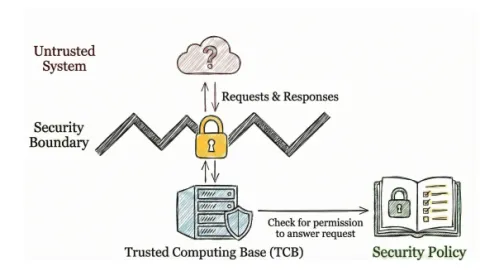
AI agents must be treated as untrusted systems: Google, Meta researchers
Cointelegraph·2026/05/26 06:15
Rumor Alert Within XRP Army: Ripple Acquires Circle for 61 Billion USDC
TimesTabloid·2026/05/26 06:00
Flash
10:41
South Korean Banks Tighten 'Borrowing to Invest in Stocks', Goldman Sachs Advises Clients to Hedge Against Korean Stock Downside Risks On June 16, the risk signals in the South Korean stock market are no longer just about 'rising too quickly'. More critically, part of the money driving the market comes from credit loans and overdraft limits, and this funding channel is being tightened by banks. Major banks in South Korea have first limited mortgage loans and are now reaching for credit loans, overdraft accounts, and internet loan access, with a direct goal: to suppress borrowing for stock investment. Goldman Sachs trader Alvin So noted in a client memo that the logic behind AI and semiconductors remains strong, and valuations are still attractive, but 'a new structural dynamic in the market has become more important than ever.' This dynamic refers to the amplification effects brought by leveraged ETFs and derivative positions. The core message is not to immediately short South Korean tech stocks, but to remind clients that core long positions can remain, but should be hedged with options against short-term pullbacks. The numbers are extreme. The assets of South Korean leveraged ETFs have reached about $40 billion, equivalent to approximately 2.6% of the market's freely tradable market capitalization; the implied volatility of South Korean options has risen to about 80%, compared to only around 20% a year ago; skew is nearing high levels, and the volatility term structure is inverted. In other words, rising stock prices have not lowered risk pricing but have instead surged alongside volatility. The credit side is also cooling down simultaneously. Last month, household loans in South Korea's entire financial system increased by 9.3 trillion won, with credit loans increasing by 3.4 trillion won in May, while they decreased by 900 billion won in April. After the regulatory emergency management mechanism was initiated, banks have gradually set loan limits, suspended some channels, and reduced unused overdraft limits. If stock market positions continue to be built on short-term borrowing and leveraged ETFs, the real danger is not just an ordinary pullback, but the simultaneous occurrence of financing contraction and position rebalancing.
10:32
Organization: Fed Stands Pat This Week, Powell's Hawkish Tilt in FocusBlockBeats News, June 16th, Capital Economics believes that the Fed will stay put this week almost for certain. The institution's Chief North American Economist, Stephen Brown, speculated that Powell will not offer his own rate forecasts but will still be asked about his views during the press conference. Brown stated: "The risk for the market is that Powell's remarks may be more hawkish than expected—either because of communication errors or simply because his current position is not as dovish as when he was vying for the Trump nomination."
However, Brown also warned that if Powell feels constrained by Trump, then an overly dovish tone could reignite concerns about the Fed's independence and potentially push up long-term bond yields. Brown suggested that there is a high likelihood of two "insurance rate hikes" in December and early next year.
10:21
German 10-year government bond yield falls by 3 basis points to 2.92%, its lowest level since April 20German 10-year government bond yield fell by 3 basis points to 2.92%, the lowest level since April 20.