
News
Stay up to date on the latest crypto trends with our expert, in-depth coverage.


Dogecoin Price Prediction 2026-2030: The Realistic Path to $1 Revealed
Bitcoinworld·2026/02/05 07:21
Quant Price Prediction 2026-2030: Unveiling the Realistic Potential for QNT’s Next Decade
Bitcoinworld·2026/02/05 07:21
Cardano Price Prediction 2026-2030: The Critical Analysis Behind ADA’s Potential $2 Journey
Bitcoinworld·2026/02/05 07:21
JasmyCoin Price Prediction 2026-2030: Unveiling the Critical Factors for Long-Term JASMY Investment Success
Bitcoinworld·2026/02/05 07:21
Chainlink Price Prediction: A Realistic 2026-2030 Outlook on LINK’s Ambitious $100 Journey
Bitcoinworld·2026/02/05 07:21
BNP Paribas Raises Mid-term Performance Targets
新浪财经·2026/02/05 07:05
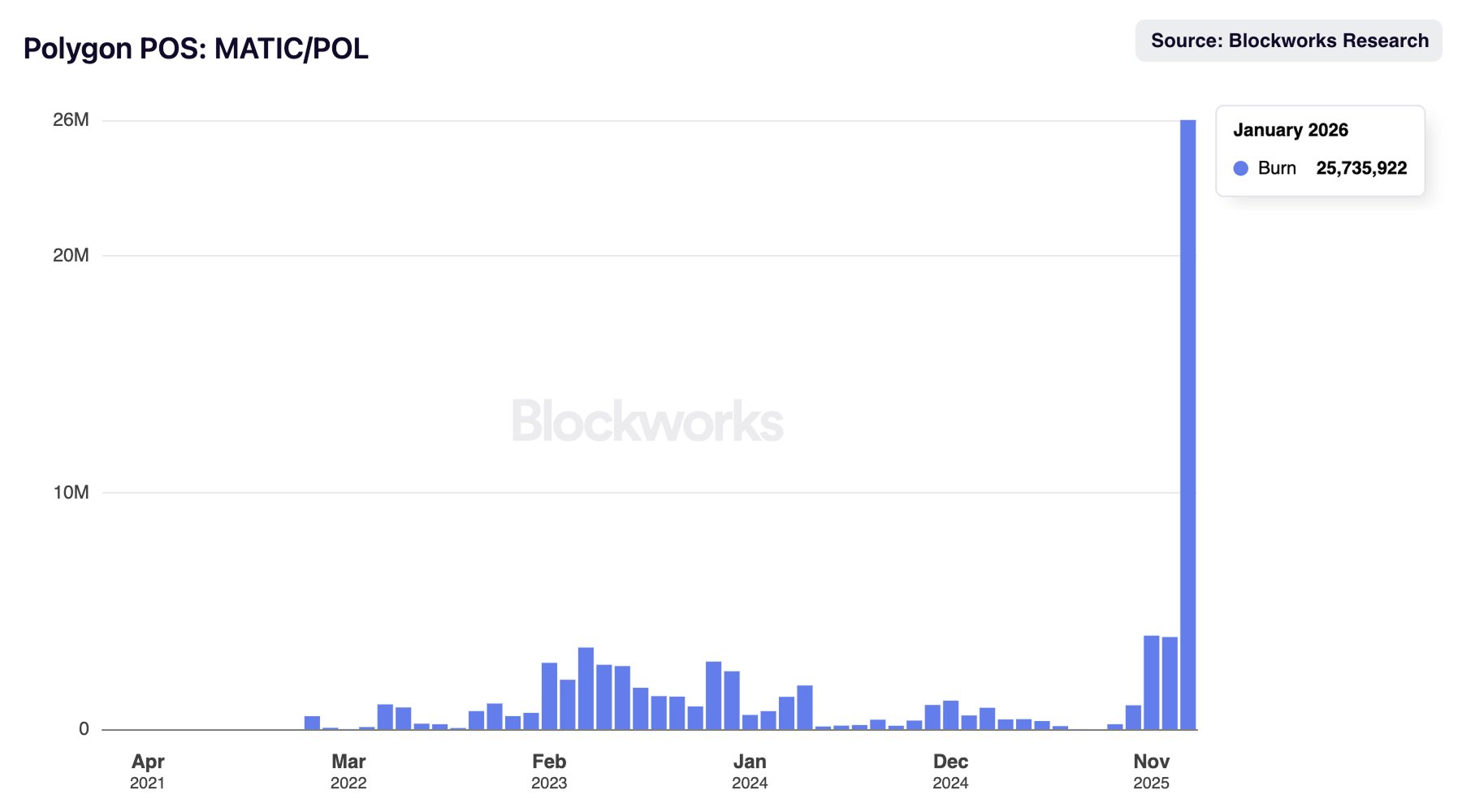
Polygon – What should traders expect from its price after 25.9M POL burn?
AMBCrypto·2026/02/05 07:03
Venus Protocol Introduces VenusFlux as Earliest BNB Chain Inclusive Liquidity Layer
BlockchainReporter·2026/02/05 07:01
South Korea's first internet bank to go public next month
新浪财经·2026/02/05 06:53
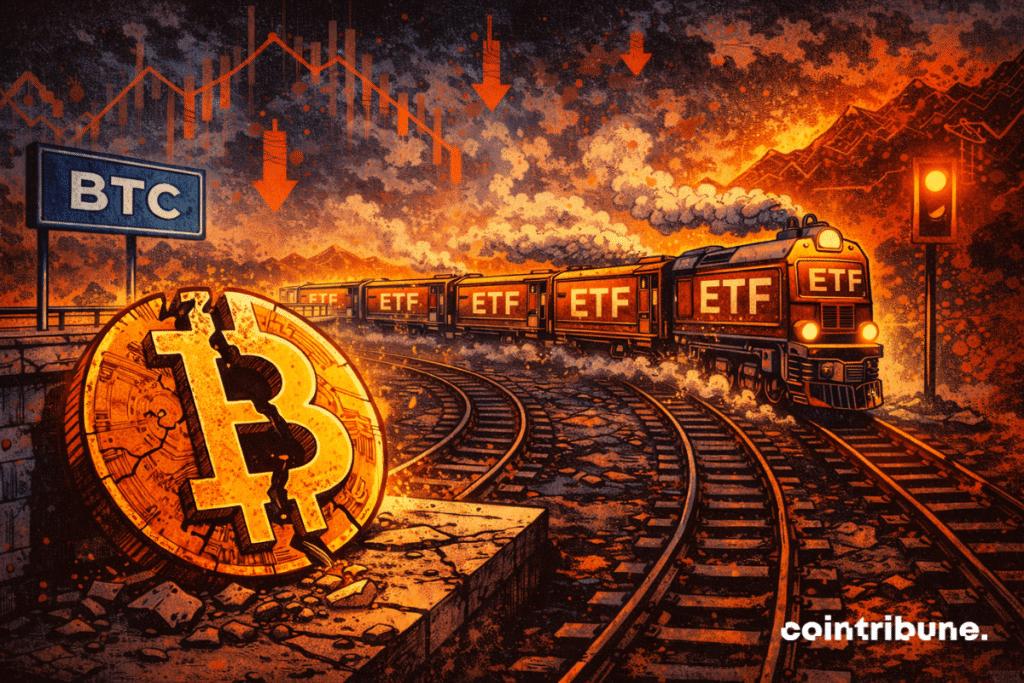
ETF Withdrawals Weigh on Bitcoin
Cointribune·2026/02/05 06:39
Flash
03:53
The Bank of Korea warns that single-leveraged ETFs for Samsung Electronics and SK Hynix amplify stock market risks.According to documents submitted by the Bank of Korea to the National Assembly, single-stock leveraged ETFs targeting Samsung Electronics and SK Hynix have expanded rapidly. The market value share of these two companies has risen from about 36.1% at the end of last year to more than 55%, while their turnover share has increased from 27.9% to 63.5%. The Bank of Korea warned that this phenomenon amplifies structural risks and volatility in the Korean stock market. Korean financial regulators emphasized the need to monitor the impact of these products on market stability and systemic risk, noting that single-stock leveraged ETFs exacerbate one-way capital flows amid changes in market sentiment and, during a market reversal, the combination of intraday rebalancing and derivatives hedging mechanisms amplify price fluctuations.
02:03
Data: Whales on the Hyperliquid platform currently hold $4.877 billions in positions, with a long-short ratio of 0.97According to ChainCatcher, citing Coinglass data, whales on the Hyperliquid platform currently hold $4.877 billion in positions, with long positions totaling $2.404 billion, accounting for 49.3% of positions, and short positions totaling $2.473 billion, accounting for 50.7%. Long positions have a profit and loss of -$26.9483 million, and short positions have a profit and loss of -$72.198 million. Among them, whale address 0x082e..88 is using 5x leverage to go all-in long on HYPE at a price of $38.6755, with an unrealized profit and loss of $41.7566 million.
01:56
Vitalik: Ethereum will enter the "Lean Ethereum" phase, with the core protocol potentially undergoing a comprehensive overhaul in the next 3–4 yearsBlockBeats News, on July 5, Ethereum co-founder Vitalik Buterin wrote that Ethereum researchers recently held a meeting in Berlin, continuing the discussion started with client teams in Svalbard in April and updating the long-term protocol roadmap. Vitalik stated, "Lean Ethereum" is not a one-time upgrade, but a series of protocol evolutions that will be implemented gradually over the next 3 to 4 years. Its impact is comparable to "The Merge" as the second major iteration, while the current stage may constitute the third significant evolution. He pointed out that future core changes for Ethereum may include: adopting recursive STARK proofs to replace direct execution verification, introducing post-quantum cryptography, adjusting the consensus mechanism to a decoupled design of available chain and finality, as well as multi-dimensional gas models and state structure reconstruction. At the state layer, Ethereum may form a "dual-layer state structure" around 2030, including about 2TB of traditional dynamic state and around 100TB of new scalable state, to support scaling needs for various application scenarios. Vitalik emphasized that privacy capabilities will no longer be an additional feature but one of the core objectives of protocol design. At the same time, the system will rely more on formal verification to enhance security, and the EVM will be promoted towards higher levels of abstraction in the future, with the underlying architecture possibly gradually transitioning to RISC-V or leanISA. In addition, he mentioned that key parameters such as gas limits, blob capacity, and block time will undergo multiple adjustments over the next few years, and Ethereum will continue to achieve scaling through client optimization and protocol upgrades. Vitalik concluded that Ethereum is entering a stage of continuous rearchitecture and expansion, aiming to upgrade the underlying system without disrupting the existing application ecosystem.
News