
Circle ($CRCL) Stock Hit with Rare Sell Downgrade: Analyst Flags ‘Gross Margin Contractions’

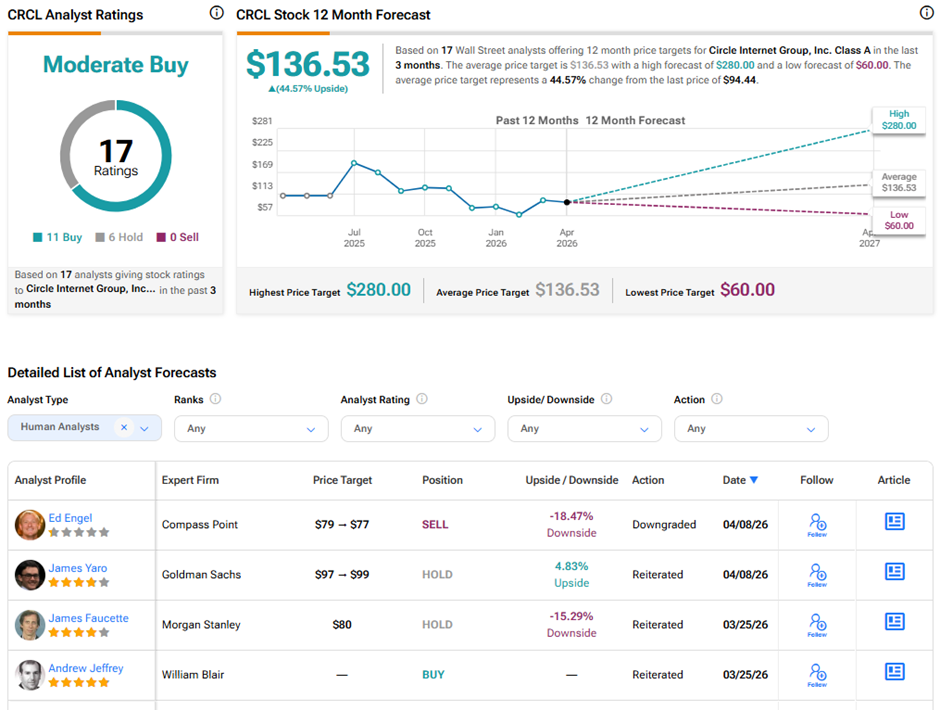
Circle Internet (CRCL) stock got a rare downgrade to Sell (from Hold) by Compass Point analyst Ed Engel. He also trimmed his price target from $79 to $77, implying 18.5% downside potential. The news dragged CRCL shares down 1.5% in after-hours trading yesterday.
Easter Sale - 70% Off TipRanks
- Unlock hedge fund-level data and powerful investing tools for smarter, sharper decisions
- Discover top-performing stock ideas and upgrade to a portfolio of market leaders with Smart Investor Picks
Circle specializes in stablecoins and blockchain technology. It issues and manages USDC, a dollar-pegged stablecoin used for crypto payments, trading, and transfers. Over the past month, CRCL stock has dropped 15.6% despite revenue growth. A slump in the broader cryptocurrency market and uncertainties around the GENIUS Act, have added pressure on shares.
A revised Clarity Act bill proposes limiting issuers like Circle from offering yields on USDC holdings, restricting rewards to activity-based uses like payments, trading, or lending. This could erode stablecoins’ appeal, which relies on bank-like interest rates.
Engel Flags Margin Compression
Engel noted that USDC has shown notable resilience amid the current crypto market cycle. However, he expects USDC’s growth to move into less profitable areas, such as non-yield-bearing reserves or lower-margin partnerships. His downgrade aligns with expectations of contracting gross margins for CRCL in the first half of 2026.
Circle’s stock surged after its late-2025 earnings, fueled by USDC’s durability and hopes for margin expansion. The stock now trades at a premium 40x optimistic 2027 estimated EBITDA (earnings before interest, taxes, depreciation, and amortization) multiples. This valuation assumes USDC supply picks up by mid-2026. With USDC supply growth stagnating and first-half 2026 margins set to decline, Engel sees analysts cutting their 2026-27 estimates. His 2027 profit estimate now sits 20% below Street consensus.
Is CRCL a Good Stock to Buy?
On TipRanks, Circle stock has a Moderate Buy consensus rating based on 11 Buys and six Hold ratings. The average Circle Internet price target of $136.53 implies 44.6% upside potential from current levels.
Copyright © 2026, TipRanks. All rights reserved.
Disclaimer: The content of this article solely reflects the author's opinion and does not represent the platform in any capacity. This article is not intended to serve as a reference for making investment decisions.
You may also like
U.S. stocks opened higher and fluctuated, the Japanese yen rebounded more than 1% intraday, 10-year U.S. Treasury yields broke above 5.22% again, and U.S. crude oil once fell nearly 3%.
After the release of U.S. consumer confidence data, the S&P and Nasdaq turned negative, while the Dow is poised to break a three-day losing streak but is set for a fourth consecutive weekly decline. Meta pulled back, falling more than 3% during the session. The U.S. 10-year Treasury yield surpassed 5.22% again, marking a new high for the third day in a row since 2007, while the 30-year yield reached its highest level since 2004. The yen/dollar pair surged 1.2% intraday, as Japanese and U.S. officials successively signaled concerns over the weak yen. Expectations for a diplomatic resolution between the U.S. and Iran are rising, halting crude oil's two-day climb.
US Treasury volatility surges, triggering alarms! BofA’s Hartnett warns of rising deleveraging risks as higher yields become main threat to the market
Bank of America strategist Michael Hartnett warns that the recent sharp rise in volatility in the US bond market is increasing the risk of broader deleveraging in financial markets.
U.S. diesel prices surge 83% this year! Apollo Chief Economist warns: Cost pass-through may make core inflation more stubborn, Federal Reserve can't ignore it
Torsten Slok, Chief Economist at Apollo Global Management, has warned that the inflation threat posed by the surge in U.S. diesel prices to historic highs may be more serious than the Federal Reserve currently realizes.
Crypto prices
More


