
Hitting the brakes, but OpenAI seeks another $200 billion in funding

AI Pioneer Report
AI Pioneer Report

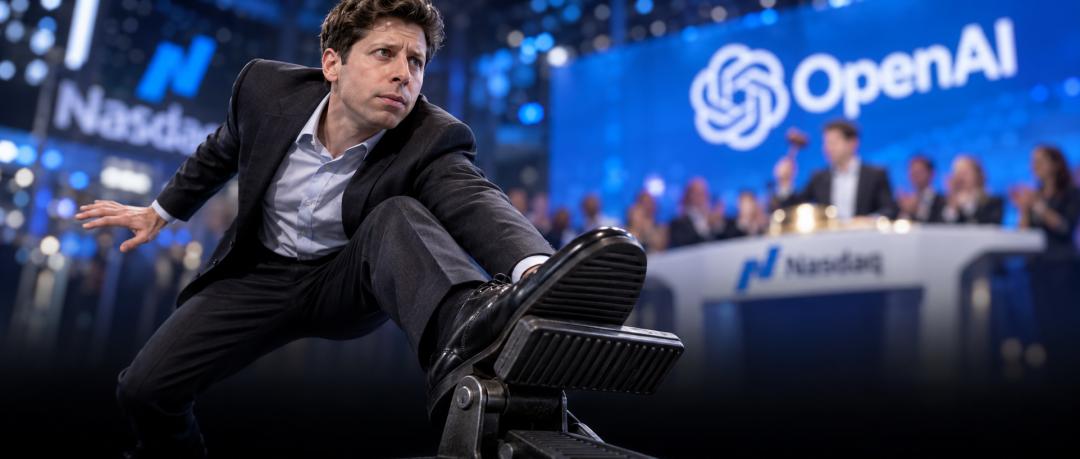
OpenAI has withheld its latest flagship model, GPT-6.1 Astra, because it "failed to pass internal safety evaluations";
The IPO process has been postponed, citing that "technological evolution has entered a new phase";
At the same time, it has notably echoed its competitors, publicly supporting a slowdown in frontier R&D efforts.
Despite hitting the brakes three times in a row, capital is pouring in more aggressively: the company is currently negotiating at least $30 billion in financing at a pre-investment valuation of approximately $1.4 trillion, with annualized revenue surging by over 70% last quarter, nearing $70 billion.
In stark contrast, OpenAI’s biggest rival, Anthropic, is racing toward the public market with an IPO prospectus that candidly acknowledges AI’s "existential risk".
According to Bloomberg, quoting people familiar with the matter, this deal—mainly driven by investors—is essentially a bridge financing to substitute for an IPO; negotiations are still in early stages and the terms are subject to change.
OpenAI declined to comment on this matter.

The turning point began with a leap in technological capability.
Launched in early September, GPT-6 Astra is the first model within OpenAI to trigger its internal "Critical" cyber security red line: when equipped with the proper tools, it is capable of autonomously uncovering unknown vulnerabilities and constructing attack chains without step-by-step human guidance.
This week, the successor GPT-6.1 Astra was held back in the lab for not meeting set safety thresholds.
This caution is not limited to a single company.
In September, Anthropic CEO Dario Amodei publicly called for the industry to slow down the leap in frontier capabilities, pointing directly at the rapid loss of control in technological evolution driven by “Recursive Self-Improvement (RSI)” since the start of summer;
Altman immediately voiced public support and promised to introduce an independent evaluation organization with privileges similar to internal staff.

Leveraging Private Funding for Time
With R&D halted, the listing process was instantly put on ice.
On Tuesday, in an interview with Bloomberg TV, Altman made it clear that OpenAI will not go public this year: the team needs to first adapt to the new level of capabilities and the accompanying safety challenges, hoping "to make core decisions now without the external pressure of being a public company."
Although Altman did not disclose any specifics, when the recently-locked GPT-6.1 Astra will be released and under what permissions, are clearly among the core issues.

Bridge Deals in the Private Market
Not ringing the bell for a secondary market listing, massive capital has now shifted to private funding.
In March this year, OpenAI raised $122 billion in funding at a post-investment valuation of $852 billion. If this round of $30 billion bridge financing goes ahead, its post-investment valuation will soar to about $1.43 trillion—a jump of about 68% in just half a year, again surpassing Anthropic’s record high of $965 billion in May.
The driver of this valuation inflation is shocking commercialization speed.
According to Axios, OpenAI’s annualized revenue has soared by more than 70% since early July, with enterprise businesses doubling.
Based on annualized revenue of $70 billion, the pre-investment valuation of $1.4 trillion corresponds to a price-to-sales ratio (P/S) of roughly 20, meaning that the valuation growth has not even outpaced the revenue growth.
However, as specifics regarding computing costs and loss structures are not yet transparent, the true nature of this high growth remains questionable.

Two Extremes Facing the Safety Red Line
On the other hand, Anthropic has taken a completely different route: reports indicate that the company is seeking an IPO valuation exceeding $2 trillion, and their prospectus explicitly warns investors that its underlying technology may pose an existential threat to humanity.
When faced with the same technology safety issue, the two leading companies have responded with opposite answers.
Anthropic chooses to confront the public market head-on, exposing the worst-case scenario under regulatory scrutiny, in exchange for ample secondary market liquidity and legitimacy, while also bearing the harsh review of quarterly reports;
OpenAI instead returns to the comfort of private capital to gain maneuvering space, avoiding public shareholder scrutiny of short-term growth and the mandatory disclosure requirements of public companies.
With the constraints of the public market temporarily absent, OpenAI's promised independent evaluation mechanism becomes the key line of defense, and the fate of GPT-6.1 Astra will be the first real test.
Altman is confident that primary market investors have enough patience.
But perhaps the real party that needs to learn patience between ambition and risk is the company that created a model even closer to ASI, but has not yet figured out how to truly control it themselves.
Editor: Mark



Disclaimer: The content of this article solely reflects the author's opinion and does not represent the platform in any capacity. This article is not intended to serve as a reference for making investment decisions.
You may also like
Nike Restructures Its Organization, The Era of Greater China’s Independence Will Become History
Starting from fiscal year 2028, Nike's organizational chart will no longer feature a separate Greater China region. On October 1, Nike disclosed its financial report for the 20... ending in August.
SUI Stair-Step Pattern Repeats — +128% Already, Next Leg Targets $1.60
Quarterly Report Misses Expectations, Revenue Stagnates! Nike Announces New Round of Layoffs, Stock Price Nearly Halved This Year in "Worst-Ever" Performance | Earnings Report Insight
Nike’s quarterly revenue fell by 4% year-on-year, and its full-year guidance is far below expectations, with earnings per share projected at only $1.15-$1.35, much lower than analysts’ estimate of $1.68. The new layoff plan “Pace” aims to save $2.5 billion by 2031. Wall Street’s rating has dropped to a 25-year low, Bank of America set a target price of just $30, and sales recovery is now expected to be delayed until 2028.
Crypto prices
More


