
Expert: Is the strongest gold rally in decades brewing? Fiat currency pressure intensifies, gold price may head directly to $5,000 next

Forex Network October 1 News—— WisdomTree strategist Shah believes that while gold is currently suppressed in the short term by rising bond yields, a strong dollar, and tight monetary policy, the market is ignoring fiat currency pressures, sovereign debt sustainability issues, and the psychological support from inflation. He expects gold prices to stay firmly above $4,000 this year and could approach $5,000 within the next 12 months.
Nitesh Shah, Head of Commodities and Macroeconomic Research at WisdomTree, believes that the gold market is still fighting against rising bond yields and global monetary tightening, but investors may be overly focused on short-term headwinds and are missing a backdrop that could be among the most bullish for precious metals in decades. At the heart of this backdrop is the growing pressure facing the fiat currency system, and gold's role as an alternative monetary asset is being reassessed by the market. In other words, the current volatility in gold does not mean the story is over—the real new narrative may be just starting to unfold.
Short-term Headwinds Remain, but They Are Not the Whole Story
Shah acknowledges that rising interest rates, high bond yields, and a stronger dollar remain significant short-term obstacles for gold. Gold seems to have been battling the bond market for several consecutive years. Traditionally, the relationship between gold and bond yields may re-establish itself over a short period, but when yields are highly volatile, this relationship often breaks down. Therefore, short-term pressure from the bond market does indeed suppress gold's performance, but it cannot fully explain the long-term logic of gold. Investors focusing only on short-term interest rate and yield changes may underestimate gold’s position in the larger macro landscape.
Inflation Psychology Hotter Than Models, Gold Aligns More With Ordinary People’s Feelings
Meanwhile, Shah notes that persistent inflation continues to provide underlying support for gold. Although market-based inflation expectations remain relatively well-anchored and breakeven rates appear stable, consumers have grown accustomed to elevated prices and repeat inflation shocks. If you talk to ordinary people on the street, they think inflation is high and will remain high for a long time, and do not believe prices will quickly return to a 2% target. People have become used to more frequent shocks pushing prices higher.
Shah believes that the gold market is psychologically closer to the broader consumer market, rather than the relatively well-anchored investor market. This psychological gap implies that what gold reflects is not just modeled inflation expectations but more the real sense of continued erosion of currency purchasing power among ordinary people.
Central Bank Dilemma: Rate Hikes Cannot Solve Supply Shocks
Shah adds that the problem central banks face is that raising interest rates cannot address many of today’s supply shocks driving inflation. Central banks can naturally suppress demand by raising rates, but monetary policy cannot resolve disruptions in the global commodities market caused by geopolitics. He also points out that additional supply-side pressures, including potential weather-related disruptions, could also keep inflation high. While persistent inflation pressure may force central banks to keep tighter monetary policies in the short term, the bigger story for gold does not end here. Monetary policy can dampen demand but struggles to repair supply chains, geopolitical conflicts, and structural issues in energy and food—these are exactly the factors likely to cause recurrent inflation.
Sovereign Debt Unsustainable, Bond Market Is Gold's Major Story
Shah points out that the larger narrative for gold is playing out in the bond market as the world deals with increasingly unsustainable sovereign debt. U.S. government debt has been rising for years, and expecting Treasury yields to remain abnormally low indefinitely is unrealistic, especially as the Federal Reserve gradually reduces its massive bond holdings accumulated after the global financial crisis.
He says debt is unsustainable, which has been a recurring theme in the gold market for over five years. Investors focus too much on the negative effects of higher short-term rates, but pay too little attention to the impact of fiscal dominance and the deteriorating sustainability of debt. In the very short term, higher yields are negative for gold; but in the medium term, the same pressures could represent “one of gold’s most bullish stories of this decade,” or even longer. He characterizes this as a contest between fiat currency and tangible “quasi-monetary” assets, and sees it as a very powerful bullish story for gold.
Price Outlook: Constructive in the Short Term, Approaching Below $5,000 in the Next Year
However, gold still has to contend with higher bond yields, elevated short-term rates, and a strengthening dollar—Shah describes these as short-term headwinds. Despite these pressures, he remains constructive on prices.
He states that he expects gold prices to remain above $4,000 per ounce for the rest of the year.
He further adds that due to ongoing economic uncertainty, he expects gold prices over the next 12 months to approach just below $5,000 per ounce, as slower inflation will bring down bond yields and weaken the dollar.
According to Shah, gold will continue to have a positive story in the next year, but he warns that if bond market headwinds persist and consensus forecasts are proven wrong, prices could become relatively flat.
Conclusion: The Real Test for Gold Is Not Short-term Rates, But Fiat Credit
Overall, Shah’s view does not deny the short-term pressures facing gold but reminds the market not to be distracted by bond yields, short-term rates, and dollar strength. What truly deserves attention are the solidification of inflation psychology, stubborn supply shocks, unsustainable sovereign debt, and the continual erosion of fiat credit. If these forces continue to build, gold could become not just a short-term safe haven but one of the most important macro trades in decades. The outlook for gold prices in the next year remains positive, though the path will not be smooth; if bond market headwinds persist, gold may also trade sideways. However, in the medium term, fiat currency pressure and debt dynamics could still open up greater upside for gold.
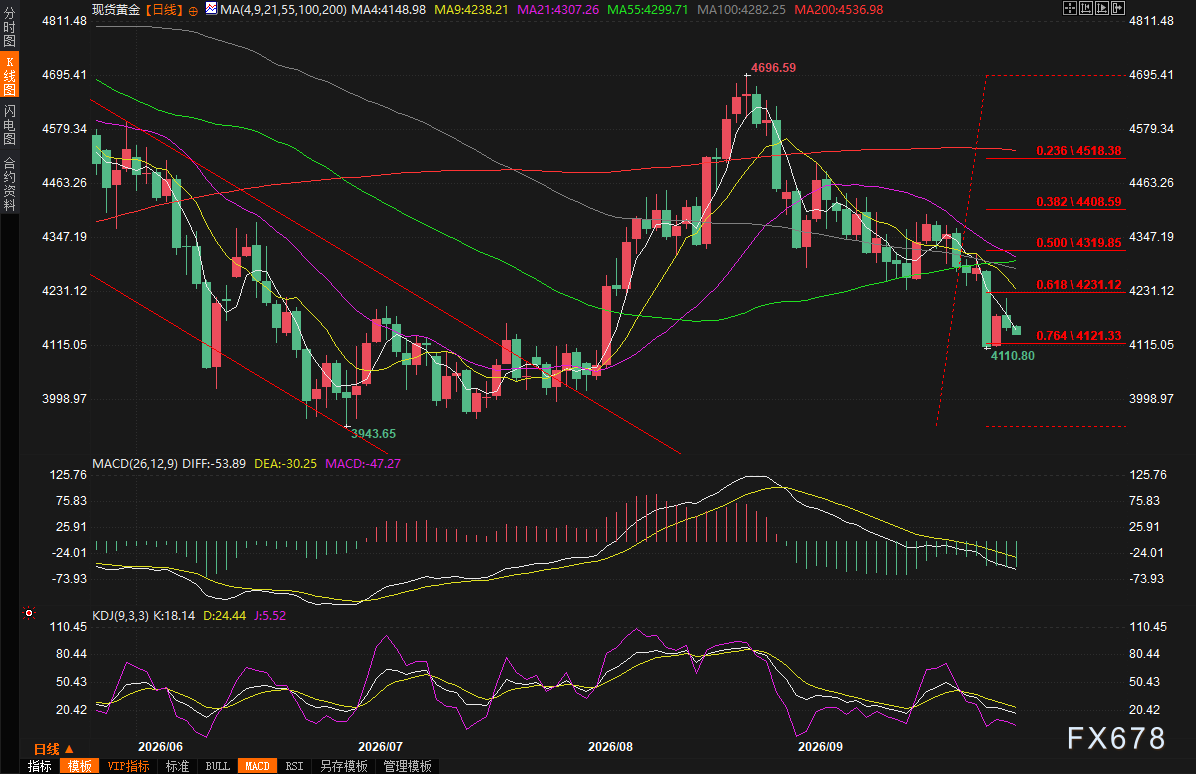
(Spot Gold Daily Chart, Source: ForexEasy)
GMT+8 08:57, spot gold is quoted at $4143.14 per ounce.
Disclaimer: The content of this article solely reflects the author's opinion and does not represent the platform in any capacity. This article is not intended to serve as a reference for making investment decisions.
You may also like
After experiencing Muse, I cleared out my Airbnb holdings
A senior analyst heavily invested in Airbnb decided to sell all his Airbnb holdings just 10 days after experiencing Meta AI's Muse app. He believes that Muse not only understands his preferences but also helps him bypass Airbnb to book accommodations directly, at 60% lower prices. As AI agents begin to compare prices, cancel, and rebook on your behalf, the "traffic moat" that internet platforms depend on is under threat, and the era of "proactive e-commerce" may be dawning.
Goldman Sachs: AI Must Endure Hardship Before Rewards
Euro weakens below 1.1350 on higher US Treasury yields, Lagarde's dovish tilt
What does Trump's "AI self-regulation" mean? Jensen Huang achieves a major victory, leads the charge questioning Anthropic's Amodei behind the scenes
Trump promotes AI "self-regulation," which appears to enhance safety but actually paves the way for the expansion of computing power: requirements for testing, auditing, and monitoring as part of "security compliance" will generate new demands for inference and optical interconnects, making Nvidia potentially the biggest winner. Jensen Huang even joined forces with Zuckerberg to oppose strict regulation, and directly questioned Anthropic's Amodei about his excessive public statements regarding AI risks.
Crypto prices
More


