
Lam Research sees strong growth extend into 2027 as AI spending accelerates

Lam Research just posted the kind of quarter that makes analysts feel underdressed. The semiconductor wafer fabrication equipment maker reported fiscal Q4 2026 revenue of $6.72 billion, a 30% jump from the same period a year ago and a 15% increase from the prior quarter. Both figures are records for the company.
Non-GAAP earnings per share came in at $1.82, comfortably beating consensus estimates. And the forward guidance suggests Lam isn’t planning to slow down anytime soon.
The numbers behind the momentum
For Q1 of fiscal year 2027, Lam is projecting revenue between $7.7 billion and $8.5 billion, with a midpoint of roughly $8.1 billion. Non-GAAP EPS guidance for the upcoming quarter lands in the $2.00 to $2.30 range.
CEO Tim Archer described the setup for wafer fabrication equipment growth in 2027 as “extraordinary,” pointing to AI-driven demand as the primary catalyst. Lam also raised its calendar year 2026 outlook for total wafer fabrication equipment spending to the low $150 billion range, up from a prior estimate of $140 billion.
Analysts bumped their fiscal 2027 revenue estimates for Lam to approximately $34.8 billion, a significant leap from the previous $31.1 billion consensus.
Where the growth is coming from
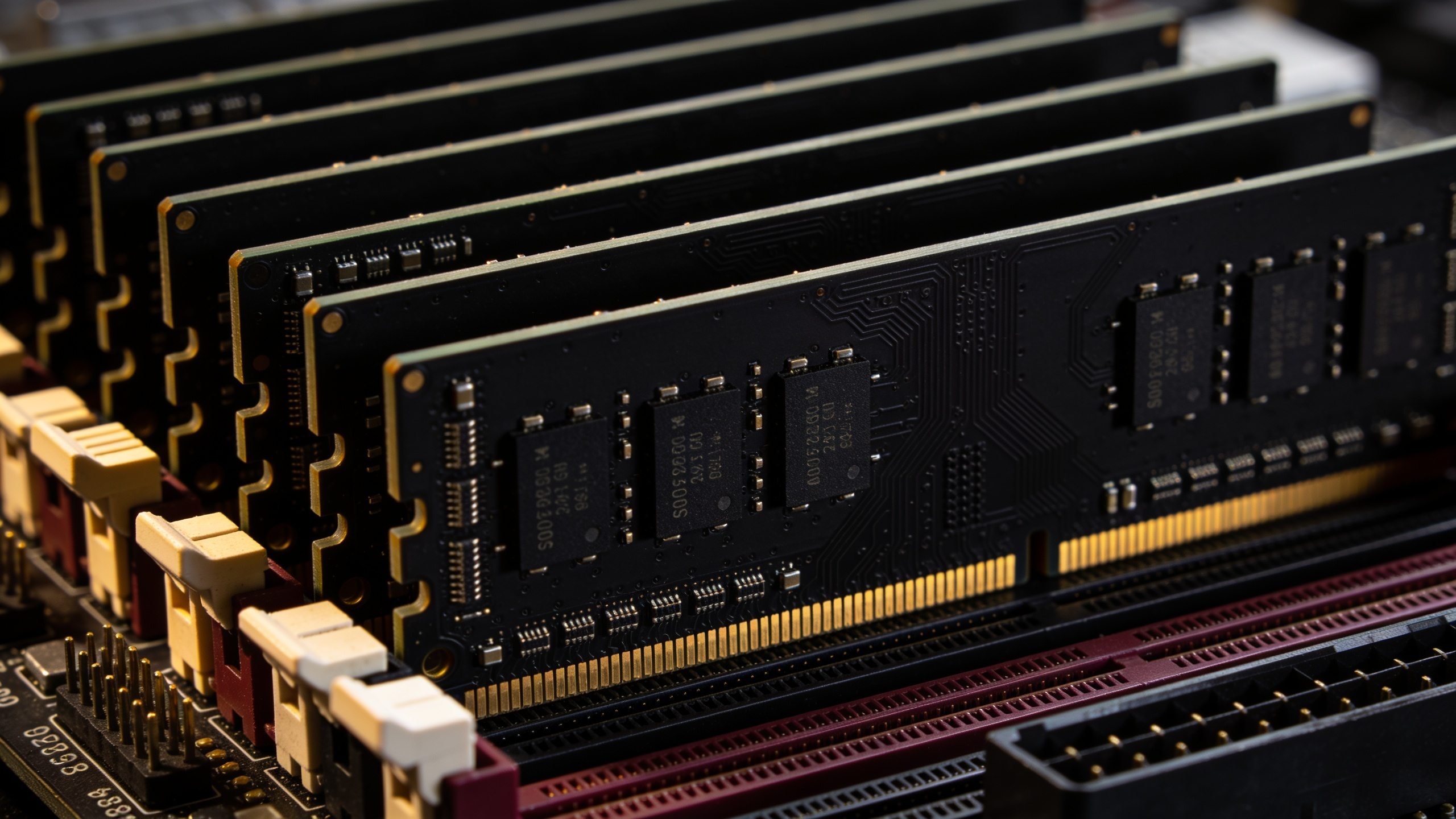
DRAM is expected to lead the charge in 2027. High-bandwidth memory, the specialized DRAM variant that sits on top of AI accelerator chips, has become one of the most supply-constrained components in the data center stack. Producing HBM requires significantly more wafer fabrication steps than conventional memory.
NAND flash and advanced packaging technologies are also contributing to the demand surge. Each of these technology transitions plays directly into Lam’s core competencies in etch, deposition, and clean processes.
On August 13, 2026, Lam announced plans to invest more than $3 billion over five years to expand its global research and development lab network. The goal is to increase experimental capacity by over 50%.
Implications for the semiconductor equipment landscape
The revised WFE spending forecast of $150 billion for calendar 2026 represents a meaningful expansion of the total addressable market. Analysts have consistently noted that Lam tends to outperform the broader equipment market during memory upcycles, and analyst revenue estimates for FY2027 were revised to approximately $34.8 billion from $31.1 billion previously, primarily due to the company’s elevated WFE outlook.
Disclaimer: The content of this article solely reflects the author's opinion and does not represent the platform in any capacity. This article is not intended to serve as a reference for making investment decisions.
You may also like
Strategy’s STRC plan could bring 365 dividend record dates – Details
Brazil’s New Crypto Rules Could Change the Market: 5 Altcoins Worth Holding as October Nears
With Q3 financial reports approaching, Samsung Electronics and SK Hynix face "extremely high expectations," testing "global AI trading"
The AI wave is driving a global semiconductor "super cycle," with combined third-quarter operating profits of Samsung and SK Hynix potentially approaching the historical record of 190 trillion won. The competition for HBM4 is intensifying, as agent-based AI pushes storage bandwidth demand up tenfold, making memory truly the "lifeblood" of AI data centers. Two upcoming financial reports will determine whether this boom is merely a flash in the pan or a structural transformation that will reshape the foundation of technology infrastructure.
‘Provide future qualification path’ — Strive challenges MSCI proposal to exclude Bitcoin treasuries
Crypto prices
More


