
Bitcoin sell pressure ‘closer to exhaustion’ after $4B USDT market-cap drop: CryptoQuant

Biggest stablecoin Tether (USDT) has shed $4 billion in market cap in just two months, but history suggests that the downturn is nearly over.
Key points:
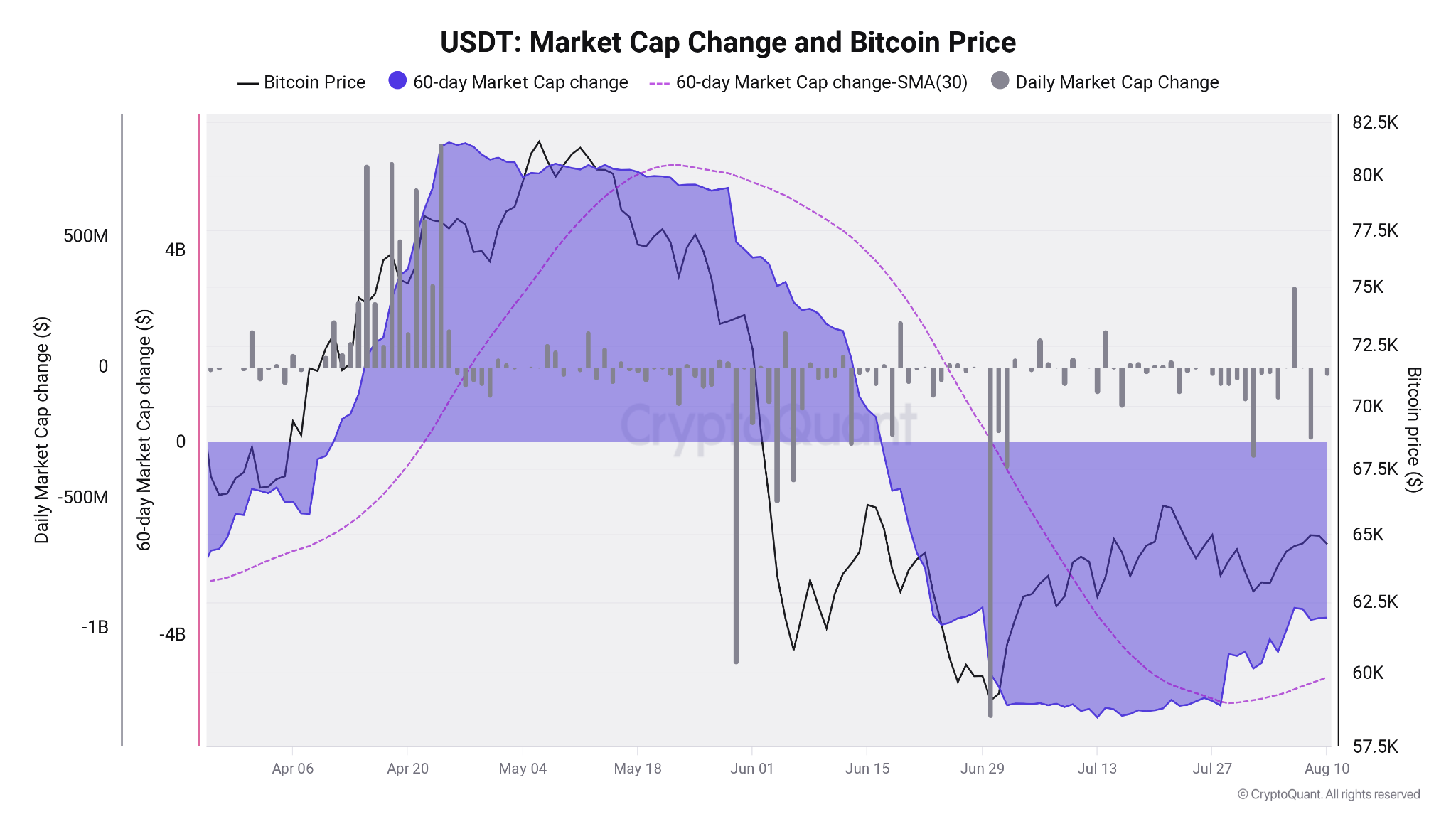
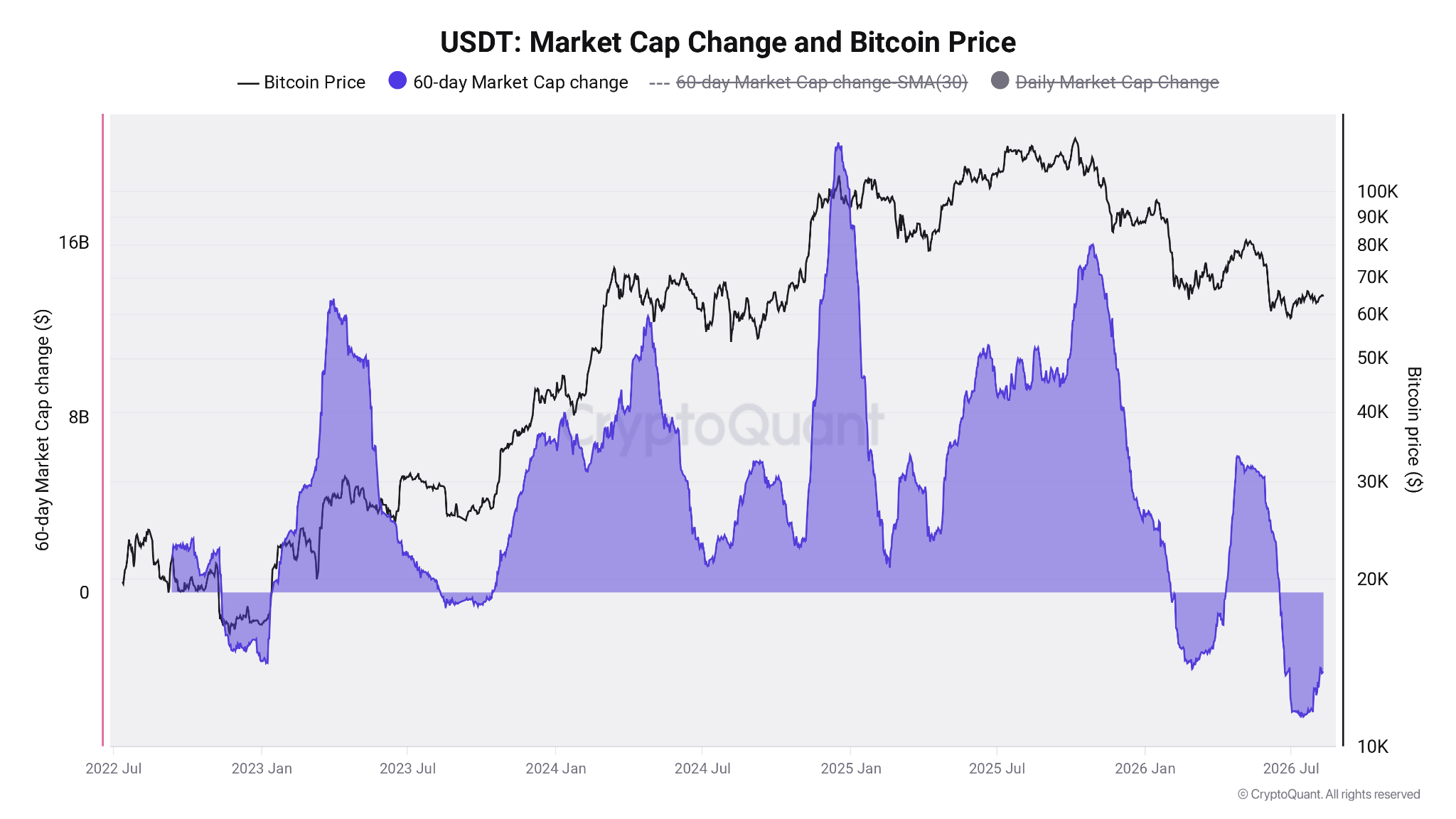
- Tether’s 60-day rolling market-cap contraction stays near $4 billion in one of its heaviest drawdowns.
- Analysis suggests that the worst of bear-market selling pressure could be over as a result.
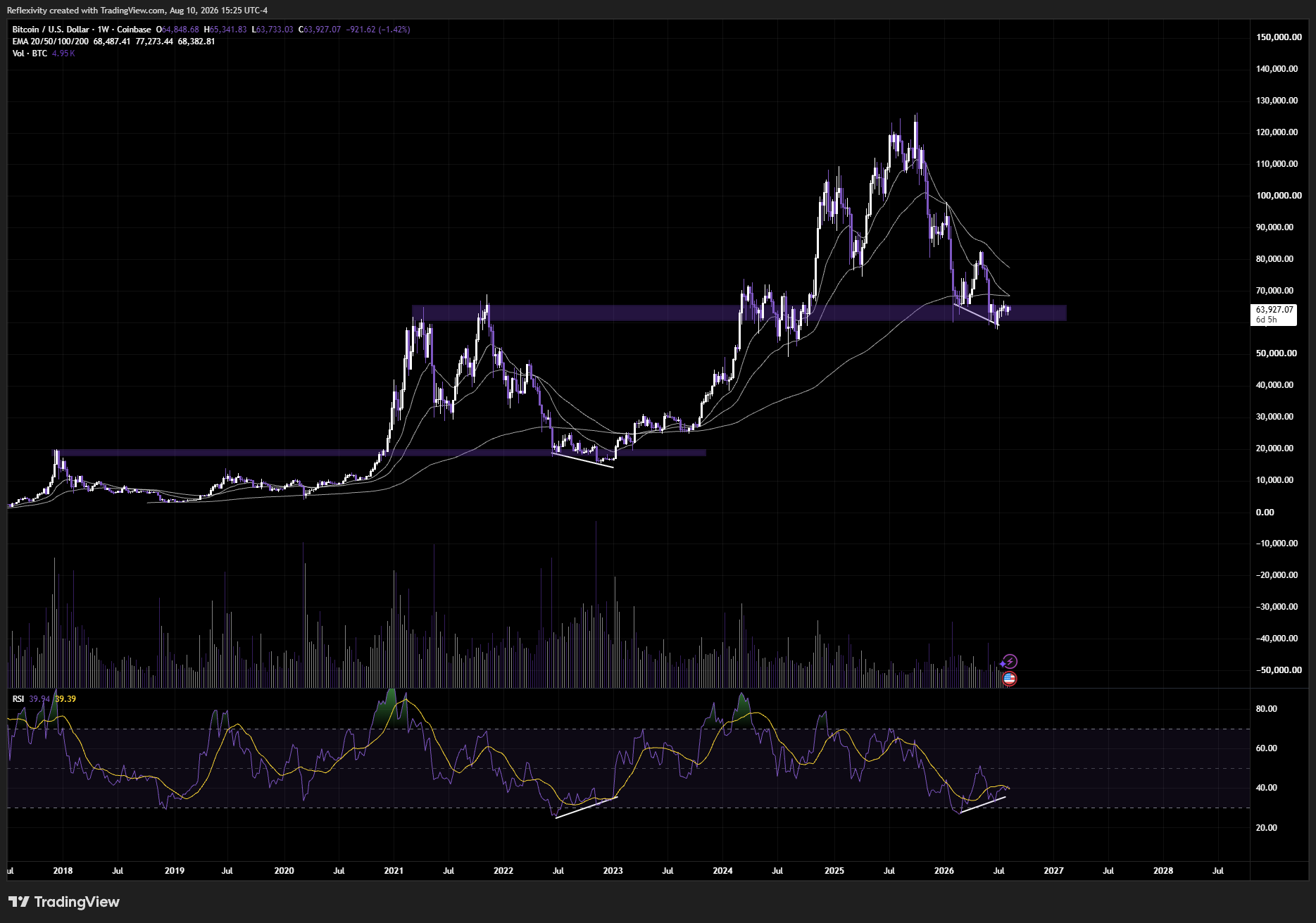
- Comparison to 2022 bear-market highlights an ongoing RSI divergence.
USDT drawdown puts “acceleration” of Bitcoin selling in doubt
Onchain analytics platform CryptoQuant in a blog post last week flagged market cap “undergoing one of its sharpest contractions on record.”
“The deterioration has also accelerated at the margin: nearly $870 million of USDT supply disappeared over the latest 11-day period, showing that the contraction is not merely a legacy effect from earlier redemptions,” analysts wrote.
CryptoQuant data puts the 30-day simple moving average (SMA) of 60-day USDT market-cap change at minus $4.88 billion as of Aug. 10.
The extent of the drawdown echoes crypto bear markets and rivals the largest ever seen. Its severity has implications for Bitcoin and the broader market recovery. Stablecoins provide a key source of liquidity, and when this evaporates, less capital or “dry powder” is available for deployment, showing a lack of interest among investors in stepping in at a given price.
“The caution is that correlation between USDT flows and BTC price doesn’t settle causality. Both likely respond to the same risk-off conditions, with redemptions accelerating alongside spot selling rather than strictly ahead of it,” CryptoQuant analysts said. They added:
“Periods of sustained USDT expansion have generally coincided with stronger Bitcoin price regimes, while prolonged contractions have accompanied weaker demand, deeper corrections, and deteriorating market conditions.”
The steepest 60-day contraction period for USDT market cap completed on July 13, when it reached minus $5.72 billion.
Zooming out, CryptoQuant notes that the most pronounced contraction phases have historically occurred in the final phases of macro market downturns.
“Historically, the market’s deepest USDT contraction phases have also marked points where selling pressure was closer to exhaustion than to further acceleration,” it added.
Weekly RSI divergence echoes 2022 reversal
The findings add to the mounting body of evidence that suggests the current bear market is in its final stages.
Disclaimer: The content of this article solely reflects the author's opinion and does not represent the platform in any capacity. This article is not intended to serve as a reference for making investment decisions.
You may also like
Smart ring manufacturer Oura (OURA.US) IPO reportedly oversubscribed by about 4 times
According to market sources, the initial public offering (IPO) of smart ring manufacturer Oura in the US stock market has reportedly been oversubscribed by approximately four times.
NEAR Protocol Price Surges Above $5 as Breakout Momentum Builds
Subscription multiplier reaches 4 times! "AI Ring" Oura IPO receives enthusiastic response
Smart ring manufacturer Oura's IPO was oversubscribed by approximately four times, planning to issue 50 million shares at a maximum price of $44 per share, aiming to raise up to $2.2 billions, with a fully diluted valuation of about $15 billions. Against the backdrop of companies like Holtec Nuclear withdrawing their IPO plans due to market conditions, Oura is expected to become the first major IPO in nearly three months to raise over $1 billion, injecting new vitality into the long-dormant U.S. IPO market.
The Bank of Japan's interest rate hike still fails to impress the market! Hedge funds slash yen long positions by nearly 80%, while dollar long positions increase significantly
After the Bank of Japan failed to deliver a clear enough signal of further interest rate hikes to the market, hedge funds have significantly reduced their bullish bets on the yen.
Crypto prices
More


