
BlackRock launches two Canada ETFs, with one allocating 3% to Bitcoin

BlackRock Canada launched two exchange-traded funds Monday, including a portfolio that combines globally diversified equities with a 3% allocation to Bitcoin.
The two funds, which began trading on the Toronto Stock Exchange, are the iShares Equity + Bitcoin ETF Portfolio (IBQT) and the iShares Core MSCI All-International Equity Index ETF (XINT).
IBQT allocates 97% of its portfolio to Canadian, US, international and emerging-market equities and 3% to Bitcoin (BTC) exposure through BlackRock’s Canadian iShares Bitcoin ETF (IBIT), which trades on Cboe Canada. Rather than investing in individual stocks, IBQT primarily holds other iShares ETFs to provide its equity and Bitcoin exposure.
XINT tracks the MSCI ACWI ex North America IMI Index, providing exposure to more than 5,000 companies across over 40 developed and emerging markets outside Canada and the US.
Both funds are managed by BlackRock Asset Management Canada through the RBC iShares alliance. BlackRock said its iShares business managed approximately $6.2 trillion in assets across more than 1,700 ETFs as of June 30.
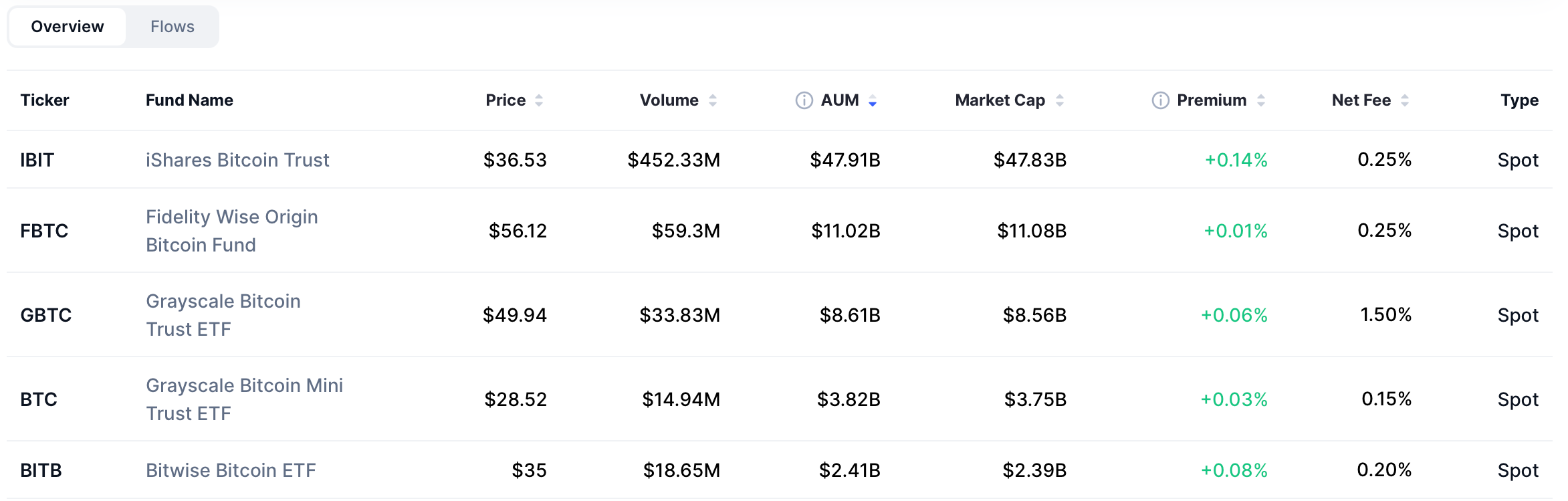
The asset management giant’s US-listed iShares Bitcoin Trust (IBIT) is the largest US spot Bitcoin ETF by assets under management, with about $47.9 billion in AUM.
Disclaimer: The content of this article solely reflects the author's opinion and does not represent the platform in any capacity. This article is not intended to serve as a reference for making investment decisions.
You may also like
Saudi Arabia’s oil shipments to Asia surged to nearly 100 million barrels, with Aramco proactively covering transportation and delivering directly to China, India, and Japan-South Korea: Supply shortage expectations meet the reality of correction.
According to reports, since the middle of last week, Saudi Arabia has sold approximately 100 million barrels of crude oil to China, India, Japan, and South Korea, with delivery periods covering October and November. At the same time, Saudi Aramco has made a rare commitment in these transactions to handle logistics and transportation, delivering the crude oil directly to Asian customers. Previously, due to soaring oil prices, Asian refineries had been considering reducing operating rates. This large-scale supply has to some extent mitigated the supply risks faced by Asia.
Embracer shareholders vote to cancel dividend, roll SEK 21.7 billion into retained earnings
Kraft Heinz Growth Potential Underestimated, RBC Says
Crypto prices
More


