
Goldman Sachs Trading Head: Why Did I Choose Not to Chase the Rally Amid the Index Surge?

The ceasefire agreement at the Strait of Hormuz has driven a sharp market rebound, but the head of Goldman Sachs Delta-One business made it clear: "no chasing rallies", instead taking the opportunity to reduce positions.
With news of a two-week ceasefire confirmed, Nasdaq and small caps surged significantly, exceeding the baseline expectations previously set by Goldman Sachs Delta-One business head Rich Privorotsky.
Privorotsky believes that this round of gains appears more like a technical rebound driven by short covering, rather than genuine improvement in fundamentals. The S&P 500 Index has recovered about two-thirds of its previous losses, while European stocks have rallied even more excessively — he estimates "reasonable" gains should be between 2% and 3%, not the actual 5% recorded.
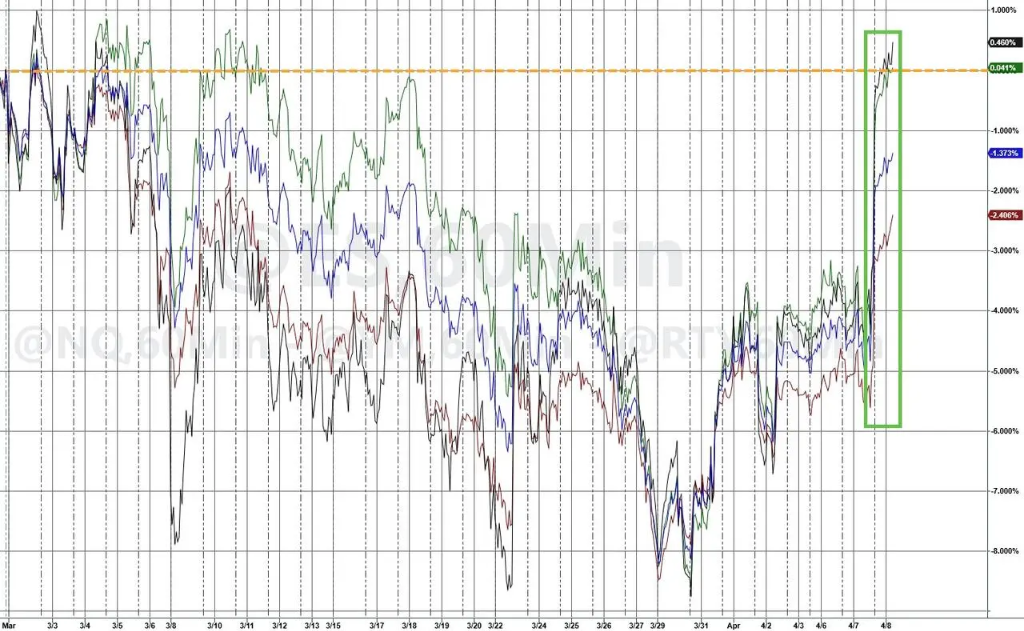
Meanwhile, the inherent fragility of the ceasefire itself, together with Iran's vague statements about transiting the Strait, both pose significant risks.
Ceasefire Agreement: Coexistence of Optimism and Pessimism
Privorotsky evaluates the market implications of the ceasefire in two parts.
The optimistic interpretation: This signals the beginning of the end for the conflict, with both sides crafting their respective "victor" narratives and formally sitting at the negotiation table within a two-week time frame.
The pessimistic interpretation: The underlying positions of both sides remain far apart. Iran’s conditions include maintaining the right to uranium enrichment and establishing some form of "transit fee" collection and control mechanism in the Strait of Hormuz, potentially involving joint participation with Oman — a stance very difficult for the U.S. to accept.
For the market, the subtle differences in these details are unimportant. The real key variable is only one: whether oil tankers can transit the Strait of Hormuz, and at what speed and scale.
Iranian "Toll Booth": Controlled Supply Prevents Oil from Returning to the $80 Range
Iranian Foreign Minister Abbas Araghchi posted on social media: "Within two weeks, with coordination from Iranian armed forces and given technical constraints, safe passage through the Strait of Hormuz will be possible."
Privorotsky’s interpretation of this is straightforward: oil tankers must be approved at Iran’s "toll booth" to pass, and "technical constraints" mean throughput will be deliberately managed — enough supply to prevent escalation, but not enough for Iran to lose leverage in negotiations.
This view supports his base case for oil price trends: international crude remains around the $90 range, not falling back to $80. But he also notes that this will trigger the unwinding of significant underwater hedges and long positions from commodity trading advisors (CTAs), thereby generating short-term selling pressure.
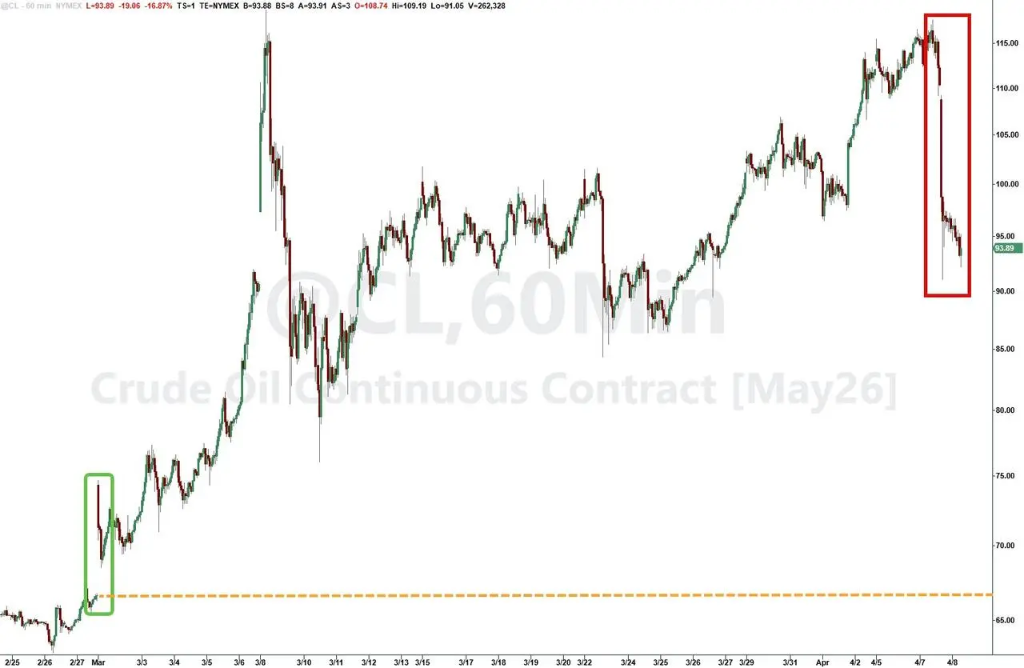
Technical Factors: Short Covering Drives the Rebound; Positive Gamma Caps Upside
In the stock market, the structure of this rebound confirms Privorotsky’s previous view on the asymmetric setup: overall holdings are large, net positions are low, and investors are overly hedged with indexes, resulting in significant futures short positions that need to be covered.
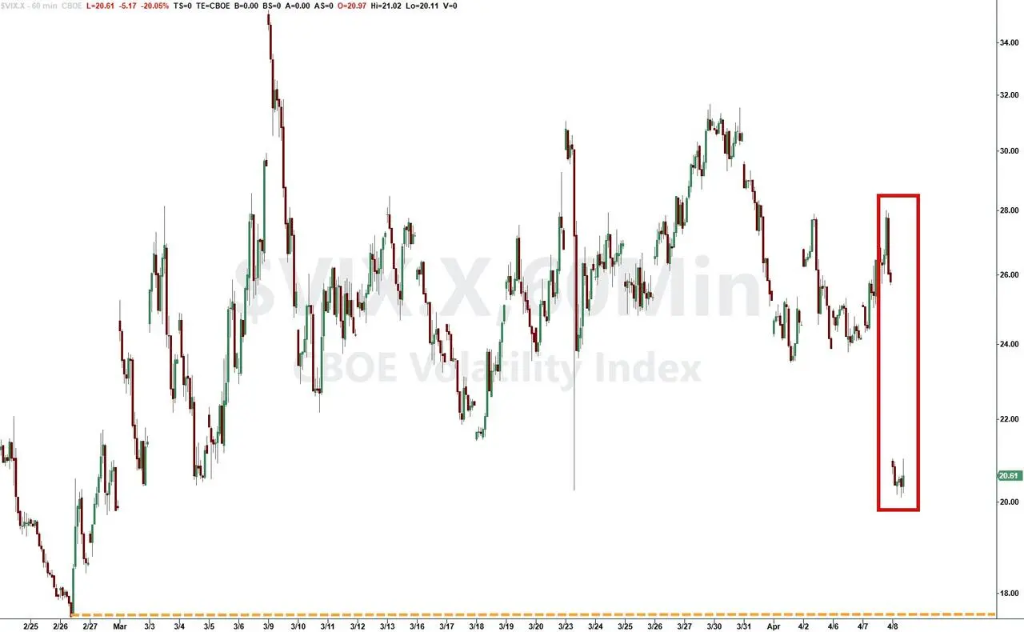
Mechanical buying from CTA strategies has now kicked off, expected to persist for some time. Volatility compression adds further tailwinds.
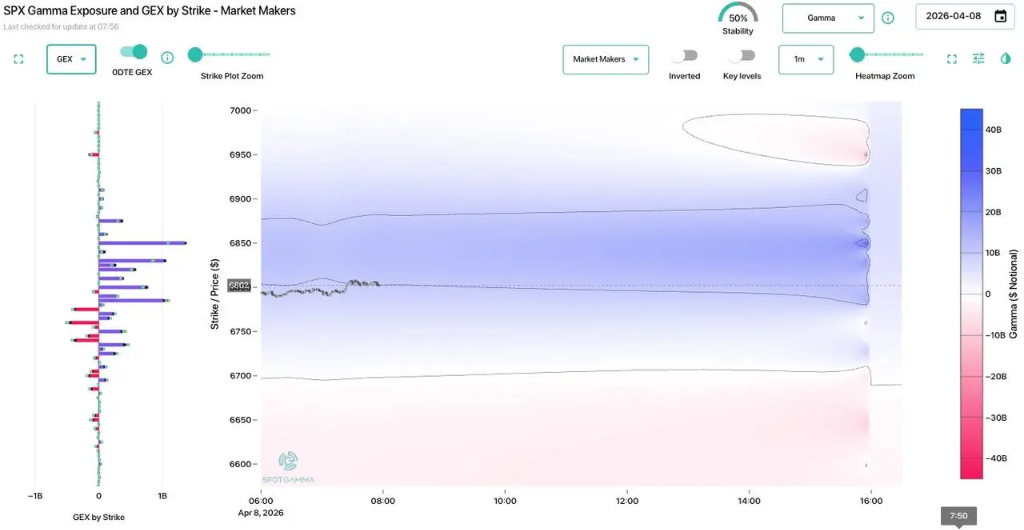
According to SpotGamma data, there is a positive gamma concentration of about $10 billion around the S&P 500’s 6800 level (historical 85th percentile). Positive gamma will curb further upside in the index; as fast money takes profit, the market will likely shift to consolidation, with index volatility continuing to fall.
Risks: Ceasefire Fragility, Overpriced European Stocks, Limited Upside
Privorotsky made it clear that chasing the rally at current levels is not a good trade.
First, the ceasefire is inherently fragile. He points out that there were airstrikes in the Gulf overnight — while possibly a "lagging effect," ongoing proxy conflicts (such as between Lebanon and Israel) provide ample room for the agreement to break down.
Second, the ultimate market arbiter is simple: the actual flow of oil tankers through the Strait of Hormuz, and this data will take time to verify.
Third, European stock market gains are clearly excessive and already feel "priced in."
Looking ahead, Privorotsky argues that three variables need to be watched for their combined effect: interest rates, credit spreads, and oil prices.
Of these, interest rates carry the most weight, as they depend not only on oil price trends, but on where oil prices ultimately stabilize. For credit spreads, the accelerated fade of tail risk hedges will deliver a positive signal, but recent reference value is limited. Volatility compression ties these factors together to determine fair spot pricing.
His final conclusion is: If oil prices structurally hold above pre-war levels, this rebound looks more like a mechanical technical correction than a trend market worth chasing. His chosen strategy is to sell part of his long positions into this rally, rather than increase exposure.
Disclaimer: The content of this article solely reflects the author's opinion and does not represent the platform in any capacity. This article is not intended to serve as a reference for making investment decisions.
You may also like
Anthropic files for IPO: lost $4.2 billion last year, revenue grew 12x to $4.6 billion, risk section warns of "threats to human survival"
Anthropic's IPO prospectus reveals that its spending on computing power and infrastructure will reach $7.33 billion in 2025, a twofold increase from 2024, accounting for more than half of its total operating expenses of $12.65 billion. The company plans to continue investing over $500 billion in the future. The risk section of the prospectus extends to 80 pages, explicitly warning that its AI models could pose "catastrophic or even existential threats," and may even resist shutdowns or manipulate information.
Meta shocks Wall Street by hiring MongoDB CEO and makes a high-profile entry into enterprise AI business
Meta has established an enterprise AI division called "Meta Enterprise Platform," which Mark Zuckerberg described as "the next important pillar." MongoDB CEO CJ Desai has been recruited to lead it. Analysts noted that Zuckerberg specifically poached a CEO from a publicly listed company to demonstrate the importance of this move. Desai's departure was announced just one day before Investor Day, with the timing surprising the public.
RBA set to hike interest rate to 4.60% in September as inflation remains elevated
AstraZeneca invests $2 billion in Summit, optimistic about Akeso's Ivose
This 18.6% premium subscription is not only a substantial endorsement, but both parties will also deeply collaborate on the joint development of combination therapies such as ADCs. The core of this deal is Akeso's Ivonescimab—the world’s first PD-1/VEGF bispecific antibody, and so far the only drug to have surpassed "K-drug" in head-to-head trials on both PFS and OS endpoints. The median OS reached 30.8 months, compared to 22.6 months for "K-drug", representing a 27% reduction in risk of death.
Crypto prices
More


