
The US dollar remains volatile at high levels, while gold has been under pressure and trading weakly for three consecutive days.

FX168 Finance News April 7—— Gold maintains a weak trajectory for the third consecutive day, pressured by a stronger US dollar and high interest rate expectations. Although geopolitical tensions continue to provide some support, the market focuses more on inflation and policy paths. In the short term, gold prices may remain in a weak and volatile pattern.
During the European session on Tuesday, spot gold continued its pullback, fluctuating within the previous trading range and overall presenting a

From a macro perspective, the stronger dollar remains the primary factor weighing on gold. As the uncertainty in the Middle East intensifies, the US dollar, as a safe-haven asset, sees capital inflows, further strengthening its status as the global reserve currency. At the same time, the US economic data shows some resilience, especially with previously released robust non-farm payroll figures, further reinforcing market expectations for the Federal Reserve to maintain high interest rates, which continues to suppress gold.
Meanwhile, the resurgence of inflation expectations has become a key variable. Influenced by rising energy prices, the market generally anticipates a renewed surge in inflationary pressure. According to data from the US Institute for Supply Management, the services price index climbed to
From a geopolitical perspective, the situation around the Strait of Hormuz continues to ferment. US President Donald Trump has set a final deadline, demanding the reopening of passage, or otherwise will take tough measures. Although the market remains concerned about escalating conflicts, more safe-haven flows are moving into the US dollar rather than gold, limiting gold’s support.
In addition, rising crude oil prices also exert indirect pressure on gold. Higher energy prices not only push up inflation expectations but also strengthen the likelihood of central banks maintaining tight policy stances, making it difficult for gold to attract sustained buying.
From a technical standpoint, on the daily chart, gold has overall entered an adjustment phase, with repeated rebounds capped at previous resistance zones, indicating obvious selling pressure above. The short-term trend has shifted from strong to weak, structurally displaying a bearish, volatile pattern. If the price continues to operate below key resistance, the medium-term adjustment is likely to extend.
On the 4-hour chart, gold is trading within a downward structure, with prices persistently suppressed below the 200-period moving average, forming a clear downtrend. The current price is below this moving average, confirming the short-term bearish bias. The MACD indicator is operating below the zero axis, with its histogram maintaining negative values, indicating that bearish momentum persists but has not significantly increased; the RSI is around
In terms of key levels, initial upside resistance is at
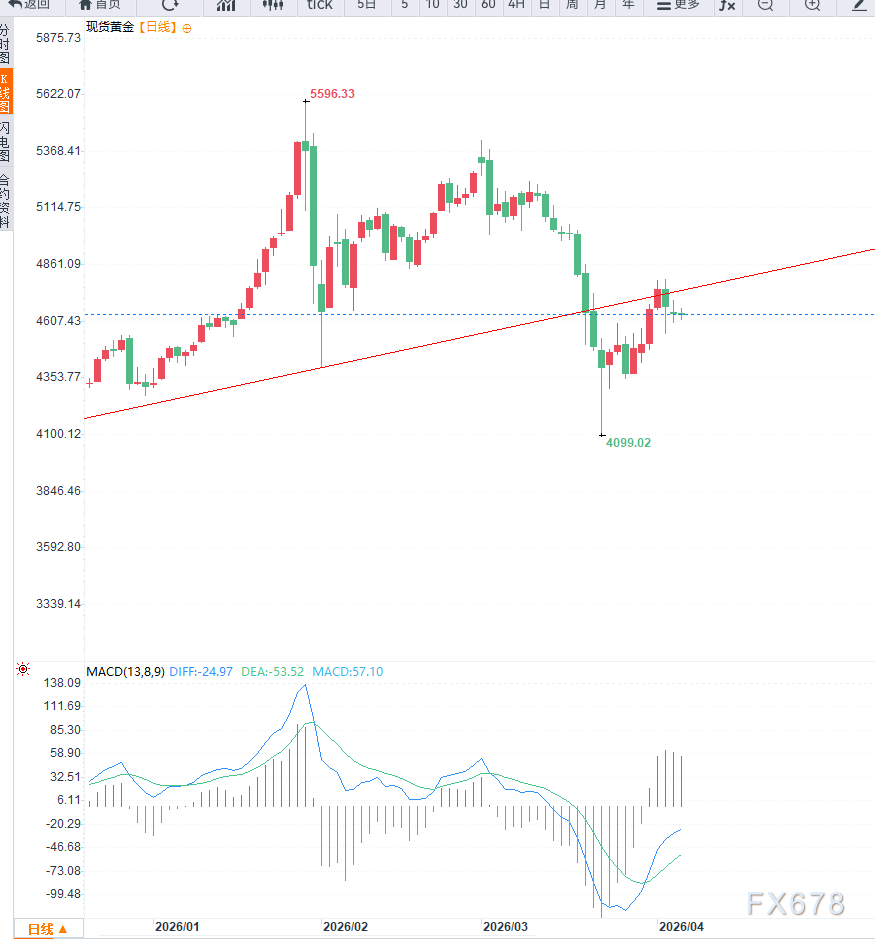
The core logic of the current gold market is “strong dollar + high interest rate expectations.” Although geopolitical tensions persist, the support for gold is noticeably weaker than before, with more funds flowing into US dollar assets. Rising inflation pressures and expectations for central bank tightening continue to weigh on gold. In the short term, without a breakout above key resistance, gold remains in an adjustment phase. It is expected to maintain a weak and volatile structure, with caution advised for further downside risks.
Disclaimer: The content of this article solely reflects the author's opinion and does not represent the platform in any capacity. This article is not intended to serve as a reference for making investment decisions.
You may also like
September New Jobs Expected to Drop to 90,000: Tonight’s Real “Bombshell” in Nonfarm Payrolls May Be Whether August Data Is Significantly Revised Down
Wall Street generally expects that new jobs added in September will drop to 90,000 and the unemployment rate will remain at 4.1%. The strong data in August was mainly boosted by unusual seasonal factors; the extent of their revision will directly affect perceptions of the strength of the September figures. As recent statements by Federal Reserve officials have pushed the probability of a rate hike in October down to 25%, market attention has shifted to long-term rates. Currently, systematic funds hold about $390 billion in global bond short positions. If the employment data unexpectedly disappoints, it could trigger severe market turbulence.
Retail Investors Stage a "Big Shrinking Circle"! JPMorgan Fund Flows Reveal Nvidia and SanDisk Attracting Funds Against the Trend, US Treasury ETF Returns to Retail Investors' Radar
Retail investors are concentrating their stock selections on a few targets related to computing power, storage, and large technology companies. On the bond side, another clear trend has emerged: amid continued pressure on long-term U.S. Treasury prices and persistently high yields, long-term Treasury ETFs saw a net inflow of $260 million during the week.

Strive stock closes at $30.11, up 2.38% as RSI flashes overbought signal
Macron calls for G7 coordination to address rising diesel prices, oil prices plunge in response, European stocks collectively rise
On October 2 local time, French President Macron called on the G7 to take coordinated action to avoid implementing export restrictions and jointly curb the rise in fuel prices. During a conference call among EU member country governments on Friday, parties discussed a proposal put forward by France: European countries would release 50 million barrels of diesel, and at the same time, International Energy Agency members would release 50 million barrels of crude oil.
Crypto prices
More


