
Polymarket fee expansion boosts revenue amid regulatory pressure

Prediction market Polymarket’s recent fee expansion has started to affect its numbers, with daily fees and revenue climbing sharply in the days following a March 30 price overhaul.
DefiLlama data shows daily fees rose from about $363,000 on Monday to over $1 million on both Wednesday and Thursday, while revenue (the portion retained after incentives) reached as high as $995,000 on Wednesday before easing to about $899,000 on Thursday.
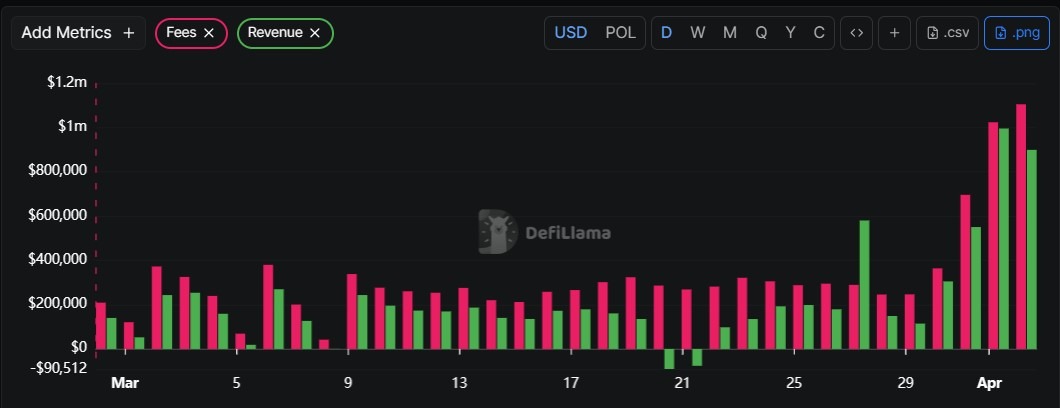 Polymarket fees and revenue data since March. Source: DefiLlama
The jump follows the rollout of a broader fee model on Monday, when the platform expanded taker fees beyond crypto and sports to categories including finance, politics, economics, culture, weather and tech, while keeping geopolitical and world events fee-free.
The spike shows how aggressively Polymarket is monetizing trading activity to maintain continued investor interest amid regulatory scrutiny in the US, Europe and other countries worldwide.
Prediction markets face growing regulatory scrutiny
The fee and revenue spike comes as prediction markets, including Polymarket, face growing regulatory scrutiny across multiple jurisdictions.
In Europe, Polymarket has faced mounting restrictions, with Hungary and Portugal moving to block or limit access in January over concerns that the platform operates as unlicensed gambling. Regulators in both countries cited licensing issues and, in Portugal’s case, concerns around political betting.
Related: Peter Brandt, Polymarket traders don’t see new Bitcoin highs this year
On March 17, a court in Argentina ordered a nationwide ban on Polymarket, arguing that the platform allowed users to place bets without sufficient identity and age verification. The court said this meant that even children and adolescents could access the platform and place bets without any control.
Polymarket’s website states the platform is currently blocked in 33 countries. Kalshi, on the other hand, reports that it’s banned in 52 jurisdictions.
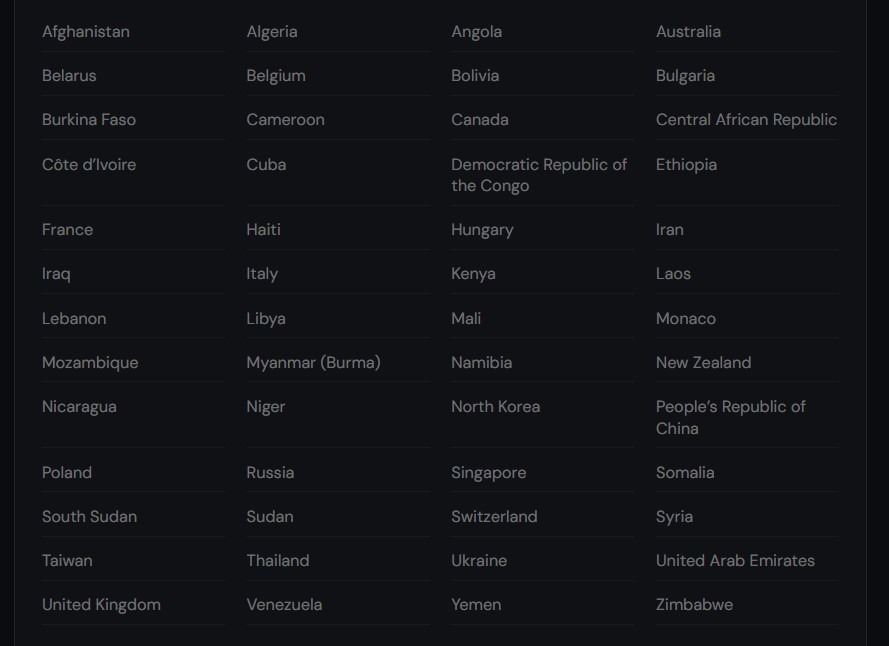 List of jurisdictions where Kalshi is restricted. Source: Kalshi
In the United States, at least 11 states have taken legal action against prediction markets such as Polymarket and Kalshi, with several issuing cease-and-desist orders or considering new legislation.
Despite regulatory crackdowns, Polymarket and Kalshi are looking to expand, with both reportedly exploring new funding rounds that could value each platform at around $20 billion.
On March 24, Polymarket and Kalshi introduced new trading restrictions to curb insider trading following criticism over well-timed bets and growing concerns around market integrity.
Magazine: Are DeFi devs liable for the illegal activity of others on their platforms?
Disclaimer: The content of this article solely reflects the author's opinion and does not represent the platform in any capacity. This article is not intended to serve as a reference for making investment decisions.
You may also like
What does Trump's "AI self-regulation" mean? Jensen Huang achieves a major victory, leads the charge questioning Anthropic's Amodei behind the scenes
Trump promotes AI "self-regulation," which appears to enhance safety but actually paves the way for the expansion of computing power: requirements for testing, auditing, and monitoring as part of "security compliance" will generate new demands for inference and optical interconnects, making Nvidia potentially the biggest winner. Jensen Huang even joined forces with Zuckerberg to oppose strict regulation, and directly questioned Anthropic's Amodei about his excessive public statements regarding AI risks.
US Stock Market IPO Preview | Henghong Technology (HCPC.US): Revenue Growth Without Profit Increase, Can Multi-dimensional Narratives Support the IPO Valuation?
After the valuation increase, is the market willing to fully subscribe at this price?
Crypto prices
More


