
Alabama becomes second US state to grant DAOs legal status under DUNA

The US state of Alabama has become the second US jurisdiction after Wyoming to grant decentralized autonomous organizations (DAOs) legal status under the DUNA Act.
The Decentralized Unincorporated Nonprofit Association (DUNA) Act (Senate Bill 277) was introduced in February by Republican Senator Lance Bell. The House passed it 82-7 with 16 abstentions on March 17, and has now been signed by Alabama Governor Kay Ivey, according to a16z Crypto.
Speaking about the bill’s passage, a16z Crypto’s head of policy and general counsel, Miles Jennings, said on Wednesday that “Decentralized governance is essential to crypto’s future—it’s one of the core constructs in market structure legislation.”
The bill provides legal status and limited liability protections to DAOs, solving a long-unresolved question in crypto: How DAOs exist from a legal standpoint in the real world.
It gives decentralized communities “the certainty to build, govern, contract, and scale in the real world,” added Jennings.
Full legal entity status for DAOs
To qualify, a DAO must have at least 100 members joined for a common nonprofit purpose, such as governing a blockchain network or smart contract system.
Governance can operate entirely through blockchain technology and smart contracts, and voting, proposals and consensus mechanisms can all be stored onchain.
These organizations will have full legal entity status, they can own property, sue and be sued, and enter into contracts, while individual members and administrators will be shielded from personal liability.
Related: Aave DAO backs V4 mainnet plan in near-unanimous vote
“As federal crypto market structure legislation moves closer to becoming law, builders need effective domestic legal structures,” added Jennings.
West Virginia DUNA Act awaits approval
A similar DUNA bill (HB 5060), introduced by Representative Tristan Leavitt in February, passed the House on March 4 and is awaiting the governor’s signature in West Virginia.
Wyoming’s DUNA Act was signed into law by Governor Mark Gordon in March 2024. The state approved the first legally recognized DAO in the United States in July 2021.
Over 13,000 DAOs exist worldwide with collective treasury assets under DAO control surpassing $24.5 billion as of 2025, according to CoinLaw. The average DAO treasury size is around $1.2 million, and Ethereum and its layer-2 networks host over 85% of DAOs, reported PatentPC in March.
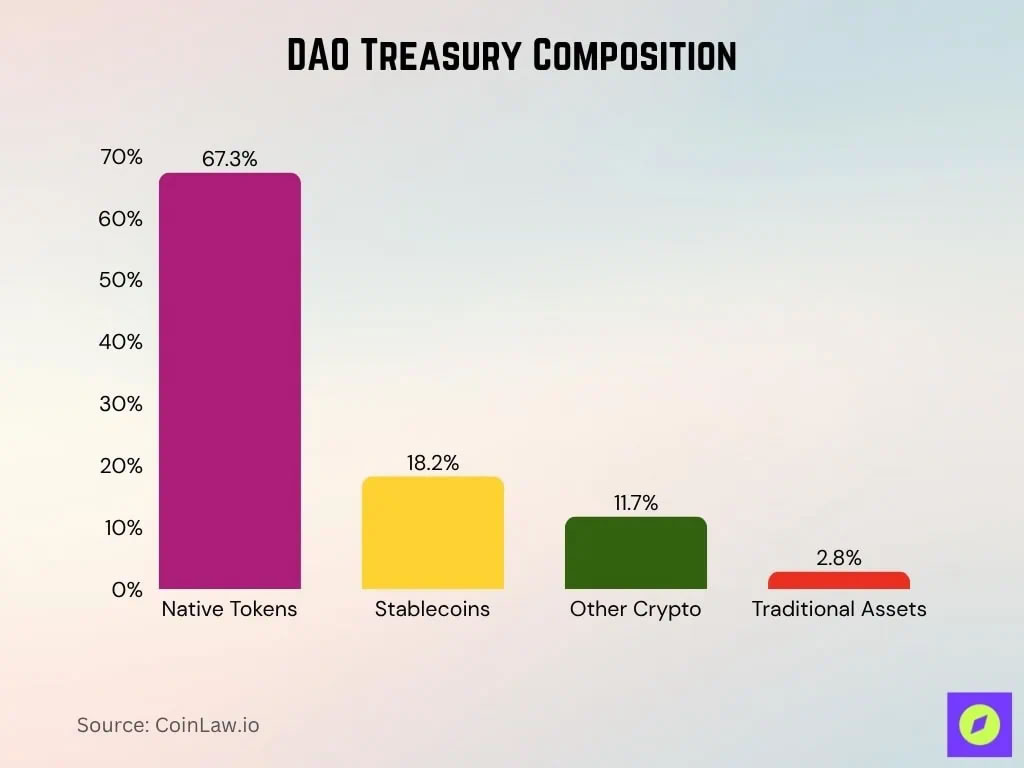 DAO treasury composition. Source: CoinLaw
Magazine: Your guide to surviving this mini-crypto winter
Disclaimer: The content of this article solely reflects the author's opinion and does not represent the platform in any capacity. This article is not intended to serve as a reference for making investment decisions.
You may also like
After experiencing Muse, I cleared out my Airbnb holdings
A senior analyst heavily invested in Airbnb decided to sell all his Airbnb holdings just 10 days after experiencing Meta AI's Muse app. He believes that Muse not only understands his preferences but also helps him bypass Airbnb to book accommodations directly, at 60% lower prices. As AI agents begin to compare prices, cancel, and rebook on your behalf, the "traffic moat" that internet platforms depend on is under threat, and the era of "proactive e-commerce" may be dawning.
Goldman Sachs: AI Must Endure Hardship Before Rewards
Euro weakens below 1.1350 on higher US Treasury yields, Lagarde's dovish tilt
What does Trump's "AI self-regulation" mean? Jensen Huang achieves a major victory, leads the charge questioning Anthropic's Amodei behind the scenes
Trump promotes AI "self-regulation," which appears to enhance safety but actually paves the way for the expansion of computing power: requirements for testing, auditing, and monitoring as part of "security compliance" will generate new demands for inference and optical interconnects, making Nvidia potentially the biggest winner. Jensen Huang even joined forces with Zuckerberg to oppose strict regulation, and directly questioned Anthropic's Amodei about his excessive public statements regarding AI risks.
Crypto prices
More


