
Wall Street “warns” Trump! Two-year US Treasury auction faces “rare bleakness,” market approaches a “turning point”

The conflict between the US and Iran continues to escalate, and Wall Street is issuing the most direct warning to the markets—the US Treasury auction is cooling off.
On Tuesday, March 24, the US Treasury's $69 billion two-year Treasury auction saw lackluster demand, well below expectations, with foreign investors nearly absent.
The final two-year Treasury yielded 3.936%, higher than the yield in immediate secondary market trading before the auction deadline, marking the largest tail since March 2023 and highlighting weak market participation.
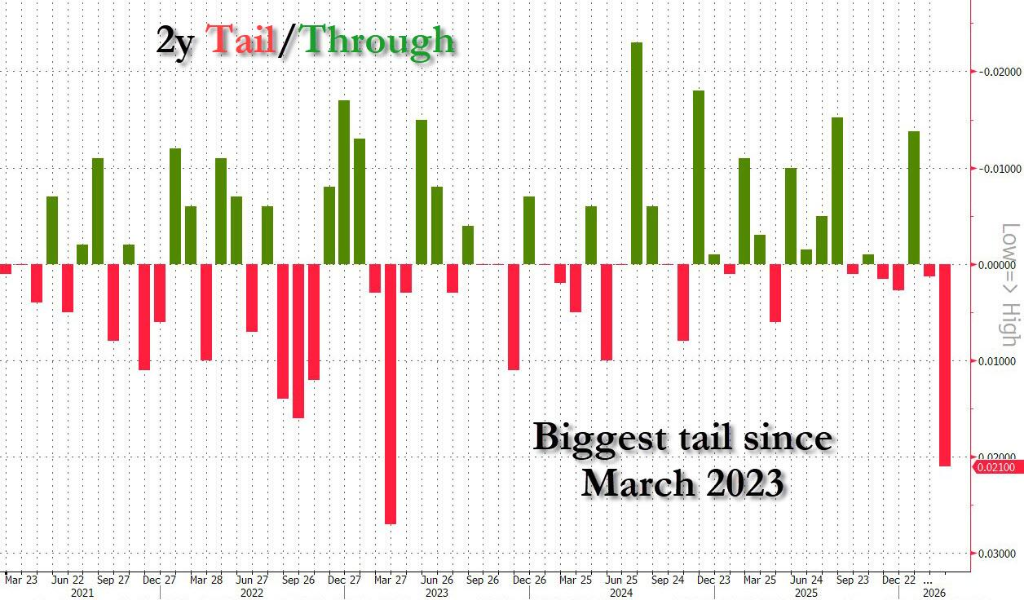
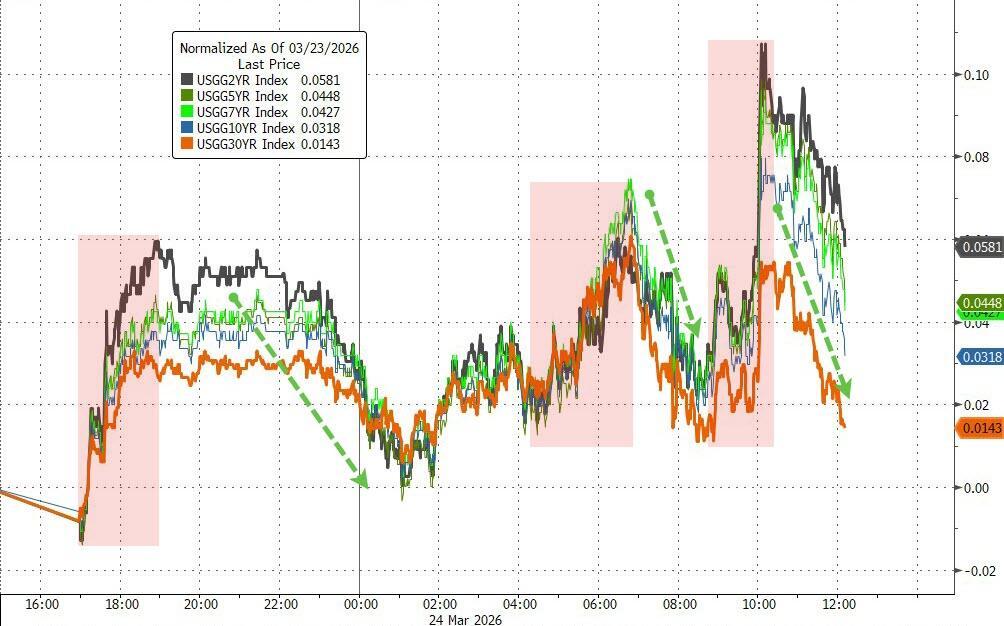
In addition, some units of the US 82nd Airborne Division are about to deploy to the Middle East. These dual factors drove the two-year Treasury yield up as much as 10 basis points to 3.96%, setting a nearly eight-month high and pushing yields across maturities temporarily higher.
TJM Institutional Services rate strategist David Robin attributed the result to an extremely uncertain market environment:
Unfortunately, today’s auction took place during a very tough, turbulent, and unknown period. Why enter the market now? The risk-reward ratio is heavily skewed towards risk.
It is worth noting that after the US stock market closed on Tuesday, Trump stated that US-Iran negotiations "may be quite close to reaching an agreement" and that Iran agreed never to possess nuclear weapons. There were also reports that the US intends to implement a one-month ceasefire and has proposed 15 negotiation terms.
US Treasury yields briefly fell, partially erasing the day's gains, and oil prices also declined in after-hours trading. However, this did not fundamentally change the cautious tone of the market. There is a $70 billion five-year Treasury auction on Wednesday and a $44 billion seven-year Treasury auction on Thursday to be digested this week.
Oil Prices Fuel Inflation Concerns, Rate Cut Expectations Completely Reversed
This auction result sets the highest yield for a two-year Treasury auction since May, whereas just a month ago, the two-year auction on February 24 saw the lowest yield since 2022.
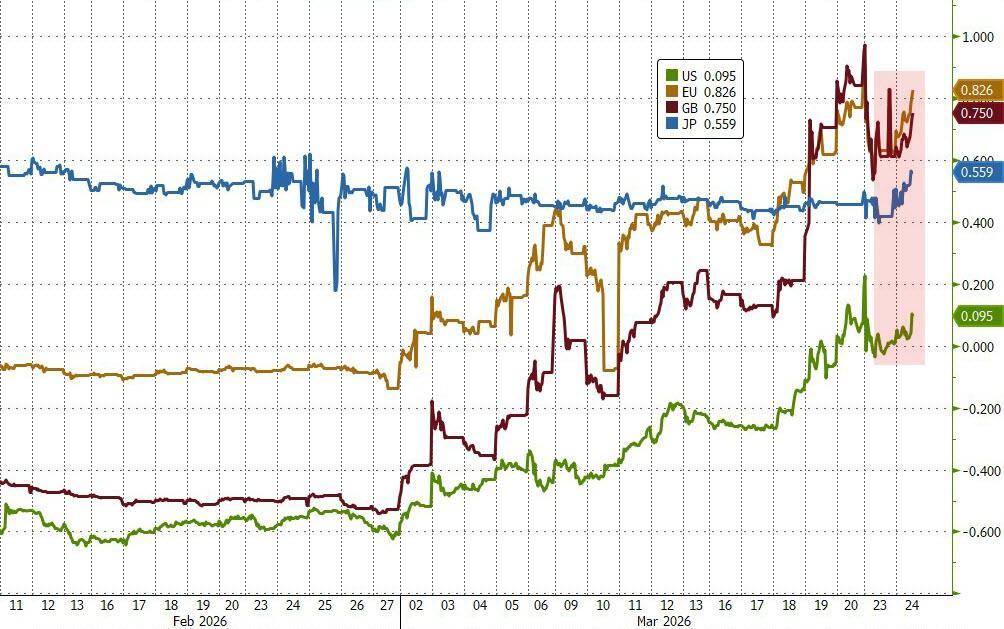
Ultimately, it is the Middle East conflict fueling persistently high oil prices, reigniting inflation expectations, nearly dashing hopes for Fed rate cuts this year, and even leading the market to price in possible rate hikes.
Oxford Economics chief analyst John Canavan noted:
High oil prices have kept modest pricing for Fed rate hikes this year, and uncertainty is causing potential auction demand to temporarily retreat.
He also stated:
The selloff in Treasuries is, to some extent, an instinctive reaction to a poor auction result, but weak auction demand itself is partly due to high oil prices.
Ameriprise chief market strategist Anthony Saglimbene pointed out:
High oil prices have placed tangible pressure on the US economy through rising prices and worsening employment. Until the Middle East situation, especially the Strait of Hormuz, becomes clearer, the stock market will remain under pressure.
The rise in Treasury yields across the board also means increased borrowing costs and tighter financial conditions, directly weighing on both businesses and consumers. Domestically in the US, about $10 trillion in debt is expected to mature and require refinancing within the next year, and the pressure from rising borrowing costs cannot be underestimated.
Moreover, the two-year Treasury is usually the type most sensitive to expectations for monetary policy and should be favored by safe-haven funds during a Fed rate cut cycle. However, the current rise in yield and significant drop in auction demand precisely indicate that investors’ outlook on Fed policy is shifting.
As Anthony Saglimbene stated:
The market is beginning to doubt that things will be resolved so easily.
Disclaimer: The content of this article solely reflects the author's opinion and does not represent the platform in any capacity. This article is not intended to serve as a reference for making investment decisions.
You may also like
Dow Jones Industrial Average bounces on Iran's latest Hormuz offer
U.S. stocks opened higher and fluctuated, the Japanese yen rebounded more than 1% intraday, 10-year U.S. Treasury yields broke above 5.22% again, and U.S. crude oil once fell nearly 3%.
After the release of U.S. consumer confidence data, the S&P and Nasdaq turned negative, while the Dow is poised to break a three-day losing streak but is set for a fourth consecutive weekly decline. Meta pulled back, falling more than 3% during the session. The U.S. 10-year Treasury yield surpassed 5.22% again, marking a new high for the third day in a row since 2007, while the 30-year yield reached its highest level since 2004. The yen/dollar pair surged 1.2% intraday, as Japanese and U.S. officials successively signaled concerns over the weak yen. Expectations for a diplomatic resolution between the U.S. and Iran are rising, halting crude oil's two-day climb.
US Treasury volatility surges, triggering alarms! BofA’s Hartnett warns of rising deleveraging risks as higher yields become main threat to the market
Bank of America strategist Michael Hartnett warns that the recent sharp rise in volatility in the US bond market is increasing the risk of broader deleveraging in financial markets.
U.S. diesel prices surge 83% this year! Apollo Chief Economist warns: Cost pass-through may make core inflation more stubborn, Federal Reserve can't ignore it
Torsten Slok, Chief Economist at Apollo Global Management, has warned that the inflation threat posed by the surge in U.S. diesel prices to historic highs may be more serious than the Federal Reserve currently realizes.
Crypto prices
More


