
OpenClaw Campaign Exploits GitHub to Steal High-Value Crypto Assets, Targeting Skilled Developers

A highly targeted and newly discovered phishing operation, named “OpenClaw,” is actively attempting to steal high-value crypto assets by compromising the cryptocurrency wallets of skilled developers who use GitHub. Cybersecurity researchers have identified this campaign.
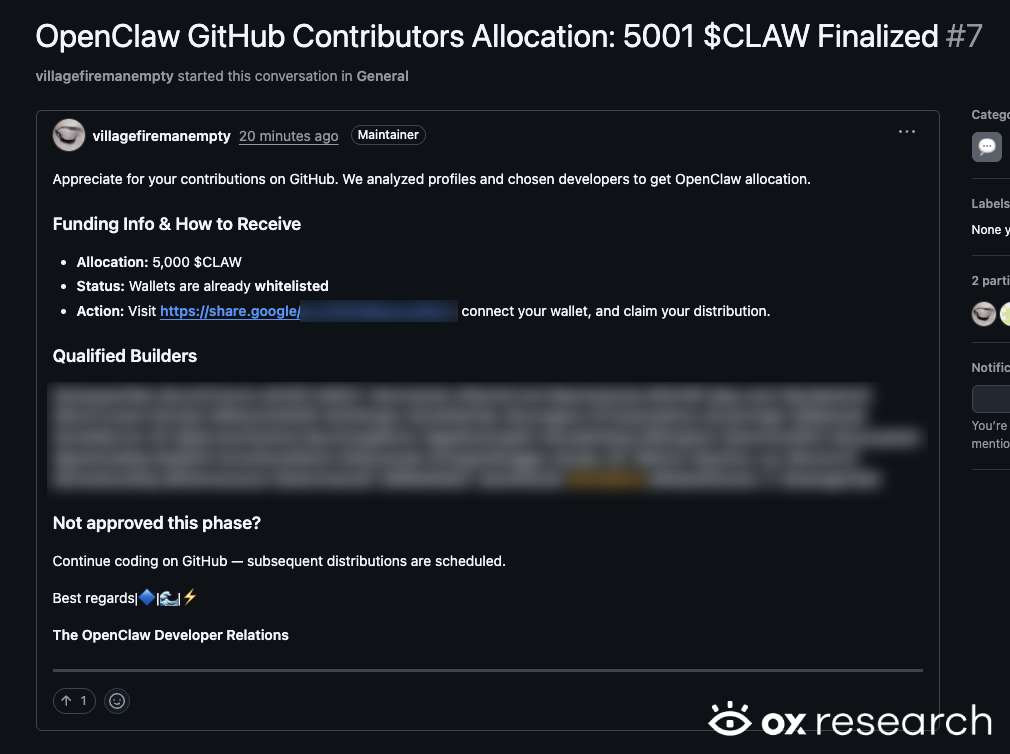
According to a detailed technical analysis by OxSecurity, the attackers utilize sophisticated social engineering tactics to lure victims into downloading malicious code disguised as legitimate open-source projects. The OpenClaw operation functions by creating credible-looking GitHub repositories that mimic popular utilities or libraries.
Once a developer interacts with these repositories, they are prompted to execute scripts that secretly install infostealer malware on their local machines. This malware is designed to scan for browser extensions and desktop applications associated with popular cryptocurrency wallets, such as MetaMask, Coinbase Wallet, and Phantom, exfiltrating private keys and seed phrases to an attacker-controlled server.
 Source
:
OX Security
Source
:
OX Security
Increasing threats to the developer ecosystem
This particular attack represents a change in the threat landscape, in which the technical abilities of a target are no guarantee against social engineering. In essence, developers are in a privileged position and may have substantial crypto assets, making them a very attractive target for sophisticated attackers. In addition, OpenClaw takes advantage of the nature of trust in the open-source community, in which sharing code and running code from other developers is a common part of daily activities.
Crypto security risks
The OpenClaw incident is part of a series of security breaches that have characterized the blockchain/Web3 industry in recent times. For example, a series of lending platform failures may be attributed to poor financial management, although individual asset losses are increasingly being attributed to these sophisticated cyber-attacks.
The increasing crisis of surgical cyber-attacks against the crypto space is highlighted by the OpenClaw campaign. This sophisticated attack shows other recent large-scale thefts, such as ZachXBT’s disclosure of an additional $4.5 million stolen from Coinbase users as part of an ongoing scam epidemic. As previous reports from DeFi Planet have shown, even major industry figures are vulnerable, vigilance remains paramount.
Disclaimer: The content of this article solely reflects the author's opinion and does not represent the platform in any capacity. This article is not intended to serve as a reference for making investment decisions.
You may also like
Anthropic files for IPO: lost $4.2 billion last year, revenue grew 12x to $4.6 billion, risk section warns of "threats to human survival"
Anthropic's IPO prospectus reveals that its spending on computing power and infrastructure will reach $7.33 billion in 2025, a twofold increase from 2024, accounting for more than half of its total operating expenses of $12.65 billion. The company plans to continue investing over $500 billion in the future. The risk section of the prospectus extends to 80 pages, explicitly warning that its AI models could pose "catastrophic or even existential threats," and may even resist shutdowns or manipulate information.
Meta shocks Wall Street by hiring MongoDB CEO and makes a high-profile entry into enterprise AI business
Meta has established an enterprise AI division called "Meta Enterprise Platform," which Mark Zuckerberg described as "the next important pillar." MongoDB CEO CJ Desai has been recruited to lead it. Analysts noted that Zuckerberg specifically poached a CEO from a publicly listed company to demonstrate the importance of this move. Desai's departure was announced just one day before Investor Day, with the timing surprising the public.
RBA set to hike interest rate to 4.60% in September as inflation remains elevated
AstraZeneca invests $2 billion in Summit, optimistic about Akeso's Ivose
This 18.6% premium subscription is not only a substantial endorsement, but both parties will also deeply collaborate on the joint development of combination therapies such as ADCs. The core of this deal is Akeso's Ivonescimab—the world’s first PD-1/VEGF bispecific antibody, and so far the only drug to have surpassed "K-drug" in head-to-head trials on both PFS and OS endpoints. The median OS reached 30.8 months, compared to 22.6 months for "K-drug", representing a 27% reduction in risk of death.
Crypto prices
More


