
Basic adds VanEck crypto ETFs to 401(k) plans amid US retirement shift

VanEck has made some of its digital asset exchange-traded products (ETPs) available to 401(k) holders in the United States, signaling a push to integrate crypto-focused investments into traditional retirement accounts.
On Wednesday, the fund issuer said a selection of its digital asset ETPs will be offered through Basic Capital, a fintech platform that provides employer-sponsored 401(k) plans.
The companies did not specify which VanEck digital asset ETPs will be available on the platform. Within crypto, VanEck is best known for the VanEck Bitcoin Trust (HODL) and the VanEck Ethereum Trust (ETHV), its spot Bitcoin (BTC) and Ether (ETH) exchange-traded funds (ETFs).
The asset manager also offers the VanEck Digital Transformation ETF (DAPP), often referred to as its “Onchain Economy” ETF, which invests in companies involved in the digital asset ecosystem.
VanEck expanded its crypto product lineup earlier this year by launching a spot Avalanche ETF in the United States.
The US Department of Labor in May backtracked on previous federal guidance that discouraged 401(k) plan providers from offering crypto among their investment options.
 Source:
VanEck
Source:
VanEck
Basic Capital was founded in 2021 and raised $25 million in a Series A funding round last year led by venture capital firms Forerunner and Lux Capital. The company’s 401(k) platform gives investors access to alternative assets beyond traditional stocks and bonds.
Related: Ethereum is very much ‘the Wall Street token,’ VanEck CEO says
Policy shift opens retirement plans to alternative assets
The move comes amid growing regulatory momentum to integrate digital assets into traditional retirement planning.
In August, US President Donald Trump signed an executive order directing federal agencies to expand access to alternative assets in 401(k) plans, including digital assets.
The directive called on agencies such as the Treasury Department and the Securities and Exchange Commission to coordinate on potential rule changes to support the broader adoption of alternative investments in retirement accounts.
The policy shift comes as more Americans rely on workplace retirement plans to build long-term savings.
Employer-sponsored defined contribution plans held about $13.9 trillion in assets as of September, including roughly $10 trillion in 401(k) plans, according to the Investment Company Institute.
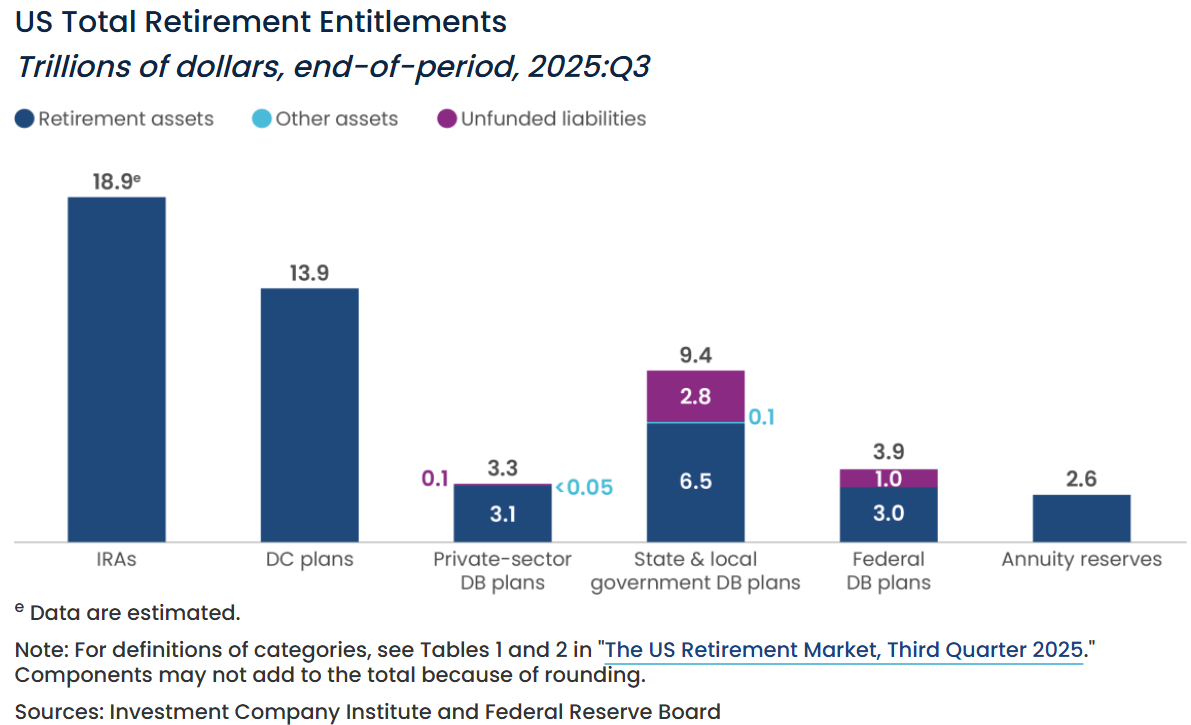 401(k) plans are grouped under Defined Contribution (DC) plans. Source.
Investment Company Institute
401(k) plans are grouped under Defined Contribution (DC) plans. Source.
Investment Company Institute
Separate data from Vanguard’s “How America Saves 2025” report suggests savings rates are also rising. Nearly half (45%) of participants increased their contribution rates in 2024, reflecting the growing use of automatic contribution features in employer plans.
Related: Crypto’s 2026 investment playbook: Bitcoin, stablecoin infrastructure, tokenized assets
Disclaimer: The content of this article solely reflects the author's opinion and does not represent the platform in any capacity. This article is not intended to serve as a reference for making investment decisions.
You may also like
The Final Meme Season Is Taking Shape: 5 Altcoins Worth Watching Before the Next Big Crypto Move
Market Cap Increased by $1 Trillion in a Single Quarter: Why Is Microsoft (MSFT.US)‘s AI Story Once Again Being Embraced by the Market?
As the third quarter concluded, Microsoft recorded its best quarterly stock performance since 1998. From July to September, Microsoft's share price rose by 37.5%, with its market value increasing by $1 trillion. Against the backdrop of the tech-heavy Nasdaq 100 index rising only 0.4% during the same period, Microsoft became the fifth best-performing constituent stock in the index.
Gold struggles as rising US Treasury yields outweigh dovish Fed repricing
FOREX-Euro slides to 17-month low, hit by rates and inflation mix
Crypto prices
More


