
Ether holds $2K as traders make push toward overhead short liquidity

Ether (ETH) climbed back above $2,000 on Monday as the altcoin’s derivatives market activity intensified across major exchanges. Data shows more than 110,000 Ether flowed into derivatives platforms, while a key leverage indicator surged to new highs.
The activity points to a rapid buildup of speculative positioning, suggesting traders are preparing for increased volatility as ETH attempts to break out of its monthly trading range.
Ether derivatives inflows meet rising leverage ratio
Ether derivatives exchanges recorded a netflow of 110,343 ETH on March 7, the third-largest spike in 2026. A larger move occurred on Feb. 6, when ETH rallied roughly 13% from its yearly low at $1,736.
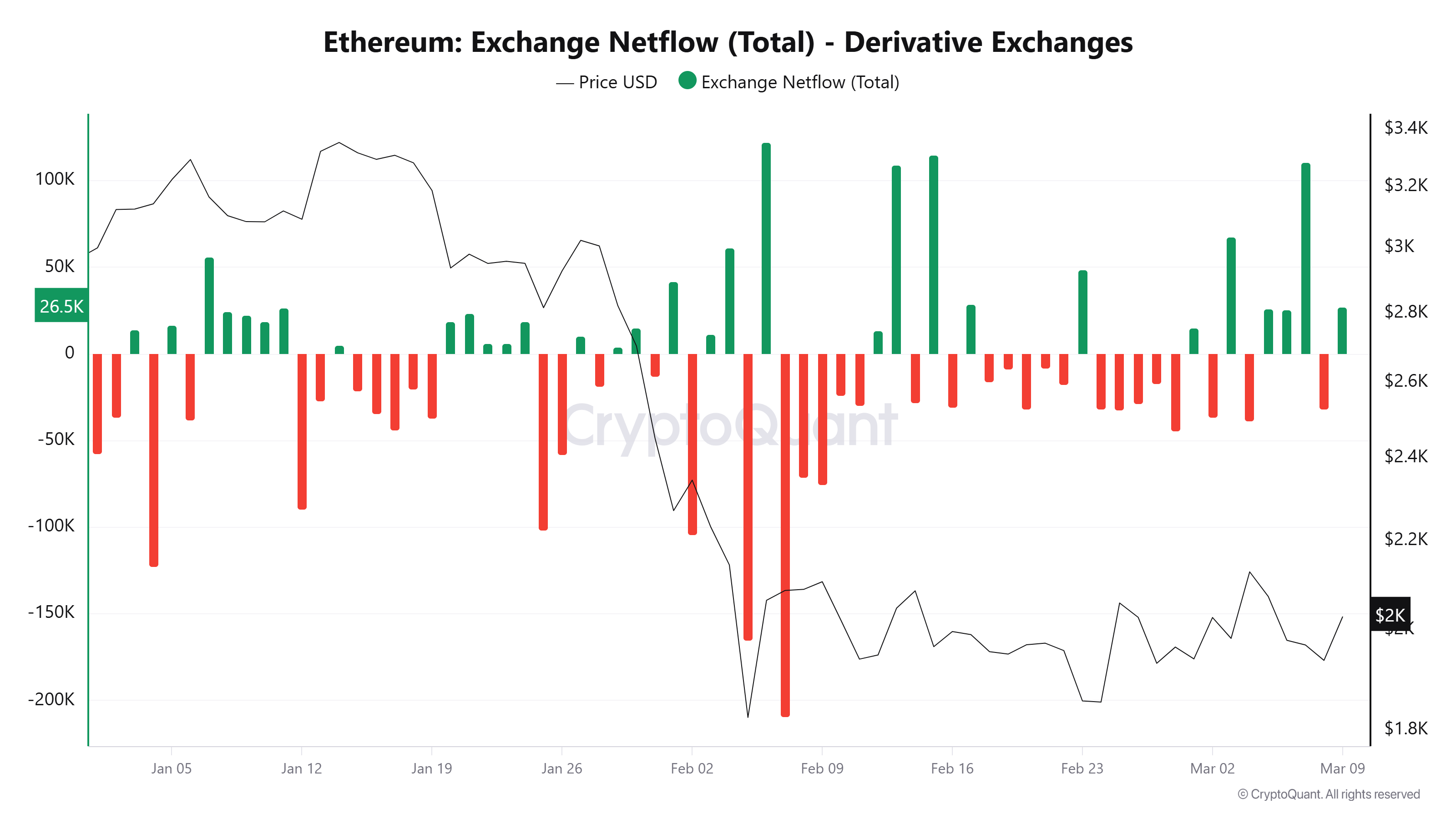
CryptoQuant data shows that the earlier spikes in derivatives inflows frequently preceded short-term drawdowns or periods of sharp volatility.
At the same time, Ether’s estimated leverage ratio climbed to a record 0.78 on Wednesday, exceeding the previous high of 0.778 recorded on Jan. 1. The metric tracks the amount of open interest relative to exchange reserves, and it is widely used to gauge how aggressively traders employ borrowed capital.
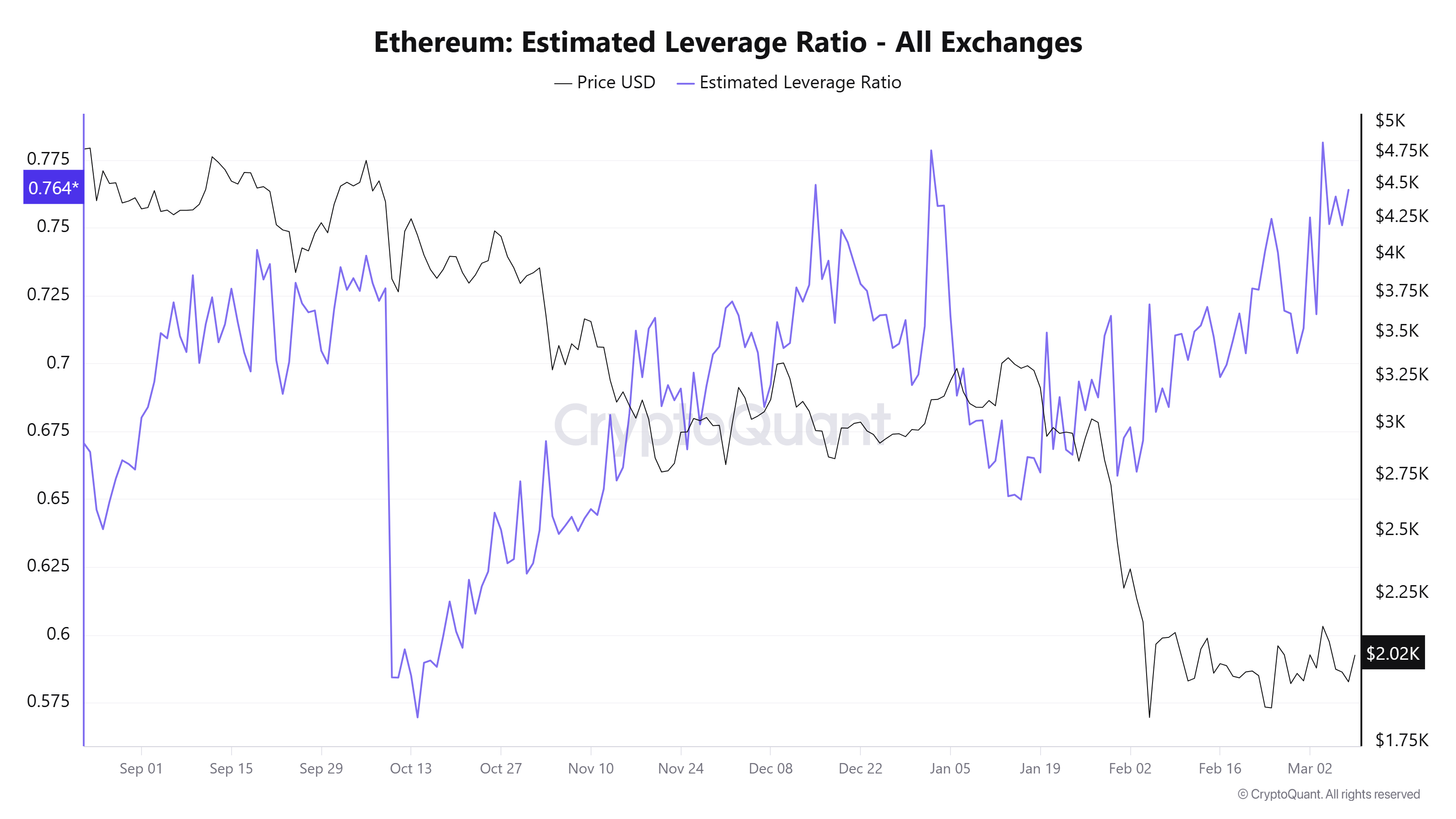
A higher reading means a larger share of the positions rely on leverage. Such conditions tend to amplify the price move in either direction as liquidations build across the derivatives markets.
Key liquidity sits near $2,050
Ether trades inside a monthly range between $1,800 and $2,000 following a swing failure pattern near $2,150 last Wednesday. The rejection signaled profit-taking above local highs, and the price retraced to the internal liquidity levels near $1,900 and $1,950 formed early last week.
The one-hour chart now shows a bullish pivot on the one-hour timeframe, which tracks the recovery on Monday after a liquidity sweep happened near $1,908 on Sunday.
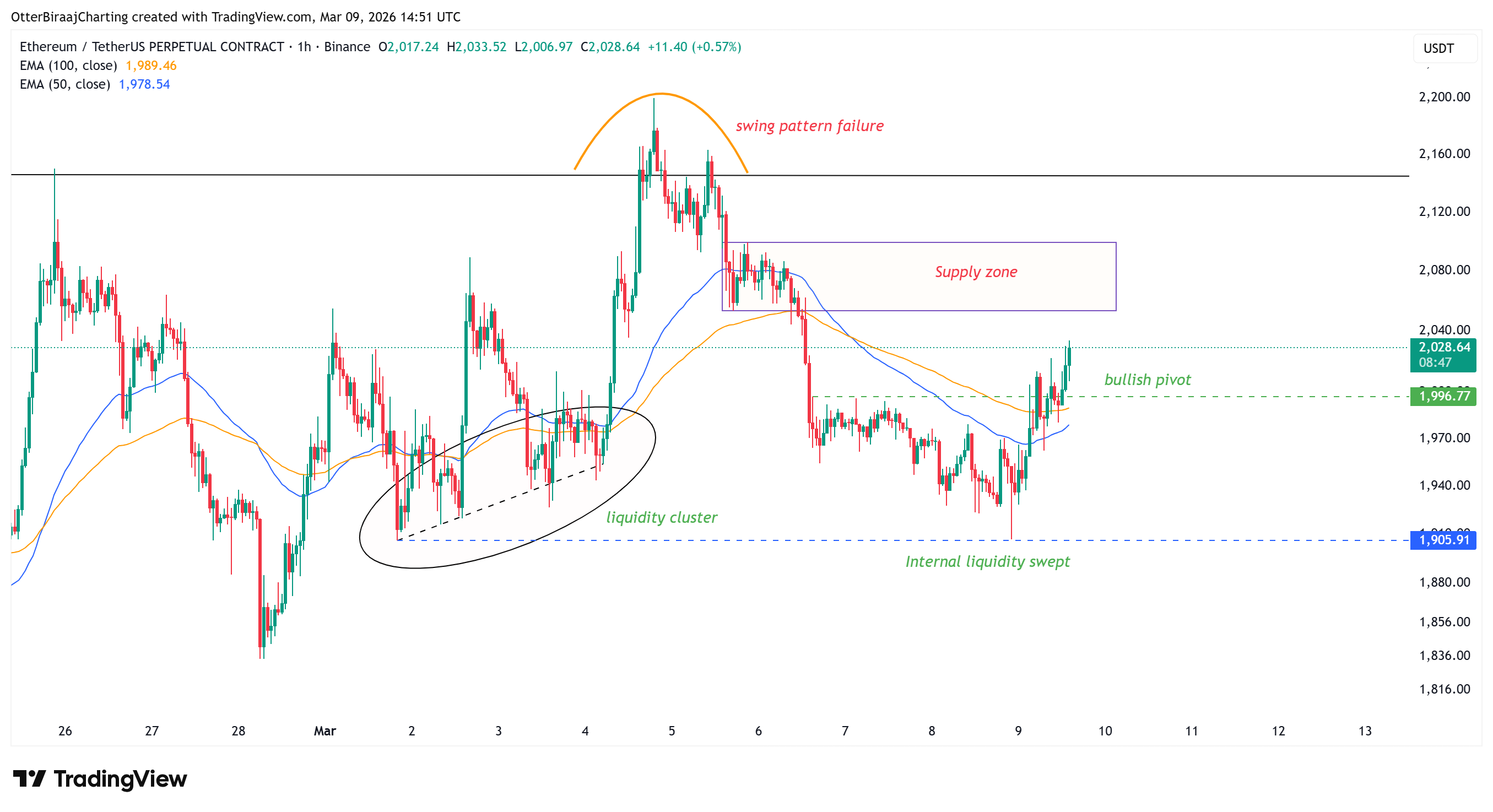
The market’s current attention may shift toward the supply zone between $2,050 and $2,100 formed late last week. A clear breakout above that range and establishing it as support may allow ETH to break significantly above $2,150.
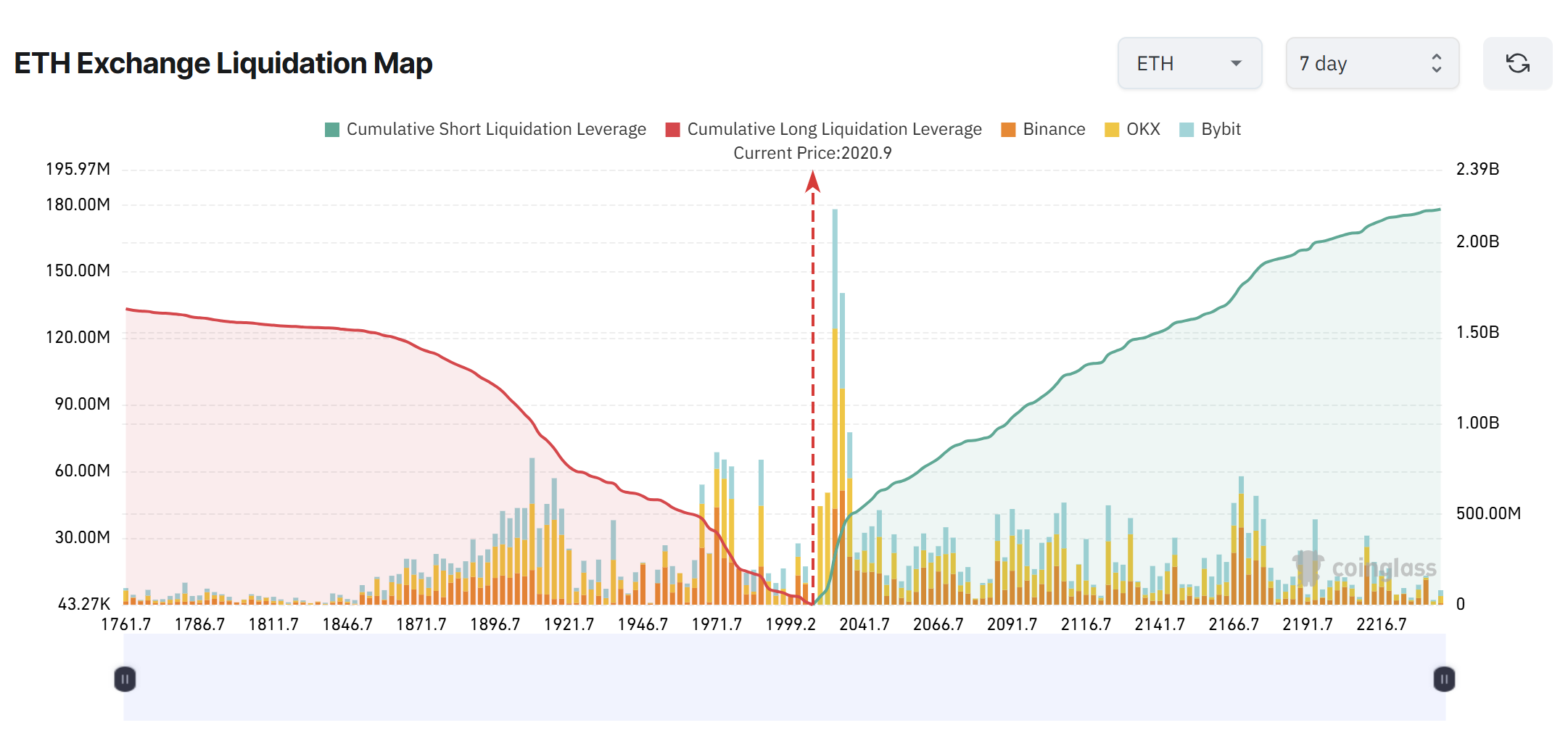
The seven-day liquidation data from CoinGlass shows a dense cluster of short positions above the current price. Roughly $273 million in cumulative short-liquidation leverage sits near $2,030.
Large concentrations of short liquidations often act as magnet levels for the price. A move into that zone may trigger forced buybacks from the overleveraged short positions, which may accelerate the upside volatility if tagged in quick succession.
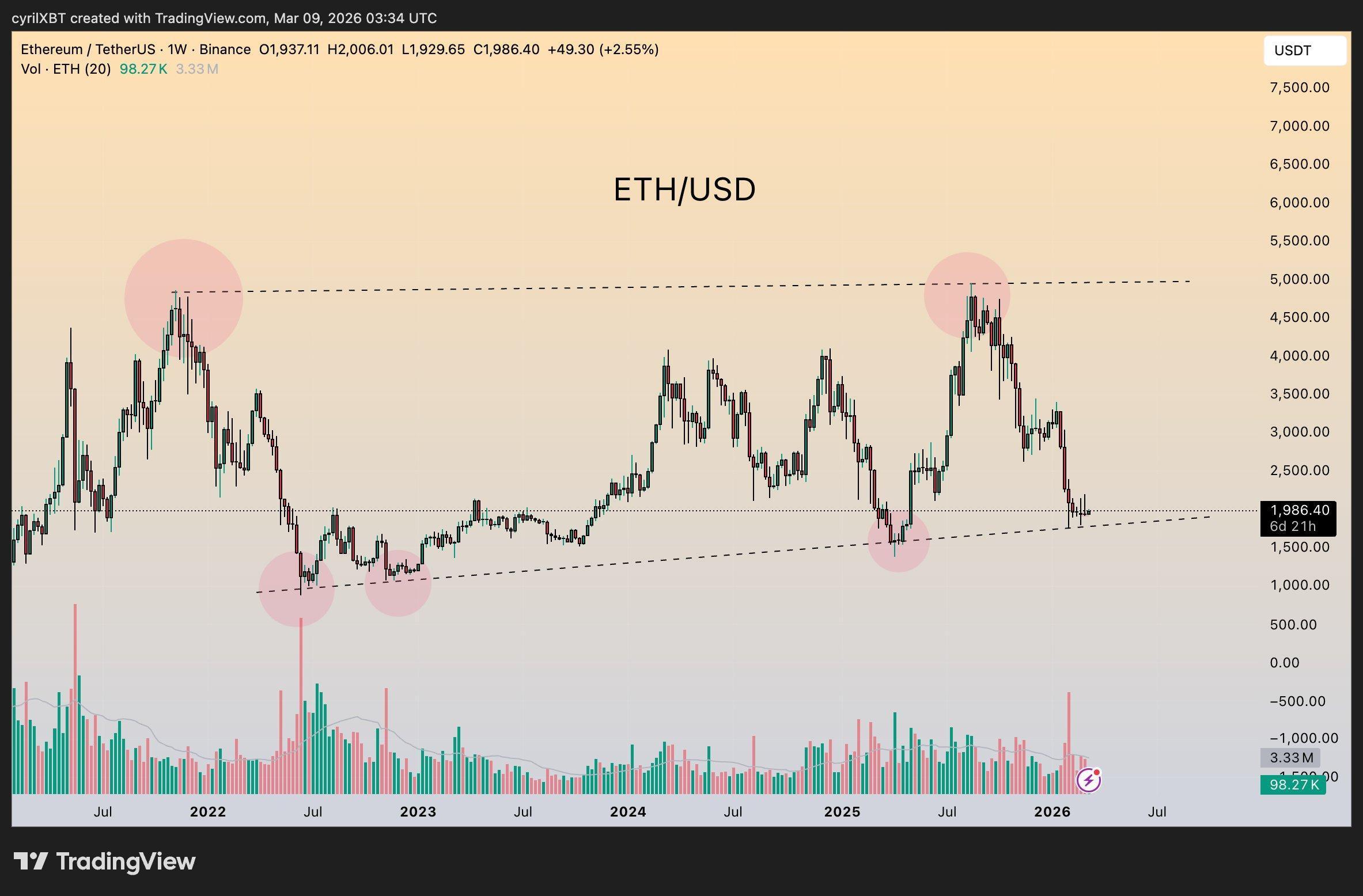
Crypto analyst Cyril-DeFi noted that ETH/USD is also testing a long-term ascending trendline that has supported the price several times since the last market cycle. The analyst said,
“Every time the price touched this support, it eventually led to a strong bounce. Right now, the $1.9k–$2k area looks like a key level that could determine the next move.”
Disclaimer: The content of this article solely reflects the author's opinion and does not represent the platform in any capacity. This article is not intended to serve as a reference for making investment decisions.
You may also like
AI demand drives TSMC to accelerate capacity expansion, 2nm monthly production aims for 120,000 wafers by year-end
According to reports, industry giants such as Apple, Nvidia, and AMD have collectively increased their orders by 10% to 20%, directly boosting TSMC's 2nm monthly production capacity to 120,000 wafers by the end of the year, which exceeds the previous estimate by more than 20% and brings forward the 2027 target by two years. For the first time in history, five factories will ramp up production simultaneously, and the annual compound growth rate of capacity from 2026 to 2028 will reach as high as 70%.
Long-term US Treasury Sell-off Continues! 10-Year Treasury Yield Breaks 5.2% Again, “AI Boom vs. Rising Financing Costs” Narrative Showdown Intensifies
On Monday, oil prices rose and US Treasury bonds were sold off again as former US President Donald Trump rejected Iran's latest proposal to reopen the Strait of Hormuz, heightening concerns about inflation.
Banks Have Been Earning Effortlessly from Idle Funds for Years—Will AI Agents Change Everything?
For years, banks have profited from customers' idle funds, but AI agents may be about to change this situation.
Goldman Sachs: US stocks are showing a "strong index, weak confidence" pattern; catch-up rally may become the main theme of the next phase
Goldman Sachs stated that the current U.S. stock market is showing an unusual pattern: while index performance is strong, investor confidence remains weak. This suggests that the market still has further upside potential, and stocks that previously lagged behind leading AI stocks may soon experience a catch-up rally.

Crypto prices
More


