
Crypto treasury inflows slow to the lowest since October 2024

Monthly inflows into digital asset treasury (DAT) companies have slowed to about $555 million, the lowest levels since October 2024, the month before the 2024 US election pump, according to data from DeFiLlama.
Inflows into digital asset treasury companies slipped to about $32.4 million ahead of the election, then rebounded to more than $12.3 billion following the results of the 2024 elections in the United States and a pro-crypto regulatory shift, DeFiLlama’s data shows.
Treasury inflows contracted in 2025 and remained well below $10 billion in monthly inflows until August 2025, before sharply falling again.
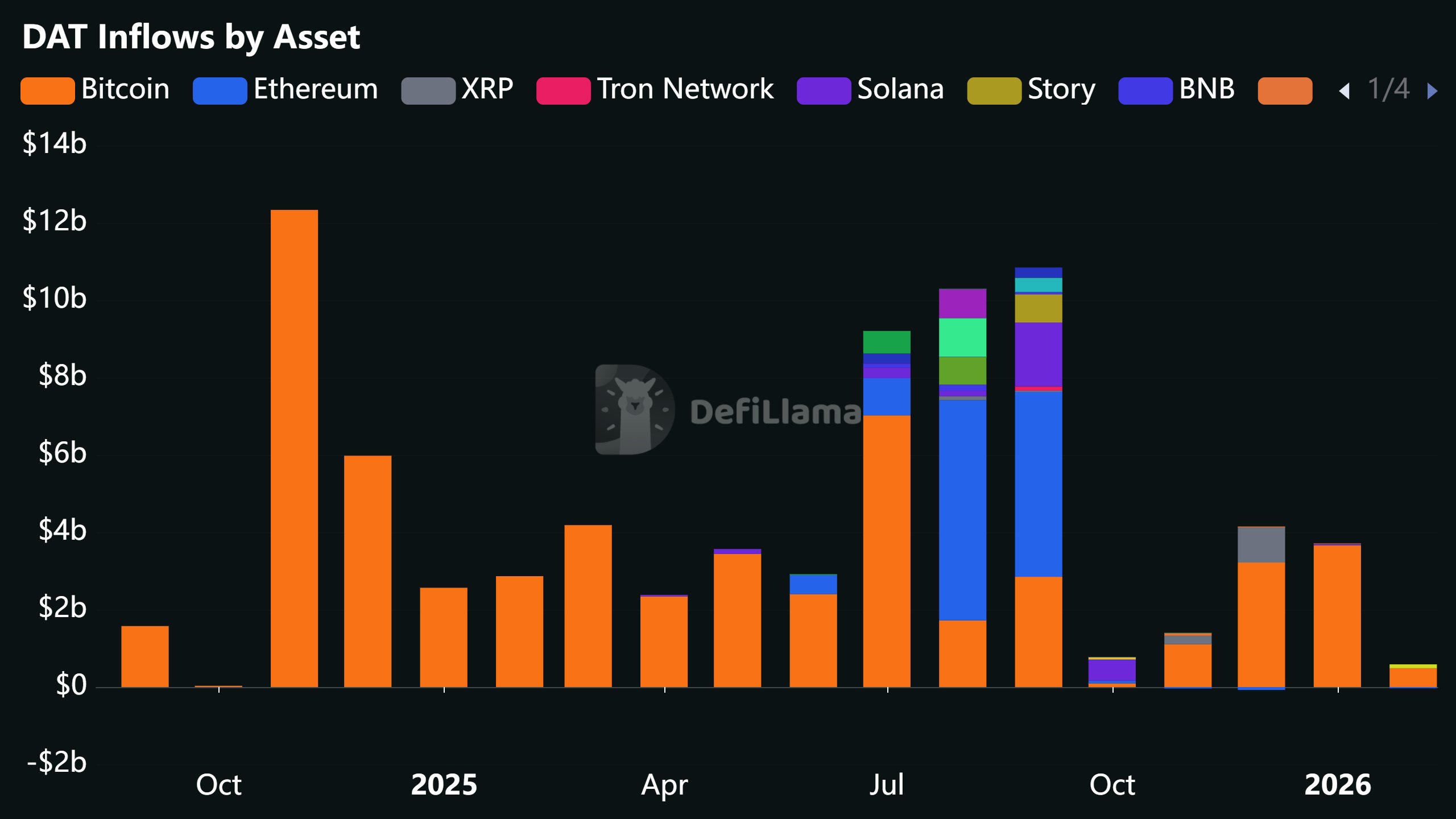
Digital asset treasury companies have faced a challenging business environment over the last year, which was made worse by the crypto market crash in October that kicked off a multi-month bear market and rolled back crypto prices to pre-election levels.
Related: Crypto treasury companies likely to consolidate in 2026: Crypto exec
Treasury companies face reinvention following market crash
Treasury companies must evolve their business strategies or risk stagnating, according to Patrick Ngan, chief investment officer of Zeta Network Group, a technology company.
“Corporate Bitcoin treasuries now need to show they can actually use the asset, not just warehouse it,” Ngan said.
Crypto treasury companies with an operating business that produces cash flow will outperform those that simply accumulate and hold crypto, he said.
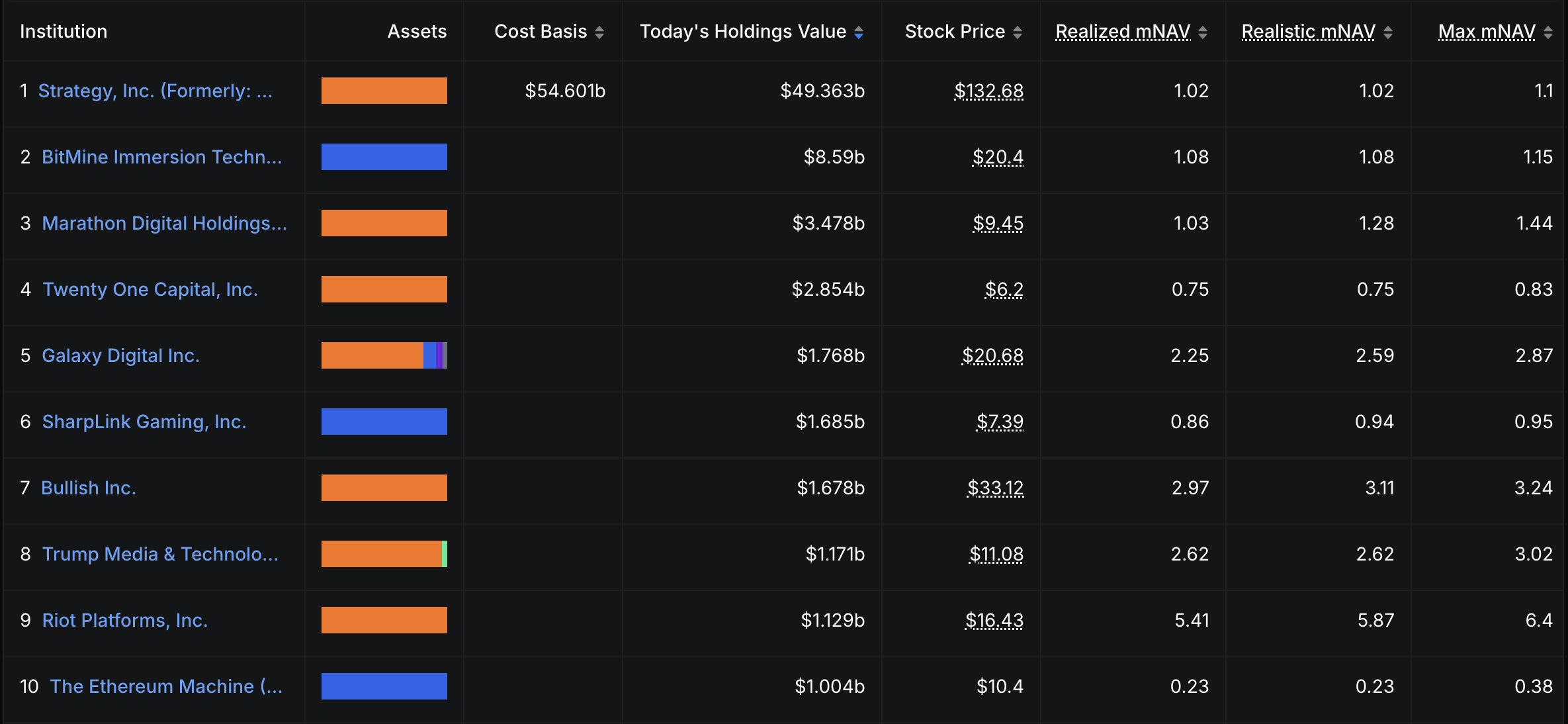
Treasury companies can generate revenue by staking or providing validation services to secure proof-of-stake blockchain networks, mining proof-of-work cryptocurrencies, lending in the decentralized finance (DeFi) space, and other unrelated businesses.
Real estate investor Grant Cardone last year expanded his multifamily housing fund strategy by combining real estate and Bitcoin (BTC) into hybrid digital asset treasury investment vehicles.
The fund benefits from the appreciation of the physical property, real estate tax advantages and rental income that can be funneled into additional BTC purchases, Cardone told Cointelegraph.
“If the company's just bitcoin, why am I investing in that company? Real estate is the best treasury company you can build because it's not a product that is discretionary — you have to buy housing,” he said.
Magazine: Big questions: Should you sell your Bitcoin for nickels for a 43% profit?
Disclaimer: The content of this article solely reflects the author's opinion and does not represent the platform in any capacity. This article is not intended to serve as a reference for making investment decisions.
You may also like
September New Jobs Expected to Drop to 90,000: Tonight’s Real “Bombshell” in Nonfarm Payrolls May Be Whether August Data Is Significantly Revised Down
Wall Street generally expects that new jobs added in September will drop to 90,000 and the unemployment rate will remain at 4.1%. The strong data in August was mainly boosted by unusual seasonal factors; the extent of their revision will directly affect perceptions of the strength of the September figures. As recent statements by Federal Reserve officials have pushed the probability of a rate hike in October down to 25%, market attention has shifted to long-term rates. Currently, systematic funds hold about $390 billion in global bond short positions. If the employment data unexpectedly disappoints, it could trigger severe market turbulence.
Retail Investors Stage a "Big Shrinking Circle"! JPMorgan Fund Flows Reveal Nvidia and SanDisk Attracting Funds Against the Trend, US Treasury ETF Returns to Retail Investors' Radar
Retail investors are concentrating their stock selections on a few targets related to computing power, storage, and large technology companies. On the bond side, another clear trend has emerged: amid continued pressure on long-term U.S. Treasury prices and persistently high yields, long-term Treasury ETFs saw a net inflow of $260 million during the week.

Strive stock closes at $30.11, up 2.38% as RSI flashes overbought signal
Macron calls for G7 coordination to address rising diesel prices, oil prices plunge in response, European stocks collectively rise
On October 2 local time, French President Macron called on the G7 to take coordinated action to avoid implementing export restrictions and jointly curb the rise in fuel prices. During a conference call among EU member country governments on Friday, parties discussed a proposal put forward by France: European countries would release 50 million barrels of diesel, and at the same time, International Energy Agency members would release 50 million barrels of crude oil.
Crypto prices
More


