
Whale loses $8.2M trying to squeeze thin liquidity ARC market on Lighter

A large crypto trader lost roughly $8.2 million after a leveraged bet on the ARC perpetuals market unraveled on the decentralized derivatives platform Lighter, forcing the exchange to tap its backstop liquidity and trigger auto-deleveraging to manage risk.
In a series of posts on X, the platform explained that the whale built a very large long position over several days, pushing total open interest in the ARC (ARC) market to about $50 million, while roughly 600 traders and market makers took the opposite side.
The trade began to fail when ARC’s price dropped around 6:00 pm ET on Wednesday. About $2 million of the position was liquidated on the order book, and the remaining position was moved into Lighter’s liquidity provider pool (LLP), where it was handled under a high-risk strategy category.
The platform then activated auto-deleveraging (ADL), meaning some profitable short traders were partially closed so the system could safely unwind the position. At one point, the LLP briefly absorbed about 200 million ARC, worth roughly $14.7 million, before the position was reduced further as prices continued falling.
Related: How South Korea is using AI to detect crypto market manipulation
Risk caps limit LP losses to $75,000
Even with the large liquidation, losses to liquidity providers were limited. Lighter said only about $75,000 was affected because the ARC market was isolated in a separate risk bucket rather than exposing the exchange’s entire liquidity pool. Short traders who held positions against the whale were profitable.
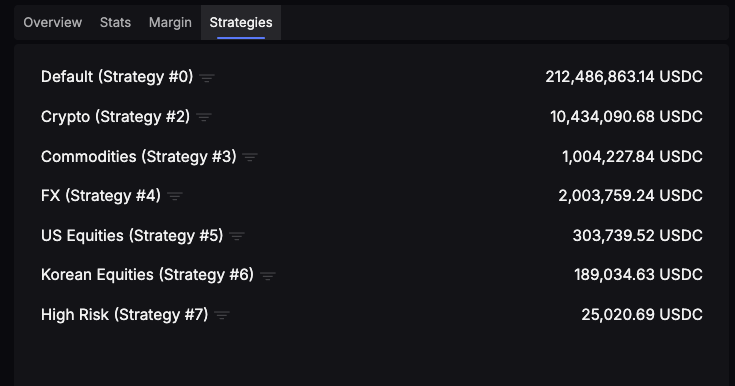 LLP Strategies limit downside while still maintaining the upside. Source:
Lighter
LLP Strategies limit downside while still maintaining the upside. Source:
Lighter
“In the end, the big long trader lost around 8.2M USDC (USDC), LLP lost 75k, and the short traders who took the risk of betting against this position were profitable,” Lighter wrote.
Following the incident, Lighter added new safeguards to the market. In a pop-up message on its website, the platform said it introduced a $40 million open interest cap on ARC and moved the pair under a capped liquidity strategy with approximately $100,000 USDC in allocated capital. If that liquidity is exhausted, the system now automatically transitions to ADL to close risk.
The exchange also said similar caps may be applied to other assets.
Related: How pig-butchering crypto scams turn trust into a financial weapon
Manipulation concerns on decentralized platforms
The incident comes amid concerns over price manipulation on decentralized trading platforms. In August last year, four whales were accused of manipulating the price of Plasma (XPL) token on Hyperliquid after the asset jumped about 200% to above $1.80 within minutes.
In June, DeFi protocol Resupply also suffered a security breach in its wstUSR market, resulting in roughly $9.6 million in losses after an attacker manipulated prices through its integration with the synthetic stablecoin cvcrvUSD.
Magazine: Bitcoin may take 7 years to upgrade to post-quantum — BIP-360 co-author
Disclaimer: The content of this article solely reflects the author's opinion and does not represent the platform in any capacity. This article is not intended to serve as a reference for making investment decisions.
You may also like
Sui Ecosystem Activity Expands Across DeFi
Cboe and S&P DJI discuss tokenized options to boost onchain derivatives
Silver price retreats as rising US yields, Hormuz tensions bolster US Dollar

U.S. August JOLTS job openings fall to a 5-month low, missing expectations for the third consecutive month
In August, job openings in the United States fell to 7.079 million, below economists' expectations of 7.228 million. Job vacancies in the real estate and rental sector were only 50,000, nearly halved from the previous month. The quit rate remained at 1.9%, matching the lowest level since 2020. The ratio of job vacancies to unemployed persons dropped to 1.0. Analysts have noted that net hires implied by the JOLTS report have been lower than the nonfarm payroll report for three consecutive months, indicating a significant downside risk for this Friday’s nonfarm payroll data.
Crypto prices
More


