
Longest Ether dip since 2022 ignored by whales: What’s next for ETH?

Ether (ETH) whale activity on a major exchange has slowed since the start of 2026, with roughly 2 million ETH traded in large-sized transactions over the past 45 days.
ETH is currently in the midst of its worst weekly losing streak since 2022, with exchange flow trends and futures market liquidation data impacting investor expectations for Ether’s short and long-term price direction in the broader market.
Ether whale order size hints at fading participation
CryptoQuant data shows that the average ETH whale sell orders on Binance have fallen to around 1,350 ETH in recent weeks, down from roughly 2,250 ETH in early January. Assuming 15 to 35 whale-sized executions per day, the cumulative gross sell-side turnover since Jan. 8 is estimated at around 1.8 to 2 million ETH over the past 45 days.
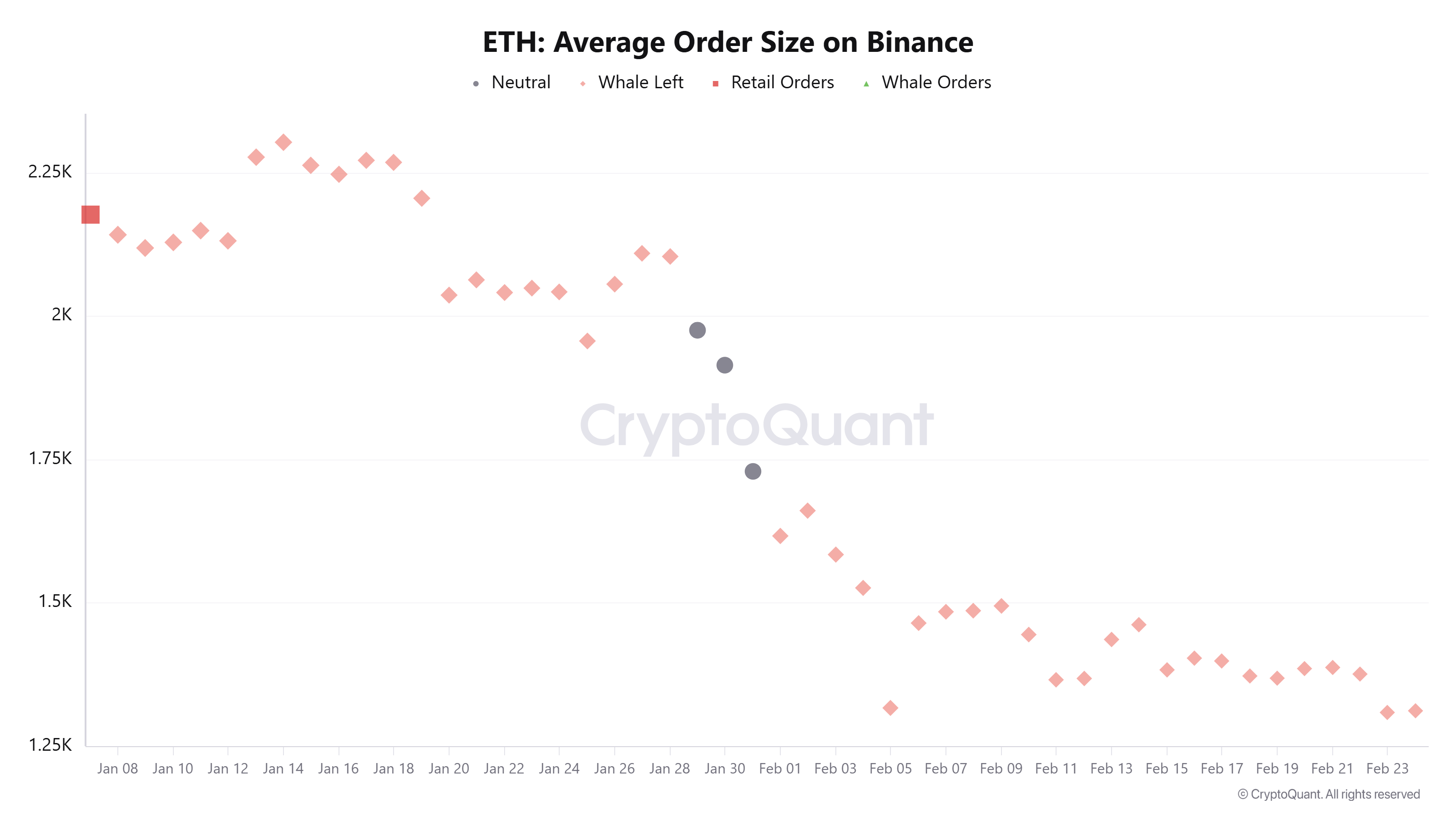 ETH Average order size on Binance (whale left). Source: CryptoQuant
Using an average price of $2,400, this activity equates to roughly $4.3 billion to $4.8 billion in large-order executions. The figure reflects gross traded volume, not confirmed net outflows, as part of the flows may relate to hedging or liquidity provision within the derivatives market.
The decline in the average order size points to a “gradual disengagement” from larger participants. Smaller traders continue to transact at stable volumes, while bigger players are reducing direct interaction with the order books.
This shift indicates a temporary thinning of market depth. With fewer large resting orders, ETH’s capacity to absorb sharp price imbalances narrows in the short term.
Parallel to exchange flows, ETH accumulation addresses added more than 2.5 million ETH in February as the price fell about 20%. Total holdings climbed to 26.7 million ETH from 22 million at the start of 2026, signaling steady demand beneath the surface.
Related: Ethereum price drops to $1.8K as data suggests ETH bears are not done yet
Will Ether break its longest bearish streak since 2022?
Ether is now in its sixth straight week of losses, marking the longest uninterrupted weekly decline since the 10-week drawdown between March 2022 and June 2022. That earlier stretch unfolded during a broader bear market and led to a cycle bottom before price stabilized.
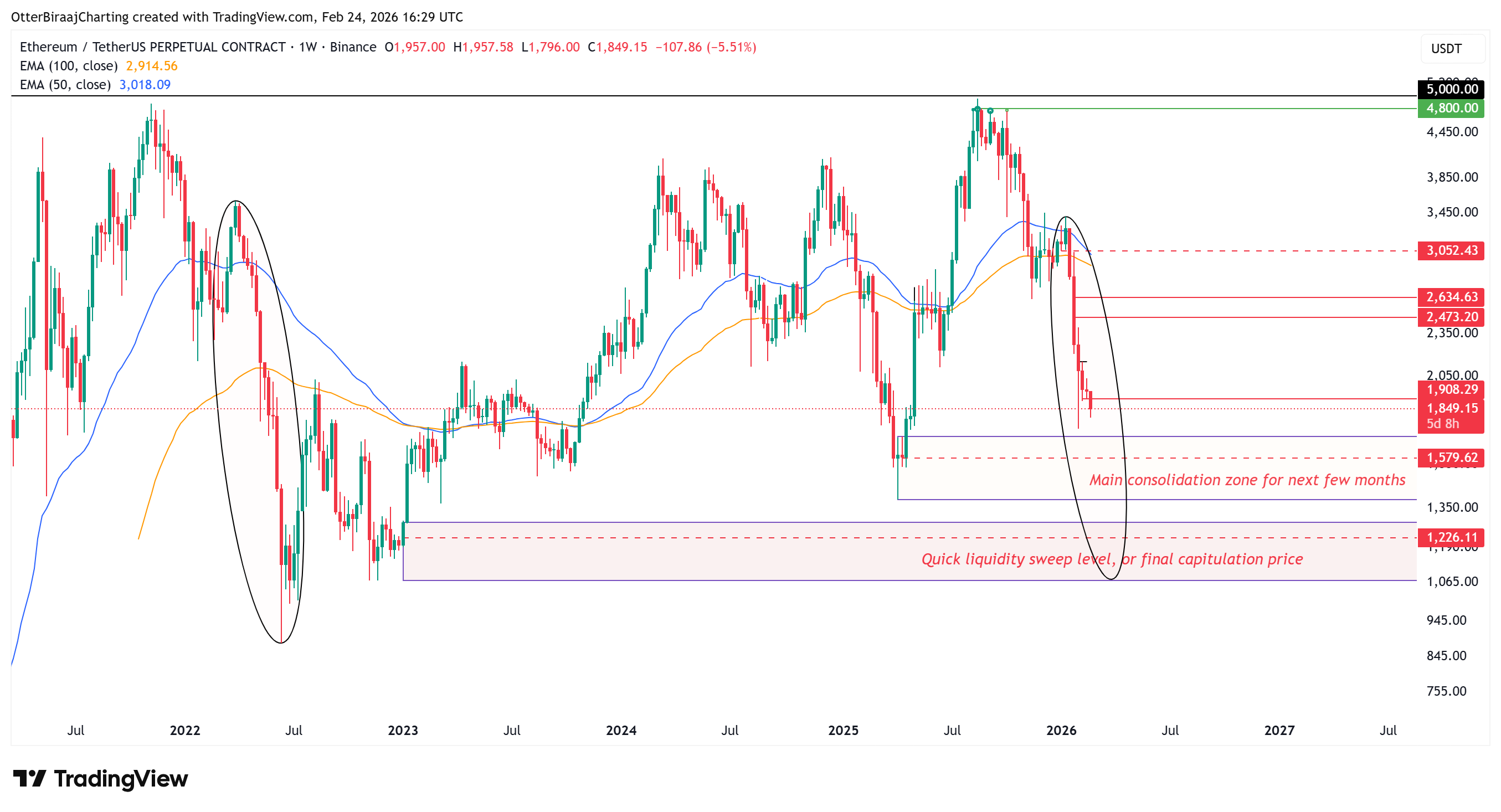 Ether one-week analysis. Source: Cointelegraph/TradingView
While the current pullback is not as long, the streak highlights sustained selling pressure and weakening momentum on the higher timeframe.
Historical market cycle data suggests that if the decline continues, a broad weekly demand zone between $1,384 and $1,691 may come into focus, an area that previously acted as accumulation during the early stages of the rally in 2023.
Futures market liquidation data shows more than $2 billion in short positions clustered around $2,000. This creates a dense liquidity pocket that may act as the near-term magnet for Ether price.
On the downside, approximately $682 million in long positions remain at risk if Ether drops to $1,600, indicating thinner liquidity compared to the upside cluster.
There is still potential for a V-shaped rebound from current levels, citing signs of underlying demand in the current structure. For now, data suggests that the $2,000 liquidation band remains the next key resistance to break.
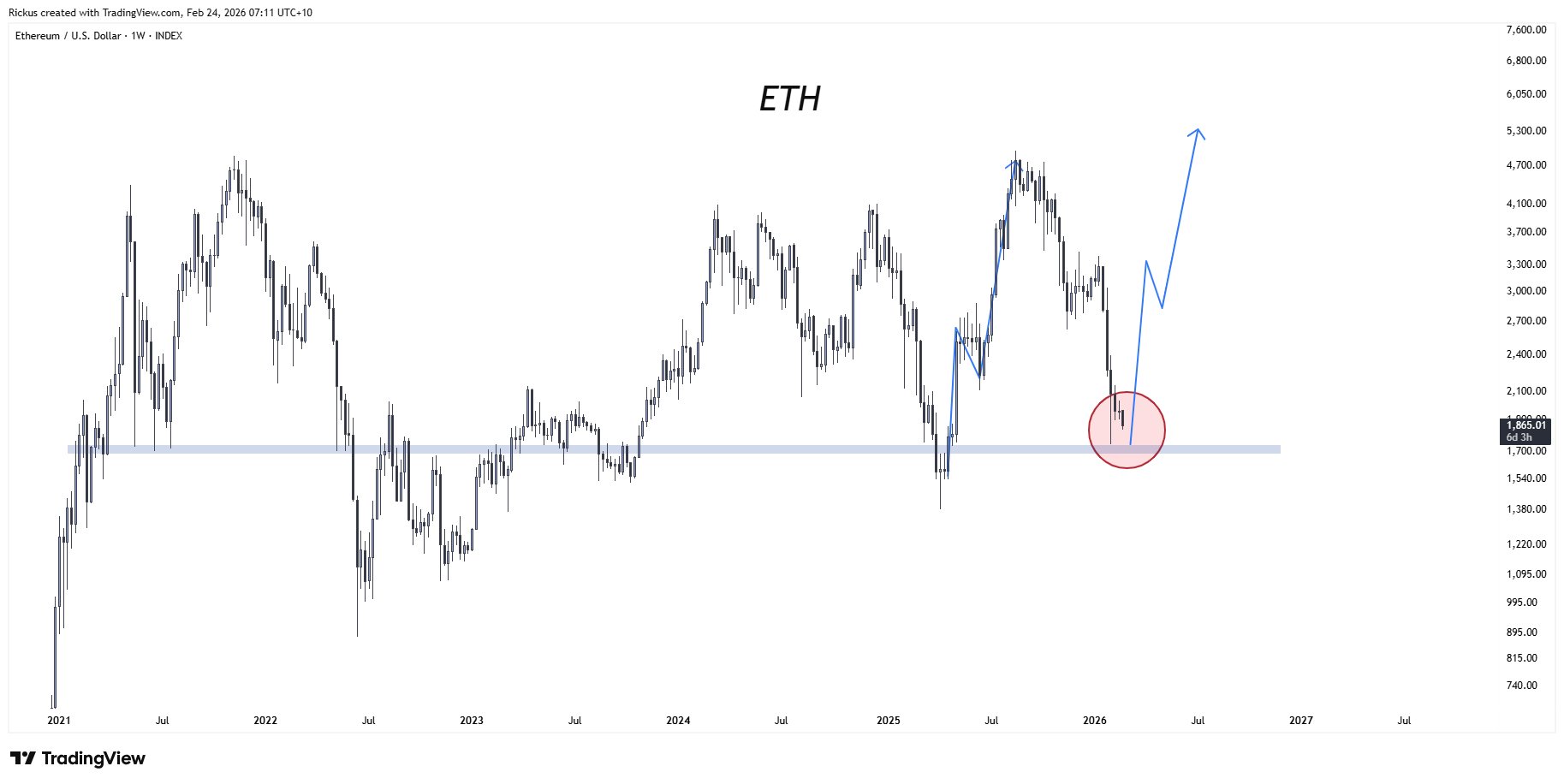 Ether analysis by RickUntZ. Source: X
Related: Ethereum Foundation starts staking ETH as client diversity concerns persist
Disclaimer: The content of this article solely reflects the author's opinion and does not represent the platform in any capacity. This article is not intended to serve as a reference for making investment decisions.
You may also like
Dell executive: "Agent AI" is different this time, key components (mainly memory and HDD) shortages may last for more than 5 years
Dell Technologies Chief Operating Officer Jeff Clarke stated that proxy AI, by taking on more tasks, continues to drive up computing and storage demands, making this AI infrastructure cycle distinct from traditional hardware upgrade cycles. By 2030, data center computing power is expected to increase by 200 GW, inference token generation will grow 87-fold, and infrastructure demand is likely to continue expanding.
Morgan Stanley Backs Meta (META.US): Muse Ecosystem Continues to Expand, VR Glasses Expected to Become a New Growth Point in 2027
Morgan Stanley maintains an "Overweight" rating on Meta with a target price of $775, and continues to list it as a top pick.
Essay: The Next Step in AI Investment—Who Can Turn Computing Power into Profit?
Meta (META.US) surged 36% in September: Muse validates AI strategy, market cap targets $2 trillion
Meta's stock is on track to achieve its best monthly performance since July 2013, and is only about a 1% increase away from joining the $2 trillion market cap club.
Crypto prices
More


