
Bitcoin price may rebound to $85K as CME 'smart money' slashes shorts

Bitcoin (BTC) bottomed after CME futures speculators turned net bullish in April 2025. A similar positioning shift is resurfacing in 2026, raising the odds of a BTC price recovery in the coming weeks.
Key takeaways:
Smart money reduced its bearish bets on Bitcoin in the past month.
Such a sentimental shift preceded a 70% BTC price rally in 2025 and 190% price gain in 2023.
BTC futures, technicals hint at $85,000 price target
Non-commercial Bitcoin futures traders cut their net position to about -1,600 contracts from roughly +1,000 a month earlier, according to the CFTC Commitment of Traders (COT) report published last week.
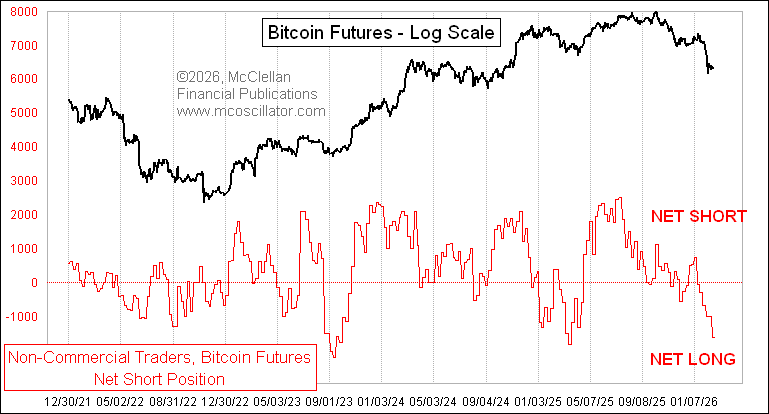 Bitcoin futures net short position. Source:
CFTC Commitment of Traders (COT)
Bitcoin futures net short position. Source:
CFTC Commitment of Traders (COT)
In practice, this means that large speculators, including hedge funds and similar financial institutions, have shifted from net short to long, with bulls outnumbering bears on the CME.
The rapid net-short unwind implies that “smart money” added longs “with some urgency,” said analyst Tom McClellan, while pointing to two similar past swings that preceded Bitcoin price bottoms.
For instance, BTC’s price gained around 70% after a sharp dip in CME Bitcoin futures net shorts in April 2025. In 2023, BTC price rose by over 190% under similar futures market conditions.
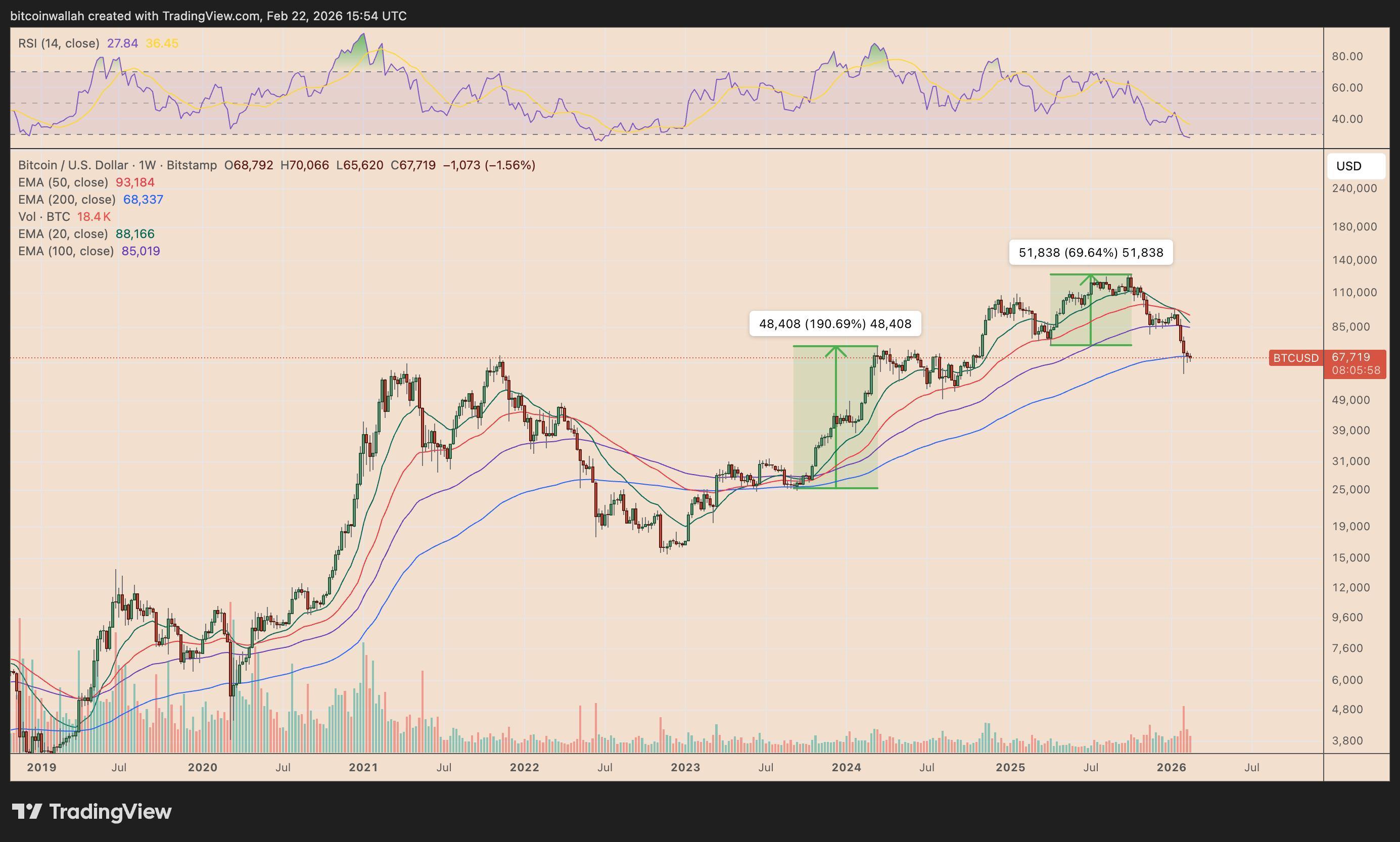 BTC/USD weekly price chart. Source: TradingView
As of February, the smart money swing is flashing once again, just as Bitcoin defends its 200-week exponential moving average (200-week EMA, the blue line), which has acted as a bear-market floor in most major drawdowns of the last decade.
On Sunday, BTC’s 200-week EMA was hovering around near $68,350.
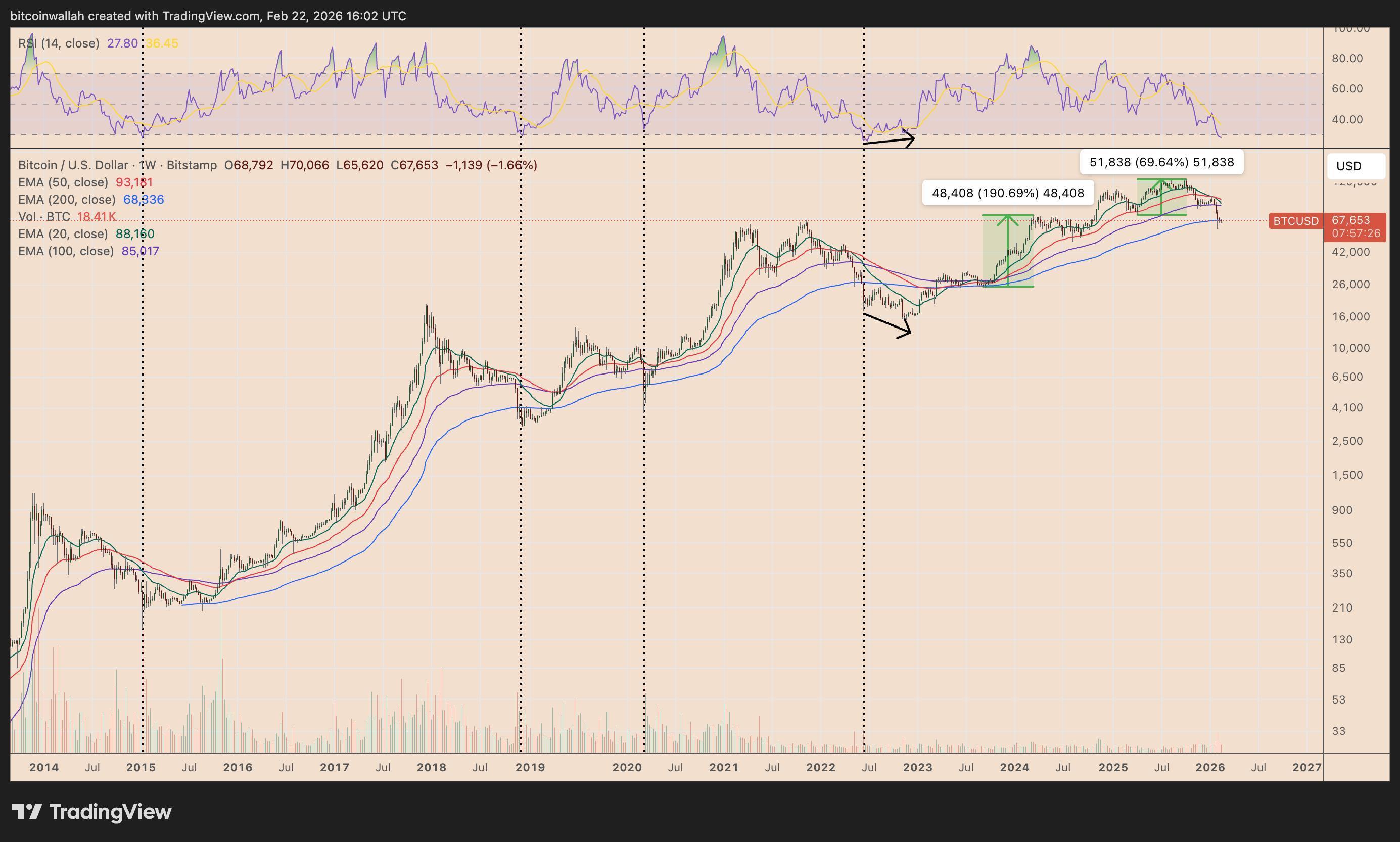 BTC/USD weekly price chart. Source: TradingView
The last time Bitcoin traded around this moving average during deep sell-offs (in 2015, 2018 and 2020), it eventually marked the end of the downtrend and the start of a new recovery phase.
Related: Bitcoin historical price metric sees $122K 'average return' over 10 months
Bitcoin’s weekly relative strength index (RSI) remains in oversold territory, a sign that selling pressure is nearing exhaustion.
That further raises Bitcoin’s odds of recovering in the coming weeks. A decisive rebound from the 200-week EMA could trigger a run-up toward the 100-week EMA (the purple wave) at roughly $85,000 by April.
Bitcoin bulls aren’t out of the woods yet
McClellan cautioned that the smart money shift is “a condition, not a signal,” meaning Bitcoin could still slide from its current price levels before a durable low forms.
That may trigger the 2022 scenario, wherein BTC plunged by over 40% after breaking below its 200-week EMA despite similar oversold conditions.
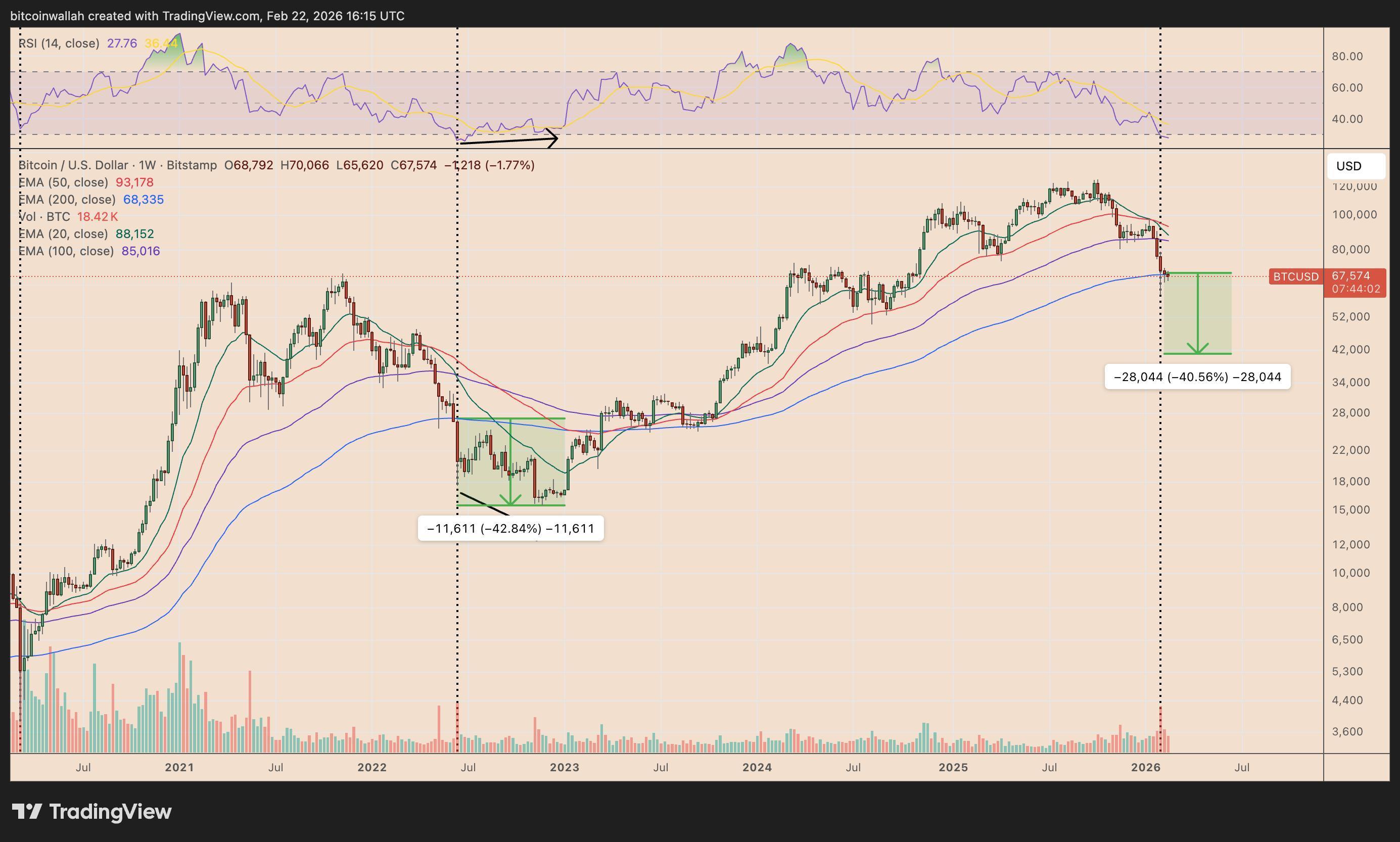 BTC/USD weekly price chart. Source: TradingView
A repeat of that 40% plunge in 2026 could result in BTC prices falling toward $40,000, or 60% from its record high of around $126,270.
Some analysts, including Kaiko, also see BTC potentially bottoming around $40,000–$50,000 based on its “four-year cycle” framework.
Disclaimer: The content of this article solely reflects the author's opinion and does not represent the platform in any capacity. This article is not intended to serve as a reference for making investment decisions.
You may also like
Gold bounces off eight-week low; not out of the woods amid rising Fed hike bets
The "Endgame" of De-globalization: A Historic Battle for Metals!

Consulting giant Bain sounds the alarm: The global AI industry needs to achieve $6 trillion in annual revenue to sustain the “cash burn” of data centers
Bain stated that by 2031, the global artificial intelligence (AI) industry needs to achieve annual revenue of $6 trillion in order to justify the massive capital investment currently being made in building data centers worldwide.
Samsung Electronics' 2nm yield approaches 60%, aiming at TSMC to compete for tech giants' orders
The yield rate of Samsung Electronics' foundry division's 2nm process has increased to nearly 60%, a significant improvement from around 30% in mid-2023. After stabilizing the yield, Samsung has shifted its engineering focus to power consumption and heat dissipation optimization, and is accelerating the development of the more powerful second-generation process, SF2P, aiming for mass production within the year. Strategically, Samsung plans to supply 2nm chips to Tesla next year, using this as a stepping stone to enter the large-scale tech client market.
Crypto prices
More


