
Ether holds $2K, but will $242M spot ETH ETF outflow reignite price downside?

Key takeaways:
Institutional demand for Ether is cooling as investors shift toward the safety of short-term US government bonds.
High interest rates and rising ETH supply make the current staking yield less attractive for long-term holders.
Ether (ETH) price has failed to sustain levels above $2,150 since Feb. 5, leading traders to fear a further correction. Investor sentiment deteriorated following outflows from Ether exchange-traded funds (ETFs) and increased demand for put (sell) options.
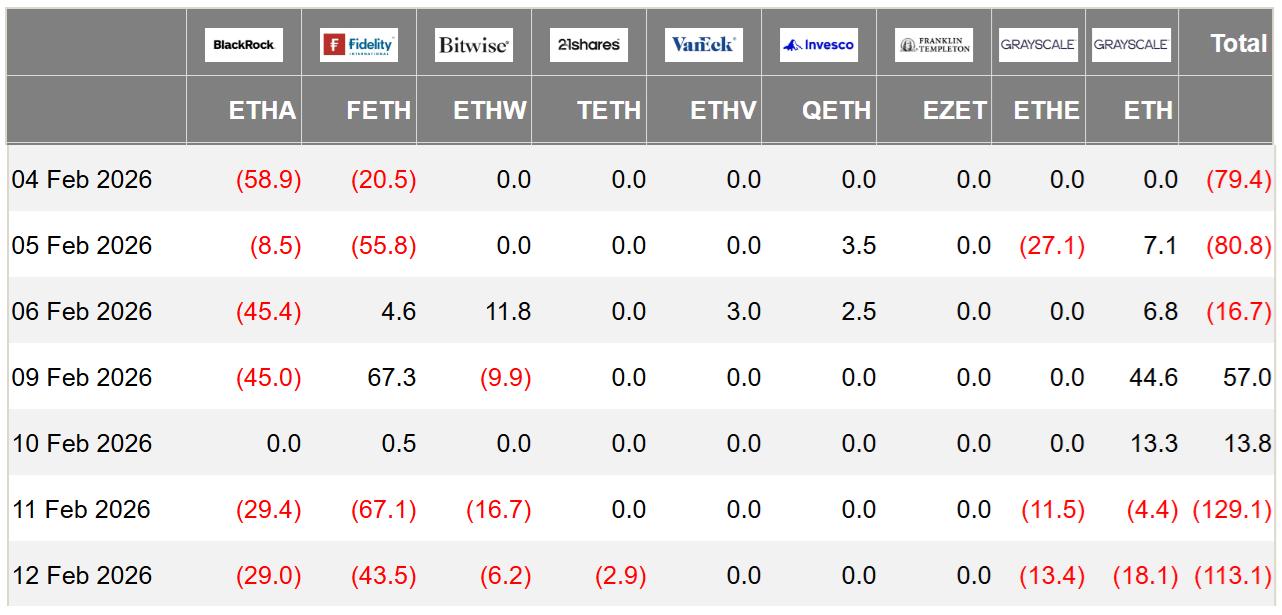 US-listed Ether ETFs daily net flows, USD million. Source: Farside Investors
US-listed Ether ETFs saw $242 million in net outflows between Wednesday and Thursday, reversing the trend from the prior two days. The institutional demand that followed the 20% Ether price recovery after the $1,744 bottom on Feb. 6 has faded as investors noted inconsistency in US economic growth—evident by the growing demand for short-term US government bonds.
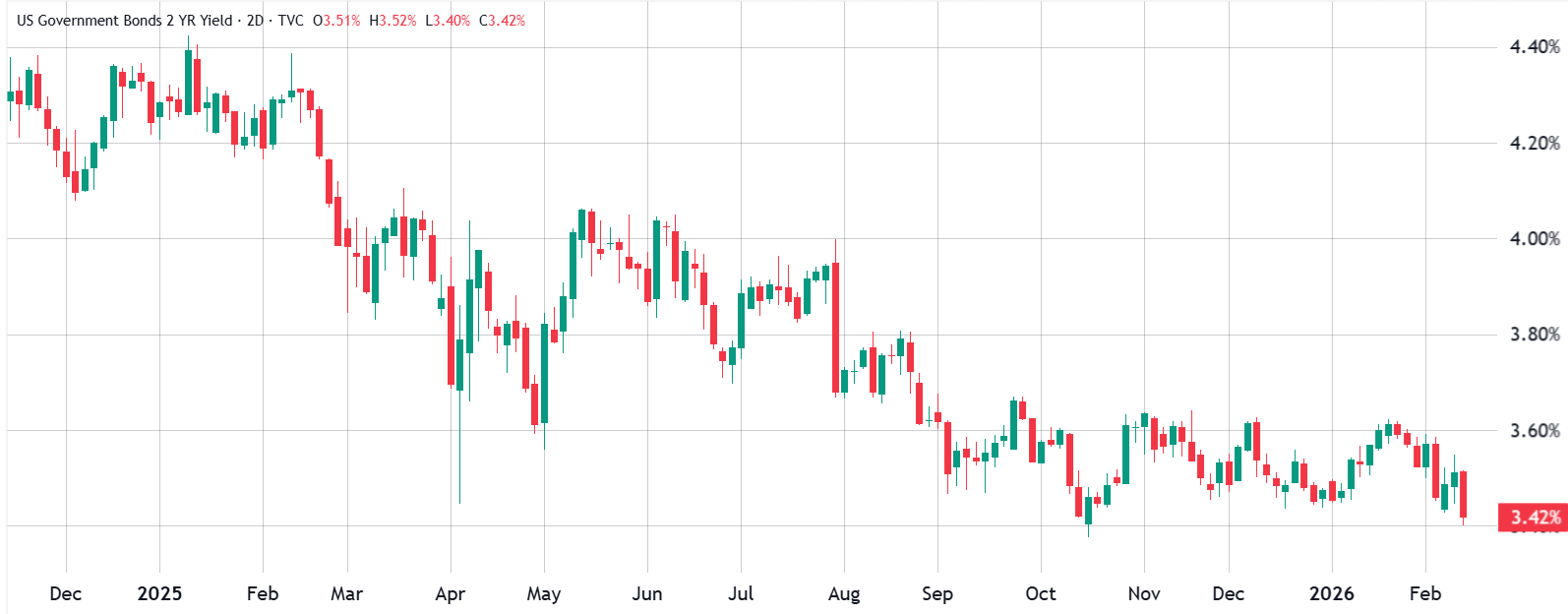 US 2-year Treasury yield. Source:
Yields on the US 2-year Treasury declined to 3.42% on Friday, nearing the lowest levels seen since August 2022. The higher demand for government-backed debt reflects traders’ expectations of further interest rate cuts by the US Federal Reserve (Fed) throughout 2026. Signs of economic stagnation reduce inflationary risks, paving the way for expansionist measures.
Regardless of macroeconomic trends, Ether has underperformed the broader cryptocurrency market, causing traders to question if Ethereum still has what it takes to compete against networks that offer base layer scalability and faster onchain activity.
Traders fear that ETH price is destined for more downside, but data seems to reflect the recent price weakness rather than the anticipation of a further crash.
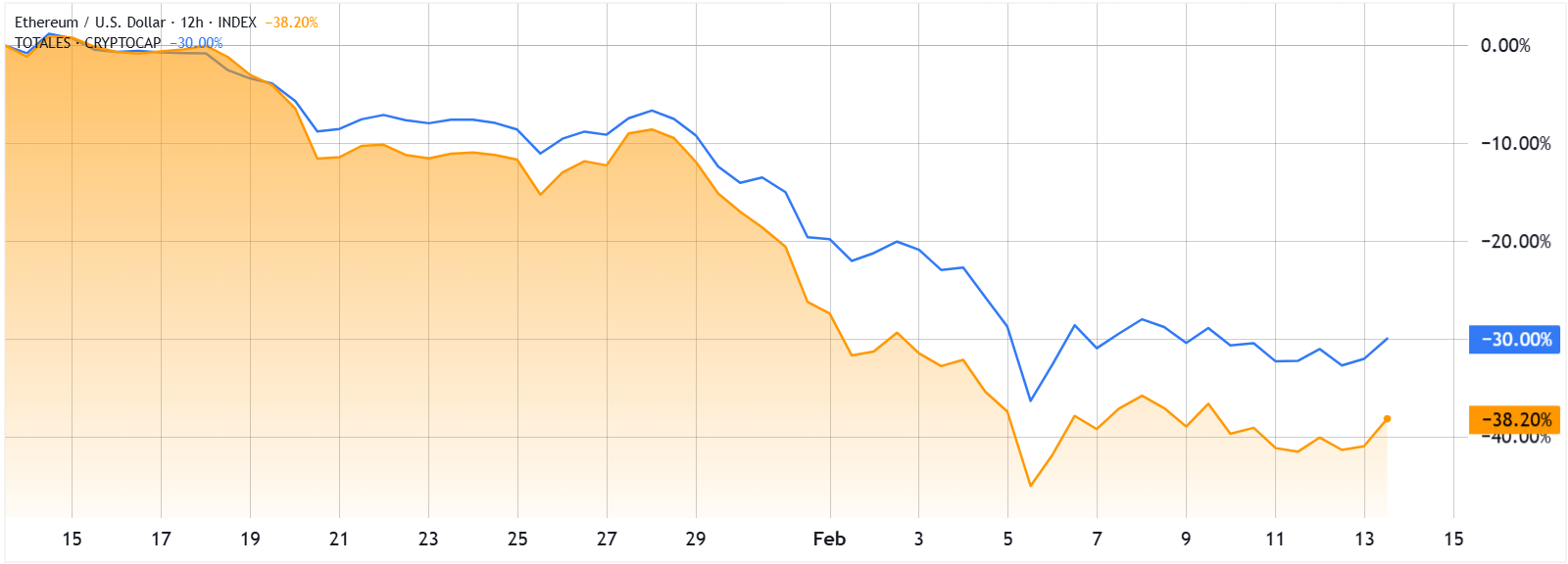 ETH/USD (orange) vs. total crypto capitalization (blue). Source: TradingView
Ether price declined 38% in 30 days, which negatively pressures the network’s fees and ultimately reduces incentives for staking. Long term holding is a critical component for sustainable price growth, and the current 2.9% staking yield is far from appealing, considering the US Fed target rate stands at 3.5%. Furthermore, the ETH supply is growing at an 0.8% annualized rate.
ETH derivatives metrics reflect traders' fear of further price drops
Professional traders are not comfortable holding downside price exposure according to ETH derivatives metrics, which further reinforces the bearish sentiment.
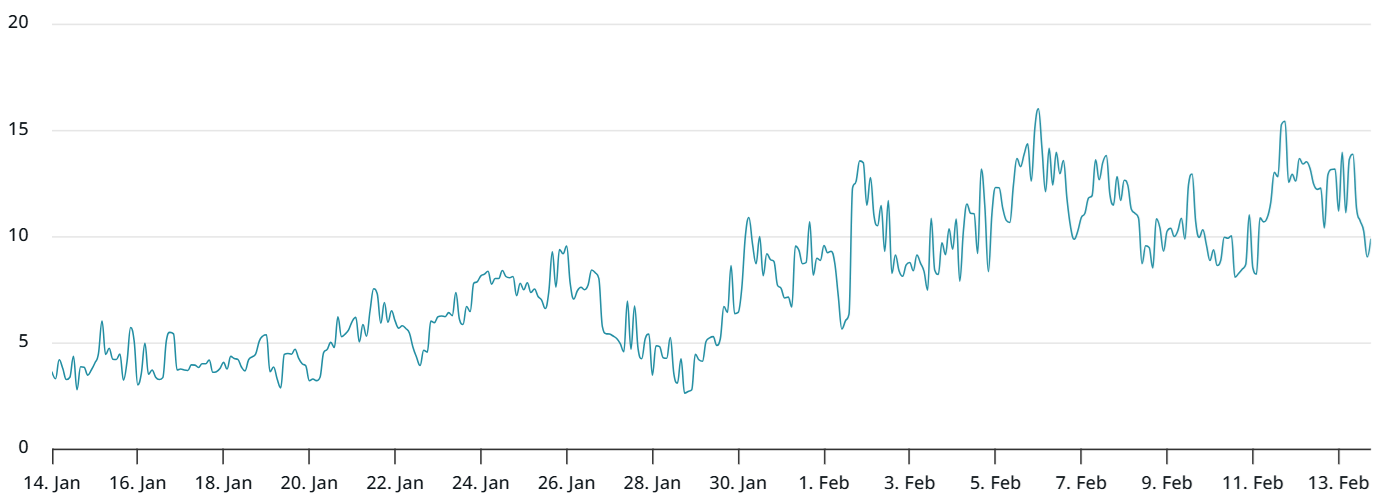 ETH 30-day options delta skew (put-call) at Deribit. Source:
The ETH options delta skew stood at 10% on Friday, meaning put (sell) options traded at a premium. The increased demand for neutral-to-bearish strategies causes the indicator to move above the 6% threshold, which has been the norm for the past two weeks. Traders’ mood reflects a six-month bear market as ETH trades 58% below its all-time high.
Related:
From a broader perspective, a mere $242 million in Ether ETF outflows represents less than 2% of the total $12.7 billion in assets under management; hence, traders should not assume that ETH price has entered a death spiral. Investors' morale will eventually recover as the network remains the absolute leader in Total Value Locked (TVL).
Traders’ attention will likely remain centered on corporate earnings results and whether the US government will be able to refinance its debt amid growing global socio-economic tensions. Under this scenario, ETH price will likely remain pressured regardless of onchain and derivatives metrics.
Disclaimer: The content of this article solely reflects the author's opinion and does not represent the platform in any capacity. This article is not intended to serve as a reference for making investment decisions.
You may also like
Why suspend RMPs? Explanation from New York Fed SOMA Manager Perli
"Agent vs US Treasury" — Who Will Dominate the US Stock Market?
The wave of AI Agents and US Treasury yields are splitting the US stock market into two worlds: Meta's release of the Muse model boosted its market value by $220 billion in a single week, propelling the Nasdaq's standout performance; however, excluding AI stocks, the S&P 500 actually fell 1% this week, with the number of new lows on the New York Stock Exchange surpassing new highs for nine consecutive days, signaling the near end of "breadth trading." Goldman Sachs bluntly stated that this is a "frustrating cat-and-mouse game" between the stock market and interest rates—any breakout can be snuffed out by the bond market at any time, so equity holders must short US Treasury bonds to hedge simultaneously.
Hopes for a ceasefire between the US and Iran encounter obstacles again! Trump rejects Iran's seven-day proposal; inflation pressure under $100 oil prices remains difficult to ease
Trump rejects a ceasefire with Iran, and it is expected that bombings will occur again after the midterm elections. The president doubts whether Tehran will meet his demands.
Tesla ramps Optimus production 10-fold but robot hands are holding Elon back
Crypto prices
More


