
Bitcoin's price fell from $126,000 to $60,000 through derivatives trading, not spot selling.

Bitcoin’s value plunged from $126,000 to $60,000 in four months, driven by synthetic derivatives trading and leverage cascades, not major news, impacting global markets.
This decline highlights vulnerabilities in derivatives markets, causing concern over regulatory oversight and institutional stability in the cryptocurrency ecosystem.
Bitcoin (BTC) experienced a drastic price decline from approximately $126,000 to $60,000 over a four-month period, largely attributed to synthetic derivatives trading. Observers noted the absence of major news events or spot selling as catalysts. Bull Theory, an active market analyst, stated,
“Bitcoin has now crashed -53% in just JST +0.00% 120 days without any major negative news or event and this is not normal.”
The crash primarily affected Bitcoin with negligible mentions of Ethereum ETH +0.00% or other altcoins.
On-chain data demonstrated a complex market response, with small holders accumulating BTC while mid-sized holders distributed slightly. The BTC Puell Multiple at 0.6 indicated statistical cheapness, suggesting potential long-term recovery. Despite the turmoil, no official comments or strategy shifts from exchange leaders, such as Binance’s CZ, were reported. The crash is described as mechanical rather than a classic cycle driven by on-chain spot flows, highlighting the derivatives’ role.
This price fluctuation underscores derivatives trading influences in contrast to spot selling dynamics. While retail investor panic was notably absent, the potential for regulatory scrutiny exists. Policymakers and analysts may reconsider current frameworks to address derivative-related volatility. This situation highlights the evolving nature of cryptocurrency markets and the importance of monitoring synthetic instruments’ impact.
Disclaimer: The content of this article solely reflects the author's opinion and does not represent the platform in any capacity. This article is not intended to serve as a reference for making investment decisions.
You may also like
Key Developments in Anthropic IPO: Plans to Allow Existing Shareholders to "Cash Out," Potential Lockup Extension, Expected Listing as Early as Late September
According to reports, Anthropic is considering allowing existing shareholders to sell a portion of their shares in the IPO while also exploring a lock-up period longer than 180 days. This aims to meet some liquidity needs of early investors and employees, while controlling the supply and price volatility of shares after the listing. The company plans to publicly disclose its prospectus after the US Labor Day on September 7, and hold an Investor Day in mid-September. Prediction markets indicate that the probability of the company completing its IPO before October has risen to 86%.
"New Federal Reserve News Agency": Bessent's frequent interventions test the boundaries of Federal Reserve independence
According to The Wall Street Journal reporter Nick Timiraos, U.S. Treasury Secretary Yellen is gradually intervening in the Federal Reserve’s traditional policy domain by expanding long-term Treasury buybacks and suppressing yields, sparking concerns about central bank independence. The timing of these moves is abrupt and has been criticized as "price management," adding pressure to the existing interest rate disagreements within the Federal Reserve. This approach also undermines Fed Chair Powell’s policy framework, which relies on obtaining real signals from market prices.
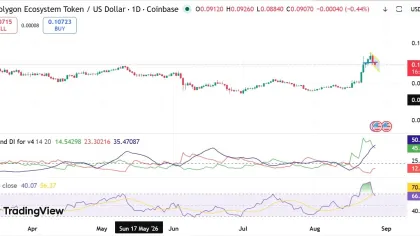
Polygon loses 12% amid intense selling pressure: Can POL redeem itself?
Goldman Sachs’ non-AI S&P 500 index outperforms regular index since June
Crypto prices
More


