
The artificial intelligence (AI) boom and the demand for computing resources to train models offered Bitcoin miners a new lifeline amid declining miner rewards.
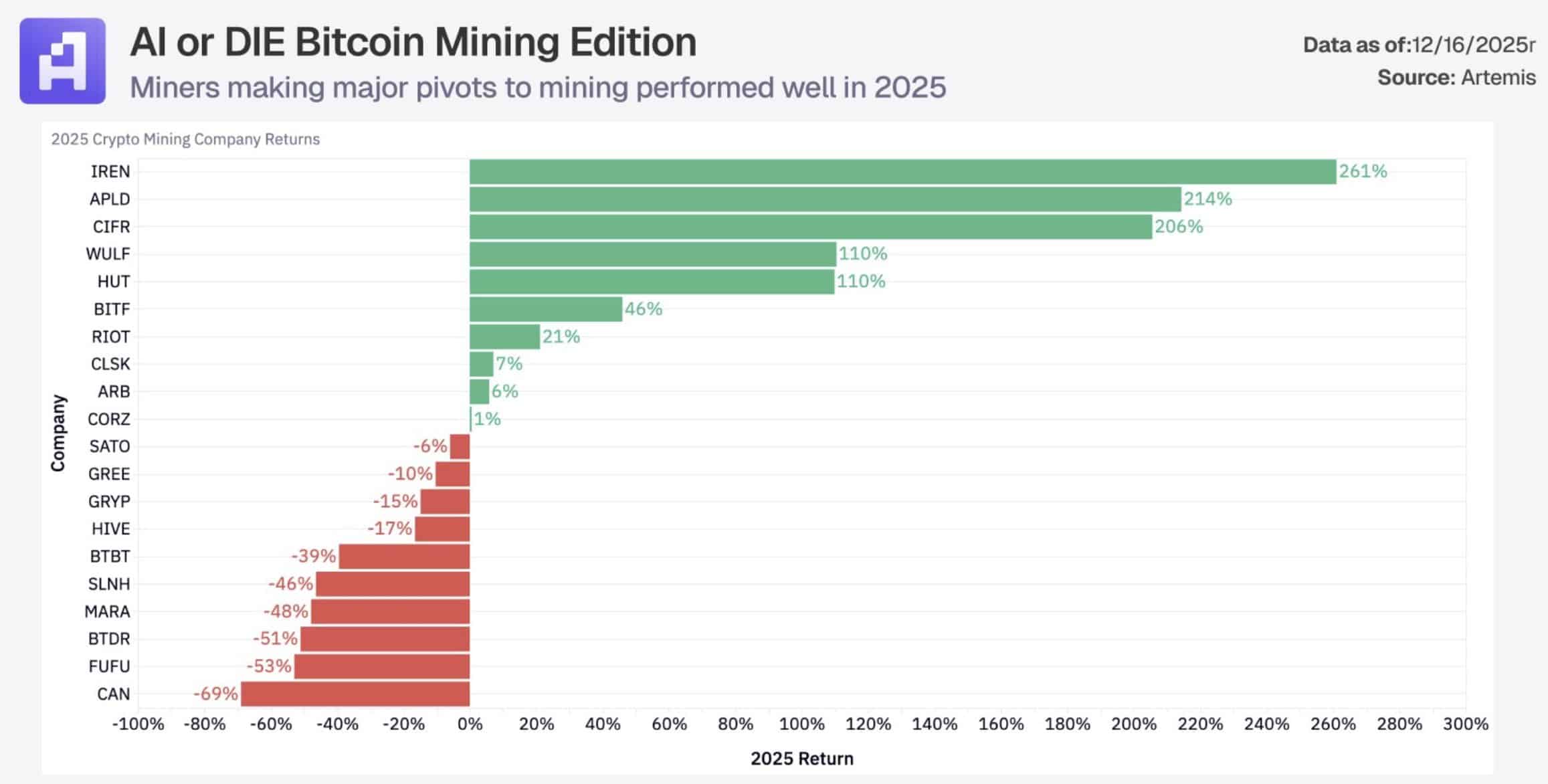
Bitcoin miners such as Iren (Nasdaq: IREN), Applied Digital Corp (Nasdaq: APLD), and Hut 8 Corp (Nasdaq: HUT), repurposed their mining rigs for AI and reported massive share gains in 2025.
Source: Artemis
But some miners are not only diversifying their operations but abandoning BTC and crypto mining altogether.
Bitfarms (Nasdaq: BITF), for example, recently sold its Paraguay BTC mining plant to “reinvest in their North American HPC/AI energy infrastructure in 2026.”
Another miner, Riots Platform (Nasdaq: RIOT), made an AI deal with AMD, fully funded by selling 1,080 BTC from its balance sheet. These actions and miner dumps fueled pressure on the crypto asset.
Will AI pivot pressure BTC?
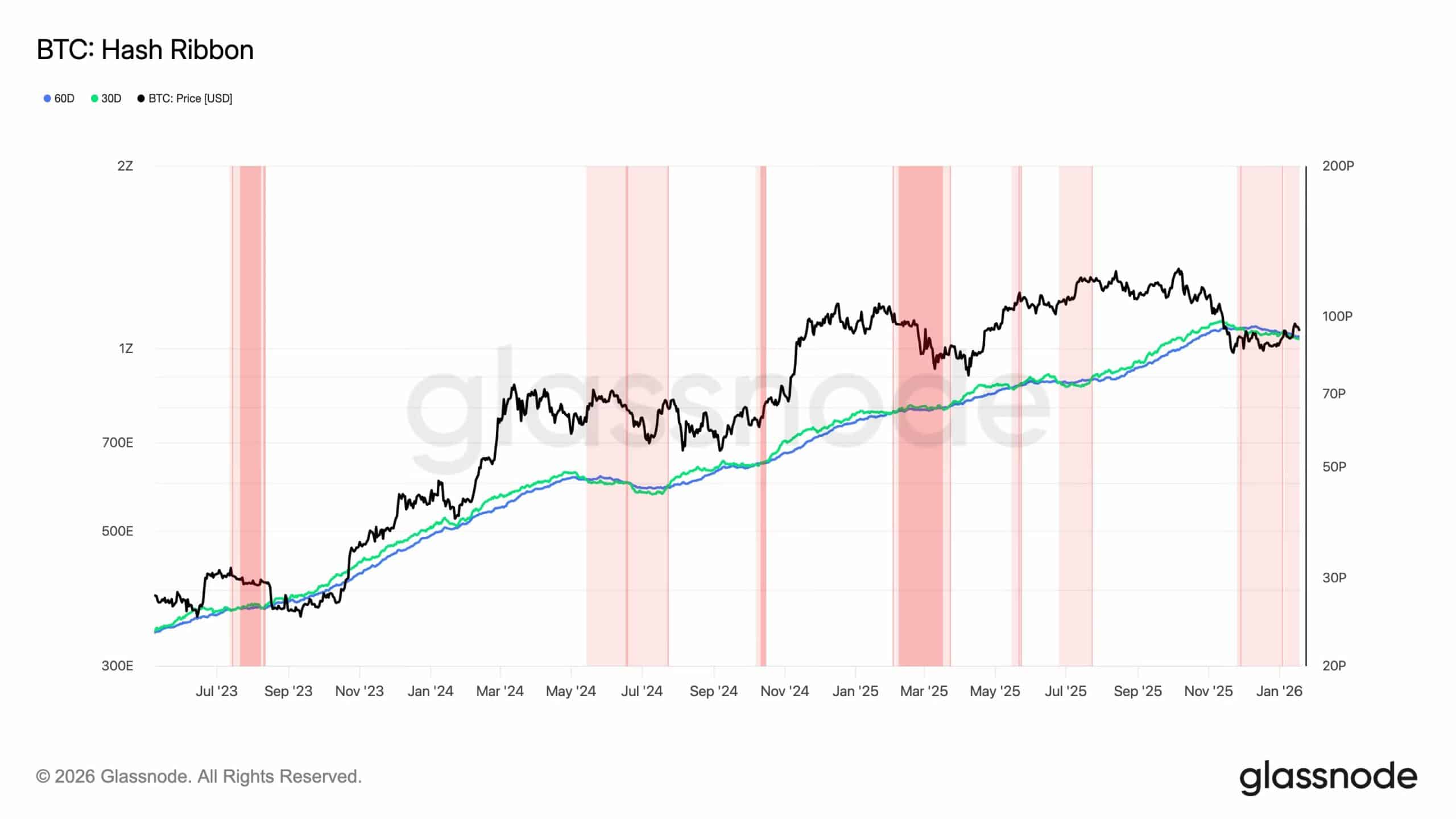
Besides, the overall mining sector has been struggling to stay afloat. Because mining costs have risen above the current Bitcoin [BTC] price. Hash Ribbon, the indicator that tracks this miner capitulation, was flagged in late November (red shades).
It always forces miners to sell BTC to cover operational costs.
Source: Glassnode
Historically, the miner capitulation also tends to act as a bottom signal and good buying opportunity (white zones) if the 30-day average (green) crosses above the 60-day average (blue).
Although such a shift was close and a firm structural rebound in BTC’s price is likely, the miner AI pivot also revealed another side of BTC that hasn’t drawn much attention.
Each BTC halving event, the block rewards miners receive are reduced by half. In 2020, it was 6.25 BTC; after the 2024 halving, the rewards dropped to 3.125 BTC. And after the upcoming 2028 event, the new rewards will drop even further to 1.5625 BTC.
Unless BTC’s value explodes higher, mining would be less lucrative in the future compared to AI returns.
Will Bitcoin network security falter?
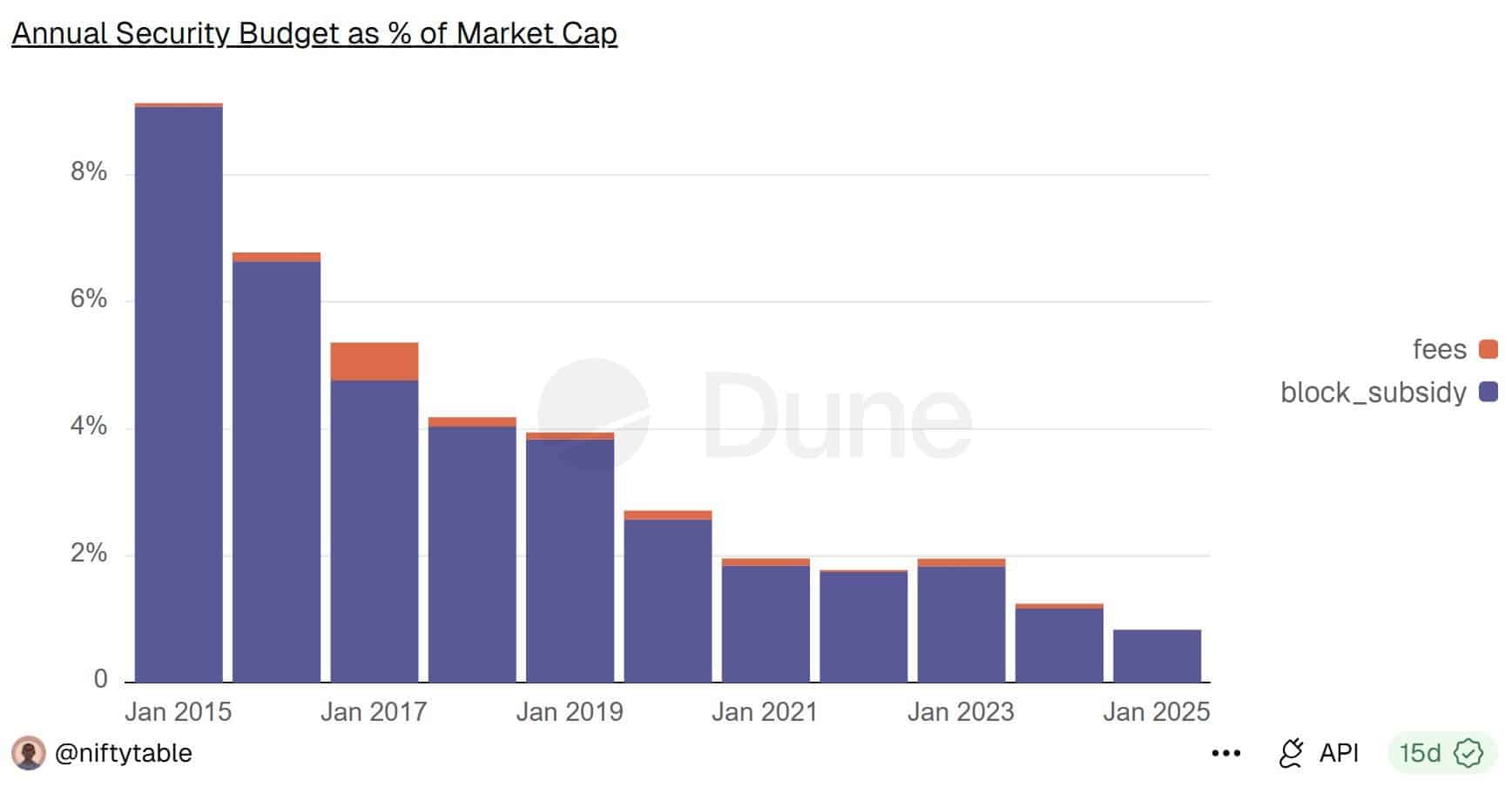
Amid this decline in rewards, transaction fees were meant to cover this shortfall. Collectively, block rewards and transaction fees are the security budget that keeps miners up and running to secure the network.
However, as block subsidy drops and fees fail to give cover, the founder of VC firm Cyber Capital, Justin Bons, warned,
“BTC’s security is lower now than it was 5 years ago! The security budget will keep falling until the network is attacked.”
Source: Dune
Final Thoughts
- The BTC miners’ AI pivot and broader mining sector added pressure to the markets.
- Although a market shift was close if the Hash Ribbon indicator cleared, the sustainability of BTC mining remained unclear.